Industry News
Curation by industry experts
Hot Articles
Popular Tags
Japan's JIS S 2029:2026 Standard Takes Effect: Stricter Oxygen Transmission Rate Requirements for Food Packaging Barrier Films
Japan's JIS S 2029:2026 Standard Takes Effect: Stricter Oxygen Transmission Rate Requirements for Food Packaging Barrier Films
Introduction
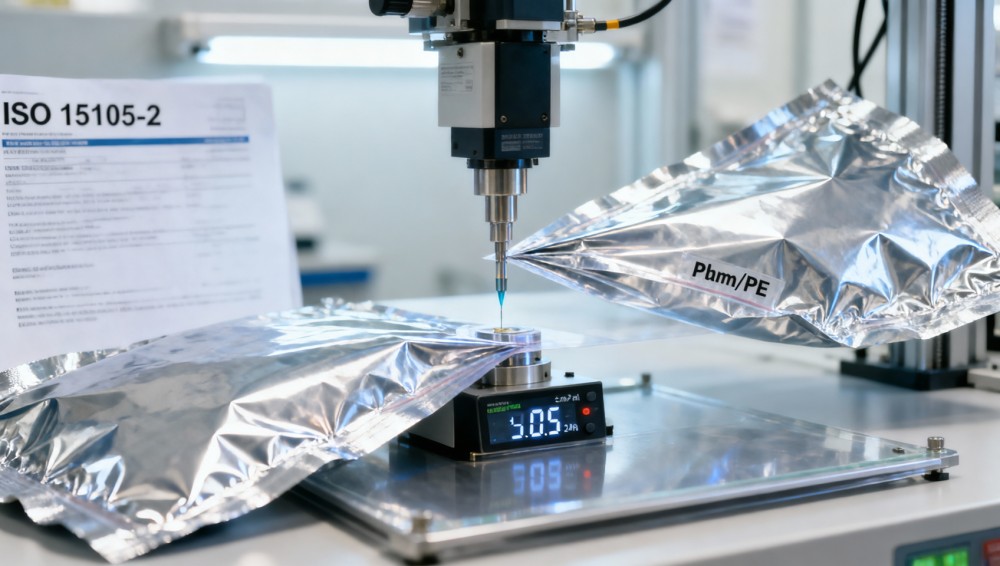
On March 25, 2026, Japan's Ministry of Economy, Trade and Industry (METI) officially implemented the JIS S 2029:2026 standard, which significantly tightens the oxygen transmission rate (OTR) requirements for aluminum foil/PET/PE composite films used in food packaging. The new regulation mandates a testing accuracy of ±0.5 cm³/m²·24h·0.1MPa and requires the use of ISO 15105-2 methodology. This development particularly impacts over a hundred composite film export manufacturers in China's Jiangsu and Shandong provinces, with some already facing shipment suspensions due to uncalibrated testing equipment. The food packaging, export manufacturing, and testing equipment industries should closely monitor these changes as they directly affect product compliance and international trade flows.
Event Overview
The JIS S 2029:2026 standard became effective on March 25, 2026, introducing two key technical changes: first, it raises the OTR testing accuracy requirement to ±0.5 cm³/m²·24h·0.1MPa for food-grade composite films; second, it makes ISO 15105-2 the compulsory testing method. Japanese importers have already begun enforcing these requirements, with verified cases of Chinese manufacturers having shipments held at customs due to non-compliant testing reports.
Impact on Specific Industries
Food Packaging Export Manufacturers
Chinese composite film producers, especially those in Jiangsu and Shandong exporting to Japan, face immediate compliance challenges. The stricter OTR requirements may necessitate reformulations or process adjustments, while the mandatory ISO method requires equipment upgrades or recalibrations. Early reports indicate at least 12 manufacturers have experienced shipment suspensions since April 2026.
Testing Equipment and Certification Providers
The mandate for ISO 15105-2 methodology creates sudden demand for compliant testing systems. Laboratories serving the packaging industry must verify their equipment meets the new standard's precision requirements, while certification bodies need to update their testing protocols accordingly.
Food Brands and Retailers
Japanese food companies using imported packaging materials must now verify their suppliers' compliance. The changes could lead to supply chain disruptions or cost fluctuations for packaged food products entering the Japanese market.
Key Focus Areas and Recommended Actions
Immediate Compliance Verification
Export manufacturers should urgently audit their testing capabilities against ISO 15105-2 requirements. Those lacking compliant equipment should prioritize calibrations or upgrades, as Japanese importers appear to be enforcing the standard without transitional leniency.
Supply Chain Communication
Active dialogue with Japanese clients about certification timelines and potential transitional solutions is critical. Some buyers may accept temporary alternative testing arrangements if accompanied by clear compliance roadmaps.
Cost-Benefit Analysis
For manufacturers serving multiple markets, evaluate whether upgrading all production to meet Japan's standards makes economic sense versus maintaining separate lines. The ±0.5 cm³/m²·24h·0.1MPa threshold currently exceeds most other countries' requirements.
Editor's Perspective
From an industry standpoint, Japan's move appears to be both a technical upgrade and a strategic trade measure. The exceptionally tight ±0.5 tolerance suggests Japan may be positioning itself as a premium packaging market. While currently affecting China-based exporters most directly, the standard could eventually influence global packaging norms, similar to how Japan's previous JIS standards became international benchmarks. The immediate operational impacts are clear, but the longer-term implications for packaging technology development warrant monitoring.
Conclusion
The JIS S 2029:2026 implementation represents a significant technical barrier for food packaging exporters to Japan, with compliance challenges centered on testing precision and methodology. While disruptive in the short term, the standard may drive innovation in barrier film technologies. Industry players should approach this not just as a compliance issue, but as an indicator of Japan's evolving quality expectations for imported packaging materials. The situation remains fluid, with further clarifications likely from METI regarding enforcement timelines and potential exemptions.
Source Information
Primary source: Official announcement by Japan's Ministry of Economy, Trade and Industry (METI) on March 25, 2026. Additional verification through trade compliance notices issued to Chinese exporters in April 2026. Ongoing monitoring required for potential updates to enforcement protocols or testing methodology interpretations.
Recommended News
 Carton & PlasticsWhat drives breakage rates in bulk wine bottles wholesale orders?Bulk wine bottles wholesale buyers: discover what drives breakage rates, from glass quality and packaging to pallet loading, and reduce costly claims.Packaging Supply ExpertSep 27, 2026
 Office FurnitureHow supplier scorecards reduce risk in furniture procurementFurniture procurement supplier management becomes more resilient with supplier scorecards that track quality, delivery, compliance, and corrective actions. Learn how to reduce sourcing risk.Interior Sourcing LeadSep 26, 2026
 Office Paper & Printing PaperHow roll diameter affects downtime when using jumbo paper rollsJumbo paper rolls can cut changeovers and downtime—if your unwinder, handling, and tension control can support them. Find the optimal roll diameter for smoother output.Packaging Supply ExpertSep 25, 2026
 Office Paper & Printing PaperWhen does carbonless paper for invoices reduce billing errors?Carbonless paper for invoices reduces billing errors by creating clear, consistent copies for deliveries, service calls, and approvals. Learn when it strengthens billing control.Packaging Supply ExpertSep 24, 2026