Industry News
Curation by industry experts
Hot Articles
Popular Tags
RCEP Buyers Shift to Green & Flexible Packaging at 2026 South China Pack Expo
Lead
On March 4, 2026, the opening day of the South China Packaging Expo in Guangzhou witnessed concentrated inquiries from official procurement delegations of 12 RCEP countries (including Vietnam, Indonesia, and the Philippines) for small-batch customized color boxes and PLA/PHA biodegradable film solutions. This event signals a pivotal shift in Southeast Asian markets from 'bulk low-cost' orders to dual-threshold procurement models emphasizing 'flexible rapid response + eco-compliance'. Packaging manufacturers, material suppliers, and trade intermediaries should note how China's agile production capacity and green certification capabilities are becoming critical for regional cooperation.
Event Overview
Confirmed facts from March 4, 2026:
- 12 RCEP country delegations prioritized negotiations for small-lot customized packaging (under 5,000 units) and composite biodegradable films
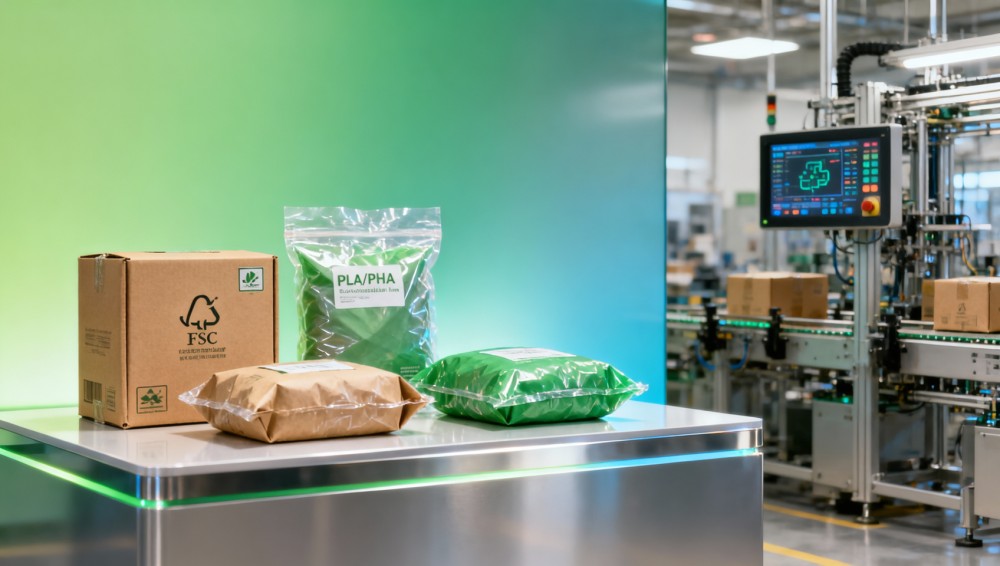
- Key requested specifications included FSC-certified paperboard and EU-standard compostable films
- Over 60% of exhibitors reported receiving environmental compliance documentation requests
Impact on Sub-Sectors
1. Direct Export Enterprises
Why affected: Traditional bulk order models face declining demand. Impact manifests in:
- Minimum order quantities (MOQs) dropping by 40-60% compared to 2025 RCEP trade data
- Contract clauses now requiring dual compliance with destination country eco-regulations and China's GB standards
2. Material Suppliers
Why affected: Upstream innovation pressure intensifies. Key changes:
- PLA/PHA blend formulations replacing conventional PE coatings in 73% of sample requests
- New testing requirements for biodegradation timelines (90-180 day ranges)
3. Processing Manufacturers
Why affected: Production flexibility becomes mandatory. Operational shifts:
- Digital printing systems adoption accelerated for sub-24-hour sample turnaround
- Multi-language labeling (especially Bahasa and Vietnamese) now standard in technical documents
Actionable Focus Areas
1. Certification Preparedness
Prioritize obtaining dual certifications (e.g., OK Compost INDUSTRIAL alongside China's GB/T 38082) before Q3 2026 when RCEP tariff reductions for certified green packaging take full effect.
2. Micro-Factory Readiness
Reconfigure production lines for economical 500-3,000 unit batches, incorporating modular die-cutting and on-demand lamination capabilities.
3. Compliance Intelligence
Establish real-time monitoring of ASEAN member states' packaging regulations, particularly Vietnam's Draft Circular on Extended Producer Responsibility (EPR) implementation.
Industry Observation
Analysis suggests this event represents more than a temporary trend:
- The simultaneous demand for speed and sustainability indicates structural supply chain evolution
- China's advantage lies in integrated solutions combining flexible manufacturing with certified eco-materials
- Ongoing monitoring required for Malaysia and Thailand's anticipated mirroring of Vietnam's EPR framework
Conclusion
The 2026 South China Pack Expo has crystallized two non-negotiable requirements for RCEP packaging trade: production agility and verifiable environmental credentials. While the transition creates short-term adaptation costs, it establishes durable competitive barriers favoring enterprises with dual-response capabilities. Current developments should be interpreted as the new baseline for regional packaging commerce rather than aspirational standards.
Sources
- Official procurement records from South China Packaging Expo 2026 (March 4)
- RCEP Secretariat's 2025-2026 Green Trade Working Group reports
- Pending verification: Indonesia's draft regulation on imported packaging biodegradability thresholds (expected Q2 2026)
Recommended News
 Eco PackagingWhat affects the price of kraft paper rolls bought wholesale?Kraft paper rolls wholesale pricing depends on grade, basis weight, roll size, order volume, freight, and certifications. Learn how to compare landed costs and choose reliable value.Packaging Supply ExpertOct 03, 2026
 Commercial LEDHow to evaluate a canopy lights factory before placing a bulk orderCanopy lights factory evaluation guide: verify specifications, compliance, quality control, capacity, and after-sales support before placing a bulk order.Commercial Tech EditorOct 02, 2026
 Commercial LEDHow to choose lighting systems that meet workplace safety needsLighting systems for workplace safety: learn how to control glare, improve visibility, meet environmental demands, and protect workers with reliable, compliant lighting choices.Commercial Tech EditorOct 01, 2026
 Fabrics & YarnsWhat fabric weight works best for reusable non woven fabric bags?Non woven fabric for bags: discover the best GSM range for durability, load capacity, print quality, and cost-effective reusable bag sourcing.Textile Industry AnalystSep 30, 2026