Industry News
Curation by industry experts
Hot Articles
Popular Tags
China's New Air Quality Standards Impact Printing Industry Exports
Introduction
On March 1, 2026, China implemented the mandatory Ambient Air Quality Standards (GB 3095-2026), significantly tightening VOC emission limits and enhancing real-time monitoring requirements. Printing factories—especially small and medium-sized enterprises (SMEs) lagging in water-based ink adoption or exhaust treatment upgrades—face challenges in providing credible environmental compliance certificates. This directly impacts their ability to export packaging materials like color boxes and labels to strictly regulated markets such as the EU and South Korea.
Event Overview
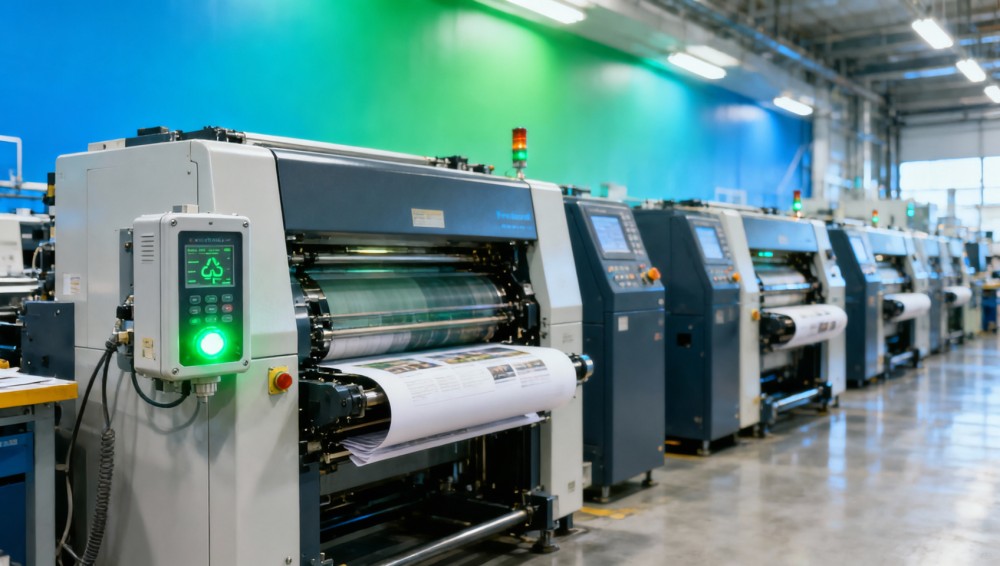
The updated GB 3095-2026 standard enforces stricter volatile organic compounds (VOCs) thresholds for industrial emissions, with mandatory online monitoring systems for printing facilities. Non-compliant factories risk losing the ability to issue internationally recognized environmental compliance documents, critical for export-oriented businesses.
Affected Sub-Sectors
1. Export-Oriented Printing Manufacturers
Printing factories supplying彩盒 (color boxes),标签 (labels), and other packaging materials to eco-sensitive markets (e.g., EU, South Korea) must now provide enhanced environmental proof. Analysis shows that SMEs relying on solvent-based inks without RTO/regenerative thermal oxidizers may face order cancellations due to unverifiable compliance.
2. Packaging Supply Chain Coordinators
Trading companies and sourcing agents handling印刷品 (printed products) for multinational brands will need to audit suppliers’ VOC control systems more rigorously. From an industry perspective, this may accelerate consolidation toward certified eco-friendly printers.
3. Industrial Compliance Service Providers
Demand surges for third-party emission testing and continuous monitoring solutions, particularly from中小印刷厂 (SME printing plants) scrambling to meet the new criteria before client audits.
Key Action Points for Businesses
Prioritize Compliance Documentation
Obtain updated environmental permits and real-time monitoring reports. Current observations suggest buyers increasingly request these as附加条款 (rider clauses) in contracts.
Evaluate Supply Chain Readiness
Brands and importers should map their印刷供应商 (printing suppliers)’s transition timelines to water-based inks or catalytic oxidizers, especially for high-value export orders.
Monitor Policy Enforcement Gradation
While the standard is national, local enforcement may vary. Industry sources indicate coastal export hubs like Guangdong and Zhejiang will likely implement stricter checks first.
Editorial Observation
This revision signals China’s alignment with global环保标准 (eco-standards), but its immediate impact is uneven. Larger印刷企业 (printing firms) with preexisting ISO 14001 systems may leverage this for competitive advantage, while undercapitalized SMEs face existential pressure. The real test lies in how local authorities balance environmental targets with economic stability in manufacturing clusters.
Conclusion
The GB 3095-2026 rollout underscores the印刷行业 (printing industry)’s tightening nexus between environmental accountability and export viability. Businesses should treat this less as a standalone compliance hurdle and more as a structural shift toward greener supply chains—particularly for EU-bound shipments where ESG due diligence is escalating.
Information Sources
1. Official release of Ambient Air Quality Standards (GB 3095-2026)
2. Industry feedback from printing associations (待持续观察 pending further updates on SME adaptation rates)
Recommended News
 Hand & Power ToolsHow to choose a hand saw for woodworking without tear-outHand saw for woodworking guide: choose the right tooth pattern, blade, and technique to achieve clean, precise cuts with less tear-out. Explore practical buying tips.Tooling & Hardware LeadOct 04, 2026
 Eco PackagingWhat affects the price of kraft paper rolls bought wholesale?Kraft paper rolls wholesale pricing depends on grade, basis weight, roll size, order volume, freight, and certifications. Learn how to compare landed costs and choose reliable value.Packaging Supply ExpertOct 03, 2026
 Commercial LEDHow to evaluate a canopy lights factory before placing a bulk orderCanopy lights factory evaluation guide: verify specifications, compliance, quality control, capacity, and after-sales support before placing a bulk order.Commercial Tech EditorOct 02, 2026
 Commercial LEDHow to choose lighting systems that meet workplace safety needsLighting systems for workplace safety: learn how to control glare, improve visibility, meet environmental demands, and protect workers with reliable, compliant lighting choices.Commercial Tech EditorOct 01, 2026