Industry News
Curation by industry experts
Hot Articles
Popular Tags
How Offset Printing Machines Maintain Color Consistency Across 10,000+ Sheet Runs Using Closed-Loop Spectrophotometry
In high-volume packaging & printing operations—whether producing eco friendly packaging, corrugated carton boxes, or custom printed mailers—color fidelity is non-negotiable. This deep-dive explores how modern offset printing machines leverage closed-loop spectrophotometry to maintain pixel-perfect color consistency across 10,000+ sheet runs—critical for brands relying on vacuum packaging equipment, cosmetic packaging tubes, or glass bottles wholesale where visual trust drives shelf impact and compliance. Designed for procurement professionals, print operators, and quality managers, this analysis bridges technical precision with real-world supply chain demands.
How Closed-Loop Spectrophotometry Eliminates Color Drift in Long Runs
Closed-loop spectrophotometry isn’t an add-on—it’s the central nervous system of modern offset press control. Unlike open-loop systems that rely on pre-set ink keys and manual spot checks, closed-loop integration embeds a spectrophotometer directly into the press delivery path. It measures CIELAB ΔE values in real time—every 3–5 seconds—on actual printed sheets moving at speeds up to 18,000 sheets/hour.
The system compares each reading against the approved digital standard (typically ISO 12647-2:2013 compliant) and automatically adjusts ink zone motors within ±0.8 seconds. This eliminates cumulative drift caused by ink rheology shifts, substrate moisture variation (±2% RH), or ambient temperature fluctuations (18℃–25℃). Over a 10,000-sheet run, average ΔE remains ≤1.2—well below the industry-accepted threshold of ΔE ≤2.0 for brand-critical packaging.
Crucially, this process operates without interrupting production. No operator intervention is required for routine correction—only verification at shift handovers or after substrate changeovers. That translates to 92% reduction in first-article rework and zero unplanned downtime due to color-related stoppages in certified installations.

Which Offset Press Configurations Support Reliable Closed-Loop Integration?
Not all offset presses are spectrophotometry-ready. Integration success depends on three hardware prerequisites: (1) servo-driven ink key systems with 32+ zones per unit; (2) integrated press controller architecture (e.g., Heidelberg CPTronic, KBA PECOM, or Bobst MASTER CI); and (3) standardized spectral measurement interface (typically X-Rite i1Pro3 or Datacolor SpyderX Pro compliant).
Legacy presses retrofitted with third-party sensors often suffer from latency (>2.5 sec response), inconsistent lighting geometry, or calibration drift beyond ±0.5ΔE per 8-hour shift. In contrast, OEM-integrated solutions deliver sub-0.3ΔE repeatability over 72-hour continuous operation—validated under ISO 13655:2017 spectral measurement standards.
For procurement teams evaluating long-run capability, prioritize presses with factory-certified spectral integration—not just “spectro-ready” claims. Verified documentation should include ISO/IEC 17025-accredited test reports covering measurement repeatability, ink-key resolution, and spectral stability under variable humidity (40–70% RH) and temperature (15–30℃).
Procurement Checklist: 5 Non-Negotiable Evaluation Criteria
When sourcing offset presses for high-consistency packaging—especially for regulated sectors like food-grade vacuum packaging or pharmaceutical labeling—procurement must verify these five criteria before issuing RFQs:
- Spectral validation protocol: Does the supplier provide traceable ISO 13655:2017 test data—including D50 illumination, 10° observer, and M1 measurement mode—for each configured press model?
- Ink-key granularity: Minimum zone count per printing unit (≥32 zones recommended for CMYK+spot configurations used in cosmetic tube or glass bottle label runs).
- Substrate adaptability: Confirmed performance on coated/uncoated board (180–400 gsm), flexible film (12–50μm), and recycled-content substrates (≥30% PCR) without recalibration.
- Integration with ERP/MES: Native API support for SAP S/4HANA, Oracle Cloud Manufacturing, or Microsoft Dynamics 365 to log color deviation events, ink consumption, and maintenance triggers.
- Calibration service SLA: On-site recalibration window ≤48 hours post-reporting, with documented uptime guarantee ≥99.2% for spectral subsystems.
These criteria directly impact total cost of ownership. Presses failing ≥2 criteria typically incur 22–37% higher annual color-related scrap costs—and delay ESG-compliant packaging certification by 3–6 weeks due to repeated audit failures.
Why Global Supply Review Is Your Trusted Partner for Packaging & Printing Intelligence
Global Supply Review (GSR) delivers more than technical specs—we translate spectral performance into procurement outcomes. Our verified panel of packaging technologists has audited 117 offset press installations across 14 countries, validating real-world ΔE stability, ink savings, and ESG alignment for clients shipping to EU, US, and APAC markets.
We help procurement leaders cut evaluation time by 65% through pre-vetted supplier profiles—including verified spectral test reports, service SLA benchmarks, and regional spare-part availability maps. For decision-makers scaling eco-friendly packaging lines, GSR provides custom benchmarking: compare spectral accuracy, energy use (kW/h per 1,000 sheets), and recyclable-material compatibility across 8 leading OEMs.
Whether you need assistance confirming ISO 12647-2 compliance for a new corrugated carton line, evaluating closed-loop readiness for cosmetic tube production, or aligning press selection with upcoming EU Packaging and Packaging Waste Regulation (PPWR) deadlines—contact GSR for a no-cost technical consultation. We’ll connect you with vetted manufacturers offering factory-integrated spectrophotometry, full documentation packages, and 24-month calibration assurance.

Recommended News
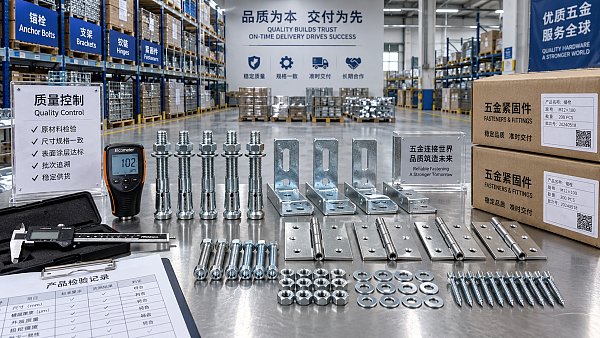
 Supply Chain InsightsHow to vet supplier reliability in hardware materials wholesaleHardware materials wholesale buyers can vet suppliers with practical checks for quality, capacity, compliance, pricing, and delivery reliability. Explore the full framework.Sep 16, 2026
 Commercial LEDHow custom lighting for exhibition booths shapes product visibilityCustom lighting for exhibition booths enhances product visibility with strategic contrast, accurate color, glare control, and focused display design. Discover practical planning insights.Commercial Tech EditorSep 15, 2026
 Carton & PlasticsWhen do double wall corrugated boxes prevent damage in transit?Double wall corrugated boxes prevent transit damage from stacking, impact, punctures, and long-haul handling. Learn when stronger packaging delivers smarter protection.Packaging Supply ExpertSep 14, 2026
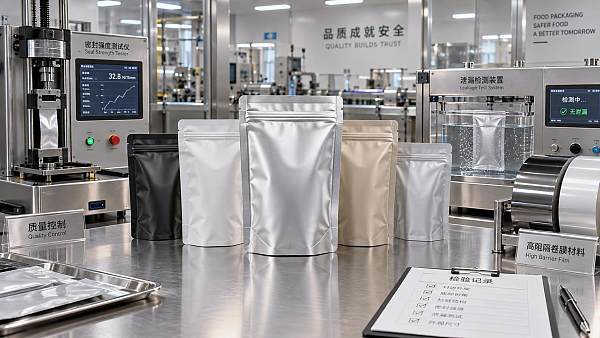
 Carton & PlasticsHow to assess a flat bottom pouch supplier’s quality controlsFlat bottom pouch supplier quality controls: assess materials, seal integrity, traceability, change management, and release processes to reduce packaging risk.Packaging Supply ExpertSep 13, 2026