Industry News
Curation by industry experts
Hot Articles
Popular Tags
When Packaging Automation Equipment Delivers Real Cost Savings
When Packaging Automation Equipment Delivers Real Cost Savings
For finance-led approvals, packaging automation equipment must justify itself in hard numbers, not broad efficiency claims.
Labor savings matter, but they are rarely the full story.
The stronger case usually comes from better output control, lower material loss, and fewer avoidable interruptions.
That also means the best investment is not always the most advanced system.
It is the one that removes the most expensive constraints in the current operation.
Why the savings case has changed
A few years ago, many buyers viewed packaging automation equipment mainly as a labor substitution tool.
Today, that view is too narrow.
Wage pressure, turnover, packaging complexity, and retail compliance costs have all increased.
At the same time, margin tolerance is tighter in both consumer and industrial supply chains.
From a cost perspective, packaging automation equipment now affects much more than headcount.
It can improve carton sizing, seal consistency, label accuracy, pack speed, and shift-to-shift predictability.
Those gains often create the real return on investment.
Where packaging automation equipment produces measurable value
The most credible business case starts with specific loss points inside the packaging line.
If those losses are already small, savings will be limited.
If they are persistent, packaging automation equipment can generate a clear cost advantage.
1. Direct labor and overtime reduction
This is usually the first model buyers build.
The important step is to look beyond base wages.
Include overtime, agency labor, training, absenteeism coverage, and reallocation costs during peak demand.
In many plants, those hidden labor costs are larger than expected.
2. Material waste control
Film, labels, tape, cartons, and corrugated inserts all add up quickly.
Manual operations often overuse materials to avoid pack failures.
Well-matched packaging automation equipment tightens material consumption with better repeatability.
Even small percentage improvements can be meaningful at scale.
3. Throughput improvement
Higher line speed only matters if downstream processes can absorb it.
Still, many operations lose capacity because packaging is the bottleneck.
When packaging automation equipment removes that bottleneck, overall asset utilization improves.
That can delay future capital spending elsewhere in the plant.
4. Error and compliance reduction
Mislabeling, wrong counts, weak seals, and poor barcodes create expensive downstream issues.
They can trigger chargebacks, returns, rework, and damaged customer trust.
Packaging automation equipment reduces variation, which lowers the cost of avoidable mistakes.
When automation does not save money
Not every packaging line should be automated immediately.
This is where disciplined capital review matters.
Packaging automation equipment underperforms when product formats change too often, volumes are low, or upstream quality is unstable.
It also struggles when maintenance resources are weak or operator training is underfunded.
A fast machine with poor line integration can create more downtime, not less.
The same is true when changeovers take too long.
In practical terms, automation saves money only when it fits the production reality.
How to evaluate total return, not just purchase price
The purchase price of packaging automation equipment is only the opening number.
A better approval model looks at total cost of ownership and total economic impact.
The core inputs usually include:
- Equipment purchase and installation
- Integration with existing conveyors, ERP, WMS, or vision systems
- Utilities, floor space, guarding, and facility modifications
- Operator training and maintenance support
- Spare parts, service contracts, and planned downtime
- Expected savings from labor, scrap, faster output, and fewer claims
A simple payback period is useful, but it should not be the only decision tool.
Net present value, internal rate of return, and sensitivity analysis give a stronger view.
That matters because packaging automation equipment often carries both upside and execution risk.
The financial signals worth checking before approval
Several indicators usually separate a sound automation case from a weak one.
- High and recurring overtime in packaging operations.
- Frequent manual errors tied to shipping claims or customer deductions.
- Material waste rates that exceed internal benchmarks.
- Strong demand visibility that supports stable equipment utilization.
- A clear bottleneck at packing, sealing, labeling, or case handling stages.
- Line staffing challenges that have persisted despite process fixes.
A weaker case appears when projected savings rely on unrealistic speed assumptions.
Another warning sign is when suppliers provide headline output rates without line-level context.
In real operations, installed performance matters more than brochure performance.
Questions that improve a packaging automation equipment business case
Before approving capital spend, it helps to pressure-test the proposal with direct questions.
- Which current costs will disappear, and which will only shrink?
- How many SKUs can the equipment handle without major changeover losses?
- What utilization rate is required to meet the payback target?
- What downtime assumptions are built into the forecast?
- What happens if labor savings arrive slower than planned?
- Can the supplier prove comparable performance in similar packaging environments?
These questions keep the model grounded.
They also help avoid buying packaging automation equipment that solves the wrong problem.
A practical way to compare options
When several systems appear viable, a side-by-side view makes tradeoffs easier to see.
This kind of comparison brings the conversation back to economics.
The right packaging automation equipment is rarely the cheapest machine on paper.
What strong approvals usually have in common
The most successful approvals tend to share three traits.
First, they target a proven operational pain point.
Second, they use conservative assumptions for savings and ramp-up time.
Third, they include realistic support costs after installation.
That discipline is especially important in packaging, where small losses repeat thousands of times per shift.
When those losses are visible and measured, packaging automation equipment can produce durable savings.
When the problem is vague, returns usually disappoint.
In the end, the best approval standard is simple.
Packaging automation equipment should lower unit cost, improve control, and stay resilient under real operating conditions.
If the proposal can prove those points with credible data, the cost savings case is usually real.
Recommended News
 Eco PackagingWhat affects the price of kraft paper rolls bought wholesale?Kraft paper rolls wholesale pricing depends on grade, basis weight, roll size, order volume, freight, and certifications. Learn how to compare landed costs and choose reliable value.Packaging Supply ExpertOct 03, 2026
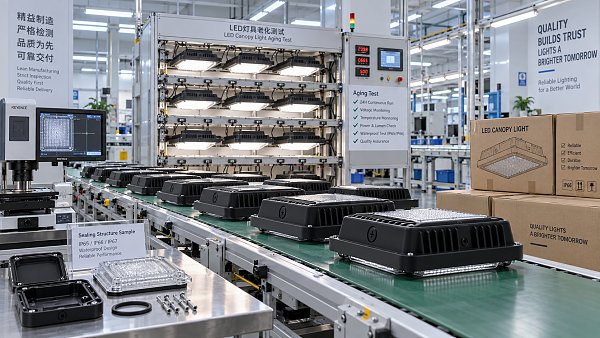
 Commercial LEDHow to evaluate a canopy lights factory before placing a bulk orderCanopy lights factory evaluation guide: verify specifications, compliance, quality control, capacity, and after-sales support before placing a bulk order.Commercial Tech EditorOct 02, 2026
 Commercial LEDHow to choose lighting systems that meet workplace safety needsLighting systems for workplace safety: learn how to control glare, improve visibility, meet environmental demands, and protect workers with reliable, compliant lighting choices.Commercial Tech EditorOct 01, 2026
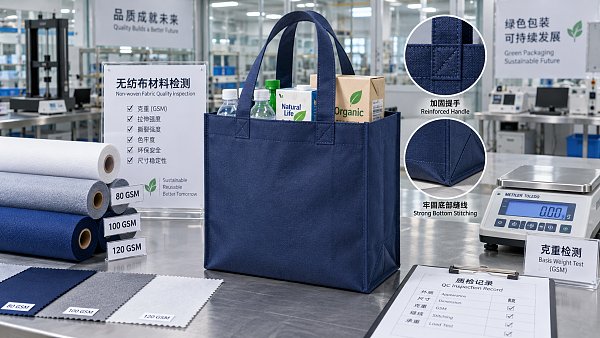
 Fabrics & YarnsWhat fabric weight works best for reusable non woven fabric bags?Non woven fabric for bags: discover the best GSM range for durability, load capacity, print quality, and cost-effective reusable bag sourcing.Textile Industry AnalystSep 30, 2026