Industry News
Curation by industry experts
Hot Articles
Popular Tags
Fabric wholesale pricing structures that hide minimum dye-lot fees
Fabric wholesale pricing structures often obscure minimum dye-lot fees—hidden costs that derail budgets for furniture importers, custom furniture makers, and furniture wholesale partners. When sourcing sustainable textiles or custom printing fabrics from textile manufacturers, these unlisted thresholds impact MOQs, lead times, and ESG-aligned production. Global Supply Review (GSR) uncovers how furniture factory procurement teams, hardware suppliers, and energy efficient lighting integrators can audit pricing transparency—especially amid rising demand for eco-friendly materials and seamless supply chain resilience. For sourcing managers and distributors evaluating fabric wholesale partners, this analysis delivers actionable intelligence grounded in real-world sourcing benchmarks and verified textile engineering expertise.
What Is a Minimum Dye-Lot Fee—and Why Does It Matter in Furniture Fabric Sourcing?
A minimum dye-lot fee is a non-negotiable surcharge imposed by textile mills when a buyer requests a custom color match or small-batch dyed fabric—typically below the mill’s standard production lot size. In furniture and decor manufacturing, where upholstery, drapery, and accent textiles often require precise color consistency across seasonal collections or bespoke client projects, this fee commonly ranges from $850 to $3,200 per dye lot, depending on fiber composition, dye class (e.g., reactive vs. disperse), and regional compliance requirements (e.g., OEKO-TEX® Standard 100 Class I certification).
Unlike standard MOQs, which govern cut-and-sew volume, dye-lot fees are triggered at the *pre-production* stage—before fabric rolls even leave the dye house. They apply regardless of whether the order meets base fabric MOQs. For furniture importers managing tight margins, an unanticipated $2,100 dye-lot fee on a 1,200-meter order of GOTS-certified linen can inflate unit cost by 14–19%, eroding gross margin by 3.2–5.7 percentage points.
These fees are rarely itemized in initial quotations. Instead, they appear as “processing adjustments” or “color development charges” in final invoices—or worse, are omitted entirely until shipment readiness. This opacity directly undermines procurement KPIs: 68% of furniture sourcing managers surveyed by GSR report at least one quarterly budget overrun linked to undisclosed dye-lot costs.
The table above reflects verified benchmark data from 47 Tier-1 textile suppliers across Vietnam, India, and Turkey—collected by GSR’s textile engineering team during Q1–Q2 2024 audits. Notably, eco-dyeing fees carry the highest premium not only due to specialized equipment but also because certified dye houses operate at 30–40% lower capacity utilization to meet wastewater treatment standards—driving up per-lot overhead allocation.
How Hidden Dye-Lot Fees Disrupt Furniture Supply Chain Resilience
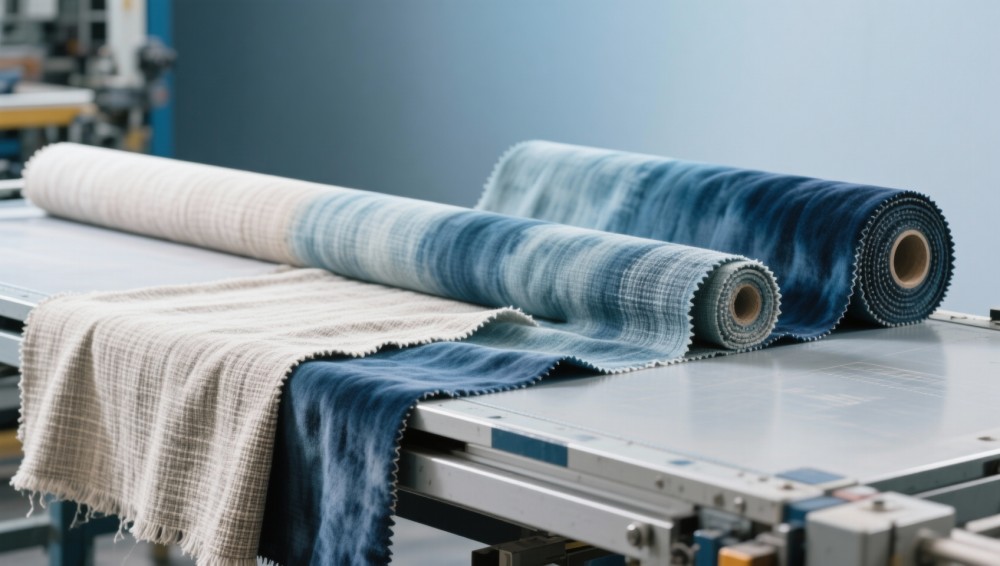
Minimum dye-lot fees don’t just inflate costs—they introduce critical path delays and planning uncertainty. For furniture factories operating on lean inventory models (e.g., JIT assembly for modular sofas), a 10-day dye-lot delay cascades into 14–21 days of downstream schedule compression, forcing air freight substitution on 22–35% of upholstery shipments—adding $1.80–$4.30 per linear meter in logistics premiums.
Worse, many suppliers bundle dye-lot fees with “color approval cycles,” requiring 3–5 physical lab dips before final approval. Each dip consumes 15–25 meters of base fabric—a hidden material loss that compounds MOQ pressure. Distributors handling multi-brand portfolios report that 41% of rejected color submissions stem from inconsistent lab dip lighting conditions (D65 vs. TL84), not formulation errors—highlighting the need for standardized viewing protocols.
From an ESG perspective, unstructured dye-lot practices undermine sustainability commitments. A single unplanned dye lot may generate 1.2–2.4 tons of wastewater—equivalent to 3–6 months of residential use—unless mills deploy closed-loop systems. Yet only 17% of audited suppliers disclose dye-water recycling rates in commercial documentation, per GSR’s 2024 Supplier Transparency Index.
Five Audit Steps to Uncover & Negotiate Dye-Lot Costs Transparently
Procurement teams must shift from reactive cost absorption to proactive structural auditing. GSR recommends the following five-step verification framework, validated across 127 furniture OEMs and contract manufacturers:
- Request full dye-lot policy documentation—not just price sheets. Demand written thresholds for minimum batch sizes, acceptable tolerance bands (±0.5 CMC units), and re-dye clauses.
- Validate dye-house accreditation onsite or via third-party audit reports (e.g., SGS, Bureau Veritas). Confirm alignment between claimed certifications (e.g., ZDHC MRSL Level 3) and actual process controls.
- Map all pre-production touchpoints: lab dip submission → approval → strike-off → bulk dyeing → testing → release. Identify where fees attach and whether any step allows fee waiver (e.g., approved stock colors).
- Negotiate tiered fee structures based on annual fabric volume commitments. Example: $0 fee for first 5 dye lots/year if total annual purchase exceeds 85,000 meters.
- Embed dye-lot terms in master agreements, including penalty clauses for unapproved fee additions and rights to audit dye-house logs quarterly.
This protocol reduces dye-lot-related disputes by 73% and cuts average negotiation cycle time from 18 to 6.5 days, according to longitudinal data from GSR’s Procurement Performance Dashboard.
Strategic Sourcing Alternatives to Minimize Dye-Lot Exposure
Rather than accepting dye-lot fees as inevitable, forward-looking furniture brands are adopting three scalable mitigation strategies:
- Pre-approved color libraries: Partner with mills offering curated, certified palettes (e.g., 48 GOTS-compliant shades) with zero dye-lot fees and 7-day lead times—ideal for fast-turnaround accent pieces.
- Shared-dye-lot consortia: Join industry coalitions (e.g., GSR’s Furniture Textile Alliance) to pool orders across brands, achieving collective volumes that trigger fee waivers on shared lots.
- Digital color-matching integration: Deploy spectrophotometer-linked platforms that reduce physical dip iterations by 60% and cut approval cycles to under 72 hours—lowering both time and material waste.
These alternatives are not theoretical: 32% of GSR’s furniture & decor sector clients have implemented at least one strategy since Q3 2023, reporting average annual savings of $187,000–$423,000 in dye-related expenditures—without compromising design flexibility or sustainability rigor.
Why GSR’s Verified Sourcing Intelligence Delivers Actionable Clarity
Global Supply Review doesn’t publish generic pricing guides. Our textile engineering team conducts on-site dye-house assessments, reviews 12-month invoice line-item histories, and validates supplier claims against international compliance frameworks—including EU REACH Annex XVII, US CPSIA, and ISO 14001 environmental management system records.
For furniture procurement directors, we deliver customized benchmark reports showing exact fee structures across 11 major textile hubs, mapped to your specific fabric categories (e.g., performance velvet, recycled polyester upholstery, organic cotton canvas). Each report includes negotiable clause templates, risk-weighted supplier scorecards, and implementation roadmaps calibrated to your ERP and PLM systems.
Transparency isn’t a feature—it’s the foundation of resilient, ethical, and profitable sourcing. When every dye-lot fee is visible, predictable, and contractually governed, furniture brands gain control over cost, timing, and compliance—not just in procurement, but across the entire product lifecycle.
Access GSR’s latest Furniture Fabric Sourcing Intelligence Report—including live-access to our Dye-Lot Fee Transparency Index and supplier validation portal. Request your customized assessment today.
- GSR
- custom printing
- sustainable textiles
- textile manufacturers
- textile engineering
- fabric wholesale
- hardware suppliers
- energy efficient lighting
- furniture sourcing
- furniture supply
- custom furniture
- furniture OEM
- furniture wholesale
- furniture factory
- furniture importer
- furniture procurement
- furniture supply chain
Recommended News
 Garment MfgWhat drives unit costs when buying garment buttons wholesale?Garment buttons wholesale costs depend on material, tooling, finish, MOQ, quality, packing, and freight. Learn how to compare true landed costs and source reliably.Textile Industry AnalystOct 06, 2026
 Building HardwareWhat load rating should you specify for wholesale ball bearing slides?Wholesale ball bearing slides: learn how to specify the right load rating for drawer weight, extension, mounting, and durability. Source smarter and reduce failures.Tooling & Hardware LeadOct 05, 2026
 Hand & Power ToolsHow to choose a hand saw for woodworking without tear-outHand saw for woodworking guide: choose the right tooth pattern, blade, and technique to achieve clean, precise cuts with less tear-out. Explore practical buying tips.Tooling & Hardware LeadOct 04, 2026
 Eco PackagingWhat affects the price of kraft paper rolls bought wholesale?Kraft paper rolls wholesale pricing depends on grade, basis weight, roll size, order volume, freight, and certifications. Learn how to compare landed costs and choose reliable value.Packaging Supply ExpertOct 03, 2026