Industry News
Curation by industry experts
Hot Articles
Popular Tags
Industrial Textiles: Key Material Choices for Demanding Applications
Industrial Textiles Matter Most When the Use Case Gets Harsh
Industrial textiles rarely fail on paper. They fail in heat, moisture, abrasion, chemical splash, pressure fluctuation, or repeated cleaning cycles.
That is why material choice is not a styling decision. It shapes uptime, compliance exposure, maintenance intervals, and replacement cost.
In actual supply chains, the same fabric family can perform very differently once coating, weave, finishing, and operating conditions change.
For Global Supply Review, this is where industrial textiles become a practical sourcing topic rather than a generic materials category.
A conveyor belt cover, filtration media, protective curtain, and insulated barrier may all look similar in specification sheets.
On site, they answer very different problems. The best selection comes from matching exposure conditions to fiber behavior and finishing limits.
Why Similar Applications End Up Requiring Different Industrial Textiles
The first mistake is treating industrial textiles as interchangeable because the headline requirement sounds the same.
“High strength” means one thing in lifting reinforcement, another in tear-prone covers, and another in puncture-resistant liners.
The second mistake is focusing on a single parameter. Tensile strength alone says little about hydrolysis, UV fatigue, or flex cracking.
A more reliable approach is to look at five conditions together:
- Continuous and peak temperature range
- Mechanical stress, including bending, vibration, and abrasion
- Chemical contact, cleaning agents, oils, dust, or humidity
- Regulatory demands such as flame retardancy, food contact, or ESG documentation
- Expected service life and replacement access difficulty
Once these are clear, industrial textiles can be evaluated as application components, not just purchased yardage.
In Filtration and Separation, Surface Behavior Often Decides Performance
Filtration is one of the clearest examples where standard fabric logic breaks down.
A media that looks durable may still blind quickly, shed particles, or lose efficiency after thermal cycling.
For air filtration, polyester and polypropylene industrial textiles are common, but they are not interchangeable.
Polyester can offer dimensional stability and broad chemical tolerance. Polypropylene may suit lower temperature environments with specific moisture concerns.
In hot gas or dust collection systems, aramid, fiberglass, or PTFE-based industrial textiles are more relevant.
Here, the real question is not only capture efficiency. It is how the textile behaves during pulsing, cake release, and extended exposure.
A low-cost media that clogs early usually raises total operating cost faster than a higher-grade option with better release characteristics.
Protective Covers and Barriers Need More Than High Strength
In equipment covers, partition curtains, containment barriers, and transport shielding, the stress profile is more mixed.
These industrial textiles may face abrasion, weathering, folding, sparks, washdown, or intermittent chemical contact in the same installation.
PVC-coated polyester remains common because it balances price and utility.
Yet TPU-coated constructions can be a better fit where low-temperature flexibility, repeated movement, or cleaner surface performance is important.
Silicone-coated fabrics are often chosen where heat resistance and release properties matter more than basic weather protection.
The decision point is usually hidden in maintenance reality. Will the material be dragged, folded, pressure-cleaned, or exposed to welding residue?
Those details change which industrial textiles hold their coating integrity and seam strength over time.
When Heat Is the Main Risk, Fiber Choice Is Only the Starting Point
Thermal insulation blankets, welding curtains, fire barriers, and furnace-adjacent shields often appear to revolve around temperature rating alone.
That reading is too narrow. Heat exposure can be continuous, radiant, intermittent, or accompanied by molten splash and mechanical shock.
Fiberglass industrial textiles are widely used, but coating selection changes performance in practice.
Vermiculite, silicone, aluminum foil lamination, and PTFE finishing each solve a different exposure pattern.
Aramid textiles may handle cut and flame concerns well, but they are not ideal for every chemical or UV condition.
A useful judgment method is to separate peak temperature from dwell time, then check whether flexing or contamination reduces the textile's rated behavior.
This is where technical review adds value. Published ratings often assume controlled test conditions rather than a mixed industrial setting.
Different End Uses Change the Material Priorities
A side-by-side view helps clarify why industrial textiles cannot be chosen from a single checklist.
For cross-sector sourcing, this comparison matters because similar line items may create very different lifecycle outcomes.
Packaging, Reinforcement, and Composite Uses Bring Another Set of Tradeoffs
Industrial textiles also play a less visible role in reinforced packaging, laminated structures, and composite backings.
In these uses, the textile is often judged by what it enables rather than how it looks alone.
Scrim reinforcement may improve dimensional control, puncture resistance, or load stability, but bonding behavior becomes critical.
A strong substrate can still fail if adhesive compatibility is poor or if converting temperatures distort the structure.
This is especially relevant across packaging, printing, furniture components, and light industrial assemblies, where material stacks are combined.
In those settings, industrial textiles should be reviewed as part of the full laminate or composite system.
Where Selection Often Goes Wrong
Several misreads show up repeatedly across industrial textiles projects.
- Assuming indoor use means low risk, even when cleaning chemicals or heat spikes are frequent
- Treating coated and uncoated versions as minor variants rather than different performance systems
- Using lab resistance claims without checking seam, edge, and fastening failure points
- Comparing purchase cost without calculating downtime, cleaning burden, and replacement access
- Overlooking documentation needs for flame standards, restricted substances, or recycled content claims
These gaps matter more as supply chains demand stronger traceability and better technical justification.
That is one reason data-led review platforms such as GSR are useful in practice. They connect material claims with operating context.
A Practical Way to Narrow the Right Industrial Textiles
Before narrowing suppliers or constructions, define the use conditions in a short technical matrix.
List the real temperature range, contact media, movement type, cleaning method, compliance threshold, and expected service interval.
Then compare industrial textiles against that matrix, not against generic catalog language.
Where conditions are mixed, request evidence from adjacent applications rather than a broad performance promise.
For more complex sourcing decisions, it also helps to separate essential requirements from desirable upgrades.
That keeps the evaluation grounded when balancing durability, ESG expectations, certification status, and cost stability.
The next useful step is simple: map the exact operating scenario, identify the failure mode that matters most, and judge industrial textiles around that reality.
Recommended News
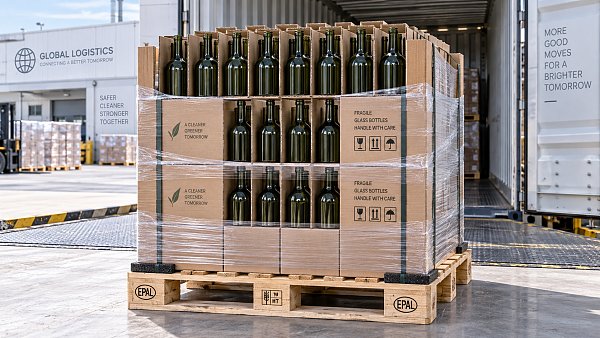
 Carton & PlasticsWhat drives breakage rates in bulk wine bottles wholesale orders?Bulk wine bottles wholesale buyers: discover what drives breakage rates, from glass quality and packaging to pallet loading, and reduce costly claims.Packaging Supply ExpertSep 27, 2026
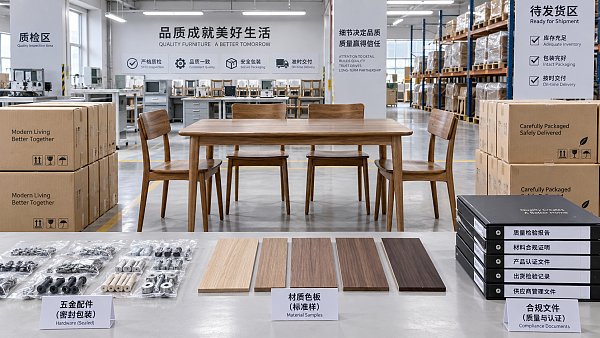
 Office FurnitureHow supplier scorecards reduce risk in furniture procurementFurniture procurement supplier management becomes more resilient with supplier scorecards that track quality, delivery, compliance, and corrective actions. Learn how to reduce sourcing risk.Interior Sourcing LeadSep 26, 2026
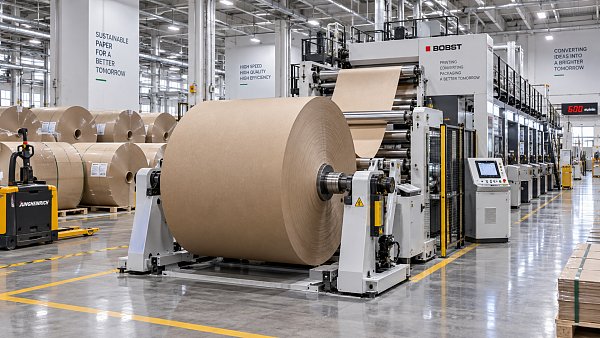
 Office Paper & Printing PaperHow roll diameter affects downtime when using jumbo paper rollsJumbo paper rolls can cut changeovers and downtime—if your unwinder, handling, and tension control can support them. Find the optimal roll diameter for smoother output.Packaging Supply ExpertSep 25, 2026
 Office Paper & Printing PaperWhen does carbonless paper for invoices reduce billing errors?Carbonless paper for invoices reduces billing errors by creating clear, consistent copies for deliveries, service calls, and approvals. Learn when it strengthens billing control.Packaging Supply ExpertSep 24, 2026