Industry News
Curation by industry experts
Hot Articles
Popular Tags
US CPSC Issues Urgent Recall: Chinese Wedding Photo Backdrops Contain Excessive Azo Dyes
On May 14, 2026, the U.S. Consumer Product Safety Commission (CPSC) issued an urgent recall notice (Recall #26-188) for 37 styles of fabric backdrops—primarily velvet and chiffon—used in wedding photography, manufactured by 12 Chinese export enterprises. The recall stems from detection of prohibited aromatic amines (24 types) released from azo dyes, including aniline exceeding limits by up to 7.2 times. This violation triggers noncompliance with Section 101 of the CPSIA. Affected products were distributed across over 210 photography studios and e-commerce channels in the U.S., Canada, and Mexico. Apparel, textile, and photo studio supply chain stakeholders—including exporters, fabric processors, and B2B distributors—should treat this as a material regulatory signal affecting compliance protocols, import clearance, and product liability exposure.
Event Overview
The U.S. Consumer Product Safety Commission (CPSC) published Recall #26-188 on May 14, 2026. It covers 37 models of wedding photography backdrop fabrics (including velvet and chiffon varieties) produced by 12 Chinese exporting companies. Testing confirmed decomposition of azo dyes into 24 banned aromatic amines, with aniline levels exceeding the legal limit by 7.2-fold. The recall applies to products sold to commercial photography businesses and online retailers across the United States, Canada, and Mexico.
Industries Affected by Segment
Direct Exporters & Trading Companies
These entities face immediate customs scrutiny and potential shipment holds at U.S. ports. As the named respondents in CPSC’s recall notice, they bear primary responsibility for notification, return logistics, and potential civil penalties under CPSIA enforcement mechanisms.
Fabric Processing & Dyeing Facilities
Manufacturers supplying finished or semi-finished backdrop fabrics—including those applying dyeing, printing, or finishing treatments—are exposed to upstream liability. The presence of excessive azo dyes indicates gaps in raw material vetting or process control, raising concerns about batch traceability and chemical management systems.
Photography Studio Suppliers & B2B Distributors
Wholesalers and specialty suppliers distributing these backdrops to studios must verify inventory status and initiate withdrawal procedures per CPSC guidance. Their contracts with end clients may include indemnity clauses triggered by regulatory recalls, increasing operational and reputational risk.
E-commerce Platforms & Marketplace Sellers
Online sellers listing affected SKUs are required to remove listings promptly and support consumer notifications. Platform-level liability under U.S. product safety law is heightened when sellers operate under their own brand or assume functional control over product specifications and labeling.
Key Points for Enterprises & Practitioners to Monitor and Act Upon
Track Official Updates from CPSC and Partner Agencies
Monitor CPSC’s official recall portal and associated notices for amendments—including possible expansion to additional SKUs, clarification of testing methodology, or issuance of compliance guidance specific to textile backdrops used in commercial services.
Review Current Inventory and Supply Contracts for High-Risk Categories
Identify all velvet, chiffon, and other dyed synthetic or blended fabrics supplied for photography, event staging, or studio use—particularly those processed with dark or vibrant colors where azo-based dyes are commonly applied. Cross-check supplier declarations against third-party test reports dated within the last 12 months.
Distinguish Between Regulatory Signal and Operational Impact
This recall targets a specific product category under defined chemical criteria—not a broad ban on Chinese textiles. However, it signals intensified CPSC focus on azo dye compliance in non-apparel decorative textiles, especially those entering commercial service environments with frequent human contact.
Prepare Documentation and Communication Protocols Ahead of Potential Inquiries
Compile existing test reports (ISO 14362-1:2017 or equivalent), supplier certificates of conformance, and internal quality control records for relevant backdrop lines. Draft standardized responses for customs brokers, downstream buyers, and platform compliance teams to ensure consistent messaging during verification requests.
Editorial Perspective / Industry Observation
Observably, this recall functions primarily as a targeted enforcement action rather than evidence of systemic failure across Chinese textile exports. Analysis shows that the violation centers on a narrow set of aesthetic products—photography backdrops—where colorfastness and visual impact may have outweighed chemical compliance in formulation decisions. From an industry perspective, it reflects growing CPSC attention toward ‘non-traditional’ consumer products entering commercial spaces but still subject to CPSIA’s children’s product and general-use safety provisions. It is more accurately interpreted as a signal of regulatory convergence: decorative textiles used in proximity to people—including professionals and minors present during photo sessions—are now being assessed under the same chemical safety thresholds as apparel or children’s items. Continued monitoring is warranted not because broader restrictions are imminent, but because enforcement precedent has been established for similar niche categories (e.g., stage props, rental costumes, event drapery).
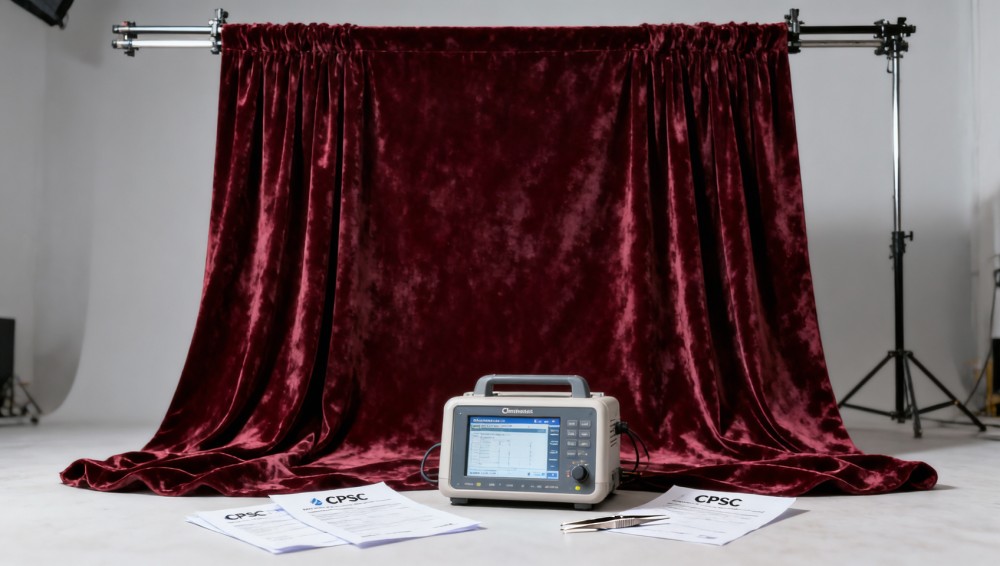
In summary, this recall underscores the expanding scope of chemical compliance obligations beyond conventional apparel and children’s goods. It does not indicate a shift in fundamental regulatory standards—but rather a refinement in their application to context-specific use cases. For affected stakeholders, the most constructive interpretation is not alarm, but calibration: aligning internal testing frequency, supplier qualification criteria, and documentation practices with the demonstrated enforcement priorities of key markets like the U.S.
Source: U.S. Consumer Product Safety Commission (CPSC), Recall Notice #26-188, published May 14, 2026.
Additional observation: Ongoing developments—including potential follow-up testing campaigns or updated CPSC guidance on azo dyes in decorative textiles—remain subject to official updates and are not yet confirmed.
Recommended News
 Carton & PlasticsWhat drives breakage rates in bulk wine bottles wholesale orders?Bulk wine bottles wholesale buyers: discover what drives breakage rates, from glass quality and packaging to pallet loading, and reduce costly claims.Packaging Supply ExpertSep 27, 2026
 Office FurnitureHow supplier scorecards reduce risk in furniture procurementFurniture procurement supplier management becomes more resilient with supplier scorecards that track quality, delivery, compliance, and corrective actions. Learn how to reduce sourcing risk.Interior Sourcing LeadSep 26, 2026
 Office Paper & Printing PaperHow roll diameter affects downtime when using jumbo paper rollsJumbo paper rolls can cut changeovers and downtime—if your unwinder, handling, and tension control can support them. Find the optimal roll diameter for smoother output.Packaging Supply ExpertSep 25, 2026
 Office Paper & Printing PaperWhen does carbonless paper for invoices reduce billing errors?Carbonless paper for invoices reduces billing errors by creating clear, consistent copies for deliveries, service calls, and approvals. Learn when it strengthens billing control.Packaging Supply ExpertSep 24, 2026