Industry News
Curation by industry experts
Hot Articles
Popular Tags
EU EcoDesign Rules for LED Ring Lights Take Effect May 15
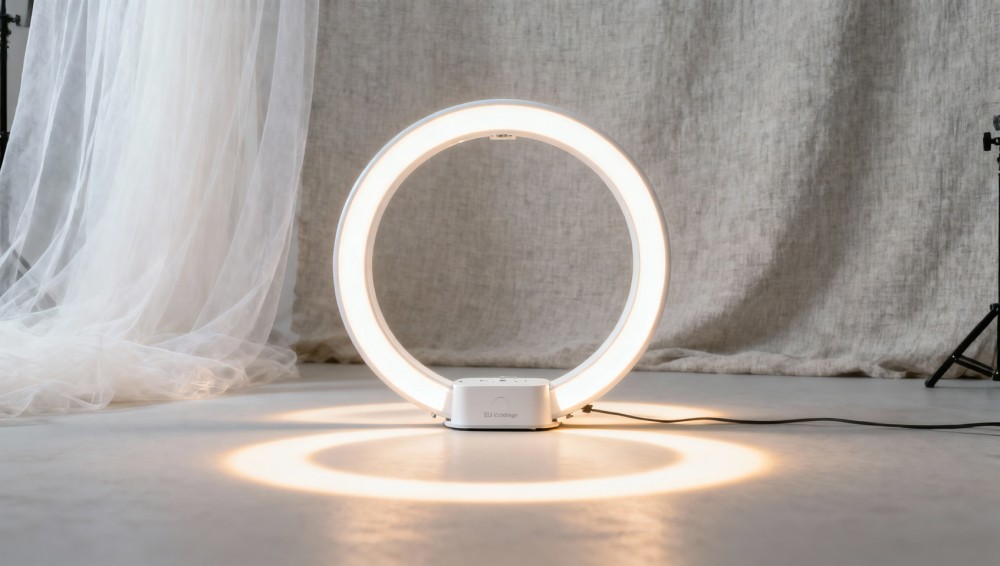
On May 15, 2026, the European Union’s updated EcoDesign Regulation (EU) 2026/892 enters into force, imposing mandatory dual certification — photobiological safety and energy efficiency — on LED photographic lighting equipment sold in the EU market. The rule directly affects the global wedding photography lighting supply chain, where Chinese manufacturers account for 83% of worldwide production capacity.
Event Overview
The European Commission formally implements Regulation (EU) 2026/892, requiring all LED photographic lighting devices — including ring lights and softboxes commonly used in bridal photography — placed on the EU market from May 15, 2026, to comply simultaneously with: (1) IEC 62471 photobiological safety classification RG0 (no hazard), and (2) ERP 2026 energy efficiency labeling at Class B or higher. Non-compliant products will be detained at EU customs or subject to return shipment.
Industries Affected
Direct Exporters: Companies engaged in cross-border trade of LED ring lights face immediate compliance risk. Impact manifests as shipment delays, customs rejection, loss of shelf space in EU retail channels, and potential contract penalties with EU-based distributors. Since most export documentation is issued pre-shipment, retroactive certification is not accepted under the regulation.
Raw Material Suppliers: Firms supplying optical lenses, phosphor-coated LEDs, or driver ICs must now provide traceable, test-backed evidence of RG0-compliant spectral output and low-flicker performance. This increases technical documentation burden and may trigger requalification of existing components — especially for mid-power LED emitters previously certified only to IEC 62471:2006 editions.
Contract Manufacturers & OEMs: Factories producing under private labels or white-label agreements must integrate dual-certification verification into final QC checkpoints. Unlike past ERP-only checks, RG0 assessment requires specialized irradiance measurement under defined operating conditions (e.g., maximum brightness, 30 cm working distance), demanding new lab capability or third-party coordination.
Supply Chain Service Providers: Testing labs, certification bodies, and logistics intermediaries offering CE marking support are experiencing surging demand for combined IEC 62471 + ERP 2026 assessments. Lead times for full compliance reports have extended from 6–8 weeks to 12+ weeks in several accredited EU-notified bodies, creating bottlenecks for time-sensitive product launches.
Key Focus Areas and Recommended Actions
Verify Existing Product Certification Status Against Updated Standards
Many products previously certified to older versions of IEC 62471 (e.g., 2006 edition) or ERP 2019 do not automatically meet the stricter RG0 requirement or revised luminous efficacy thresholds under ERP 2026. Manufacturers should request gap analyses from notified bodies before May 2026.
Prioritize Dual-Certification for High-Volume SKUs
Given limited testing capacity and cost constraints, exporters should identify top 20% of revenue-generating SKUs (by EU destination) and fast-track their RG0 + ERP 2026 validation. Ring lights with adjustable CCT or dimming functionality require separate testing per mode — a factor often overlooked in initial planning.
Update Technical Documentation and Labeling
ERP 2026 mandates updated energy label format (including QR code linking to EPREL database) and revised Declaration of Conformity wording referencing both Regulation (EU) 2026/892 and Directive 2009/125/EC. Photobiological safety data must now appear in the user manual and technical file — not just the test report.
Editorial Perspective / Industry Observation
Analysis shows this regulation marks a structural shift: photobiological safety is no longer treated as a niche health-and-safety add-on but integrated as a core design parameter alongside energy performance. Observably, the RG0 threshold — particularly for high-luminance ring lights with narrow beam angles — pushes thermal management and optical diffusion engineering beyond prior industry norms. From an industry perspective, the convergence of safety and efficiency requirements signals growing regulatory alignment across lighting sub-sectors, suggesting similar dual-mandates may emerge for studio flash units or continuous LED panels in future revisions.
Conclusion
This regulation does not merely raise compliance barriers — it reshapes product development timelines, R&D investment priorities, and supply chain accountability models for photographic lighting. A rational interpretation is that the policy accelerates consolidation among mid-tier manufacturers unable to absorb certification costs or redesign cycles, while reinforcing the competitive advantage of vertically integrated firms with in-house optical and electrical testing capabilities.
Source Attribution
Official text: Commission Regulation (EU) 2026/892, published in the Official Journal of the European Union on April 3, 2026. Implementation guidance issued by the European Commission’s Joint Research Centre (JRC) remains pending — particularly on test protocols for non-standard mounting configurations (e.g., ring lights mounted on tripods or gimbals). Updates will be monitored via the EU EcoDesign Portal.
Recommended News
 Carton & PlasticsHow to assess seam quality in 250ml aluminum beverage cansLearn how to assess seam quality in 250ml aluminum beverage cans with practical visual checks, precise measurements, teardown methods, and defect-control guidance.Packaging Supply ExpertSep 28, 2026
 Carton & PlasticsWhat drives breakage rates in bulk wine bottles wholesale orders?Bulk wine bottles wholesale buyers: discover what drives breakage rates, from glass quality and packaging to pallet loading, and reduce costly claims.Packaging Supply ExpertSep 27, 2026
 Office FurnitureHow supplier scorecards reduce risk in furniture procurementFurniture procurement supplier management becomes more resilient with supplier scorecards that track quality, delivery, compliance, and corrective actions. Learn how to reduce sourcing risk.Interior Sourcing LeadSep 26, 2026
 Office Paper & Printing PaperHow roll diameter affects downtime when using jumbo paper rollsJumbo paper rolls can cut changeovers and downtime—if your unwinder, handling, and tension control can support them. Find the optimal roll diameter for smoother output.Packaging Supply ExpertSep 25, 2026