Industry News
Curation by industry experts
Hot Articles
Popular Tags
Vietnam Plans AD Duty on Bridal Fabric Imports
On June 5, 2026, Vietnam’s Ministry of Industry and Trade announced an anti-dumping investigation involving polyester blended bridal fabric from China under HS code 5515.13. If the preliminary finding is affirmed, a temporary duty of 18.2% to 34.7% may be imposed, with a preliminary hearing scheduled for June 20. For fabric exporters, bridal garment manufacturers, sourcing teams, and cross-border supply chain participants, this is not just a trade headline: it is a rule-development signal that could affect purchasing decisions, landed cost calculations, delivery planning, and compliance document review in a product segment that reportedly accounts for about 61% of imported fabric used by Vietnam’s bridal apparel factories.

What has been officially announced so far
The confirmed facts available from the provided information are limited but clear. Vietnam’s Ministry of Industry and Trade issued a notice on June 5, 2026 regarding an anti-dumping investigation into polyester blended bridal fabric originating from China, classified under HS code 5515.13. The notice indicates that, if the preliminary ruling is established, a temporary tariff of 18.2% to 34.7% is being considered. A preliminary hearing is set for June 20. The products concerned account for about 61% of the fabric volume imported by bridal garment factories in Vietnam, and the development is described as mainly affecting exporters in Guangdong and Zhejiang.
Where the pressure points may emerge across the chain
Export transactions may face higher trade and documentation sensitivity
From an industry perspective, exporters shipping the affected fabric category to Vietnam may be the first group to feel the impact because even a proposed temporary duty changes the risk profile of ongoing and upcoming orders. The main pressure points are likely to appear in price confirmation, customer quotations, shipment timing, and product classification review linked to HS code 5515.13. What deserves closer attention is whether contracts, customs declarations, product descriptions, and technical documents are internally consistent, since trade remedy cases usually make classification and supporting records more commercially sensitive.
Vietnam-based buyers may need to revisit sourcing and cost assumptions
For bridal garment manufacturers and fabric procurement teams in Vietnam, the issue is not only whether a duty is ultimately imposed, but how the investigation itself may affect procurement rhythm. Because the products involved reportedly represent about 61% of imported fabric used by local bridal apparel factories, buyers may need to reassess cost assumptions, buffer stock decisions, supplier communication, and order scheduling. Analysis shows that even before any final result, the investigation can influence how purchasers evaluate supply continuity and pricing exposure.
Supply chain and delivery coordination could become more complex
Supply chain service providers, including logistics and trade execution teams, may also need to track the case closely. If counterparties begin adjusting order timing around the June 20 hearing or any later procedural developments, the operational effect could show up in shipment pacing, customs preparation, and delivery commitments. This does not confirm any disruption as a fact; rather, it highlights that procedural trade actions often require tighter coordination across booking, clearance, and handover stages.
What companies should watch in the coming stage
Keep a close eye on official wording after the June 20 hearing
The current development should not be treated as a final trade outcome. Companies should closely follow how the case is described in subsequent official communications, especially any clarification on preliminary findings, duty application conditions, and procedural scope. Where no further execution detail has yet been provided, it is more appropriate to treat the present notice as an active rule-development process rather than a completed measure.
Review product classification and supporting trade files
Businesses handling the affected fabric category should recheck whether product descriptions, HS code usage, invoice wording, shipping records, and customer-facing specifications align with the goods covered by the notice. This is not a suggestion that existing filings are incorrect; it is a practical compliance step because classification accuracy and document consistency often become more important once anti-dumping procedures begin.
Reassess pricing, delivery terms, and procurement schedules
For exporters and buyers already engaged in orders connected to Vietnam, it would be prudent to review quotation validity, delivery windows, and cost-sharing assumptions under current contracts. Analysis shows that the proposed temporary duty range of 18.2% to 34.7%, if later applied, could materially affect landed cost expectations. Companies should therefore monitor whether ongoing transactions need more cautious scheduling and clearer commercial terms.
Focus on exposure in the most affected regional export bases
The provided information indicates that exporters in Guangdong and Zhejiang are the main groups affected. Firms with concentrated shipments from these regions should pay particular attention to customer communication, order concentration, and shipment documentation for the relevant fabric line. This is less about predicting a result and more about identifying where commercial exposure is already visible.
Why this should be read as a signal, not yet a settled outcome
Observably, this development is better understood as an execution signal within a trade remedy process rather than as a fully landed rule change. The investigation has been announced, a hearing date has been set, and a possible temporary duty range has been indicated, but the final commercial effect still depends on how the case proceeds after the preliminary stage. For the industry, the key implication is that the compliance and trade environment around this specific fabric category has become more sensitive, even though the end result is not yet confirmed.
How to read the current stage of the case
At this point, the most balanced interpretation is that the market is facing a material policy and trade-risk development, not a completed tariff reality. The notice matters because it directly touches a fabric category with significant import share in Vietnam’s bridal garment manufacturing chain, and because it may alter commercial behavior before any final resolution. A rational takeaway is to prepare for closer compliance scrutiny, possible pricing adjustments, and more careful supply planning while continuing to watch the official process.
Basis of this article and what still needs verification
This article is based on the user-provided news title, event date, and event summary. For events of this type, relevant source categories commonly include official announcements, releases from regulatory authorities, customs or trade administration information, industry association updates, standard-setting documents, and reporting by authoritative media. No specific official source link was provided in the input, so the exact official publication path still needs to be verified on an ongoing basis. Subsequent points requiring continued observation include later procedural notices, the official enforcement wording, any change in procurement or tender documentation, market feedback from affected companies, and the practical implementation response across the supply chain.
Recommended News
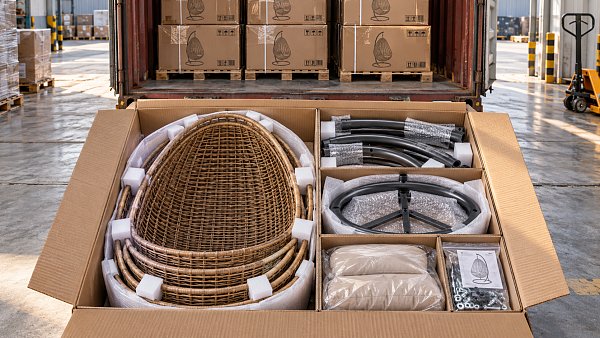
 Outdoor FurnitureHow packaging affects freight costs for wholesale wicker egg chairsExplore wicker egg chair wholesale packaging strategies to cut freight costs, improve container loading, and protect profits. Compare packing options for lower landed costs.Interior Sourcing LeadOct 19, 2026
 Supply Chain InsightsHow to use supply chain resilience metrics to assess recovery riskUse supply chain resilience metrics to compare recovery time, survival buffers, and financial exposure. Learn how to assess disruption risk and prioritize mitigation that protects service.Oct 18, 2026
 Commercial LEDHow to assess an LED street light exporter’s warranty coverageAssess an led street lights exporter beyond warranty length. Learn how to verify coverage, uncover hidden costs, and negotiate stronger terms before you buy.Commercial Tech EditorOct 17, 2026
 Carton & PlasticsWhen should you heat seal aluminum foil zipper bags for food storage?When should you heat seal aluminum foil zipper bags? Learn when stronger closures matter, how to protect dry foods, and which sealing checks help ensure reliable storage.Packaging Supply ExpertOct 16, 2026