Industry News
Curation by industry experts
Hot Articles
Popular Tags
China Adds New HS Codes for Bridal Formalwear Exports
On June 25, 2026, China began applying a revised tariff schedule that creates more specific customs classification for high-value bridal formalwear and adds new mandatory declaration fields for export filings. For exporters, manufacturers, buyers, and customs-facing supply chain teams, the change is worth close attention because it links product classification more directly to material disclosure, decorative elements, and environmental attributes, with potential effects on clearance timing, EPR-related product categorization, and ESPR fit assessments.

What the new customs filing requirement confirms
The revised edition of China’s import and export tariff schedule was formally put into use on June 25, 2026. Under Chapter 62, covering apparel and clothing accessories, two new HS subheadings were added: 6204.59.11 for women’s custom wedding gowns and 6204.59.12 for matching men’s formalwear.
For export declarations, three fields must now be submitted together with the filing: the percentage composition of fabric materials such as cotton, polyester, silk, and linen; whether the product contains metal decoration; and whether the product uses biodegradable environmentally friendly materials. The event summary provided also states that this change will directly affect overseas importers’ customs clearance timing, EPR compliance categorization, and adaptation assessment under the EU Ecodesign for Sustainable Products Regulation (ESPR).
Why the impact reaches beyond customs coding
Export filing now depends more heavily on product data accuracy
Exporters of bridal gowns and coordinated formalwear may be affected first because the filing process now requires more product-level information than a basic apparel declaration. The operational impact is likely to appear in classification review, internal document preparation, and coordination between merchandising, production, and customs declaration teams. What deserves closer attention is whether the declared material percentages, metal decoration status, and environmental material claims are supported consistently across commercial and technical documents.
Manufacturing and sourcing teams face tighter handoffs
For garment makers and sourcing teams, the change may shift pressure upstream into bill-of-materials control and supplier information collection. If a product uses mixed fabrics, trim, or decorative hardware, the export declaration process may depend on clearer input from fabric suppliers and accessory vendors. From an industry perspective, this makes procurement records, material specifications, and product configuration management more relevant to trade execution than before.
Import-side coordination may affect delivery rhythm
Overseas importers and channel-side buyers may also feel the effect because the summary explicitly links the new fields to customs clearance timing and compliance categorization. In practice, this means import-side planning may rely more on complete pre-shipment product information. Where buyers use EPR-related classification or assess ESPR alignment, the quality and consistency of export declarations may become more important in cross-border document review and delivery scheduling.
Compliance and testing service providers may see broader document checks
Analysis shows that certification, testing, and compliance support providers may be drawn into a wider verification role, even though no detailed enforcement procedure is provided in the input. Their relevance may increase where clients need supporting material descriptions, traceable composition records, or clearer evidence for environmental material claims connected to biodegradable content.
What companies should watch in current operations
Review product classification against the new subheadings
Companies handling bridal formalwear exports should first check whether the affected products fall within the newly added subheadings and whether current internal item mapping matches the revised customs structure. This is especially relevant for businesses managing customized or paired ceremonial apparel.
Align declaration fields with source documents
Businesses should pay close attention to whether fabric composition percentages, metal decoration status, and biodegradable material descriptions are captured in a way that can be used consistently across export declarations, product specifications, and transactional paperwork. The input does not provide a detailed enforcement standard, so this is better treated as a documentation readiness issue rather than a confirmed final practice model.
Watch compliance implications in downstream markets
Because the summary specifically mentions EPR categorization and ESPR adaptation assessment, export teams and overseas buyers should monitor how these newly required customs data points are referenced in downstream compliance review. Observably, the immediate issue is not the creation of a new foreign rule, but the stronger connection between export-side product disclosure and later-stage market compliance screening.
Prepare for possible execution differences in early implementation
It is more appropriate to understand this phase as an implemented rule change that may still require close observation in day-to-day execution. Companies should therefore watch for further official wording, practical declaration expectations, and any shifts in document requirements that may emerge as the revised tariff schedule is applied.
How this should be read by the market
Analysis shows that this is not merely a naming adjustment inside the tariff schedule. The addition of dedicated subheadings for high-value bridal formalwear, together with mandatory disclosure fields tied to materials, decoration, and environmental attributes, signals a more granular customs approach to product description. From an industry perspective, that matters because customs classification, sustainability-related product review, and delivery execution are becoming more tightly linked at the document level.
At the same time, the available facts do not yet establish how uniformly the new requirements will be interpreted in every transaction scenario. For that reason, this development is best seen as both a landed rule change and an execution signal that still deserves continued observation.
What the development means at this stage
At this stage, the most reasonable reading is that China’s export declaration framework for certain bridal and formalwear products has become more specific and more data-dependent. The immediate significance lies in classification precision and declaration completeness, while the broader commercial effect will depend on how customs practice, importer expectations, and sustainability-related compliance reviews interact after implementation. That makes this a concrete operational change, but not one that should yet be overstated beyond the confirmed facts.
Basis of this article and points for follow-up
This article is generated from the user-provided news title, event date, and event summary. For developments of this kind, relevant source types typically include official notices, releases from regulatory authorities, customs or trade administration information, industry association updates, standards-related documents, and reporting by authoritative media. A specific official source link was not provided in the input, so it still needs to be verified on an ongoing basis.
Further observation is still needed on later implementation details, practical compliance interpretation, possible changes in bidding or purchasing documents, market feedback, and how companies execute the new filing requirements in actual export operations.
Recommended News
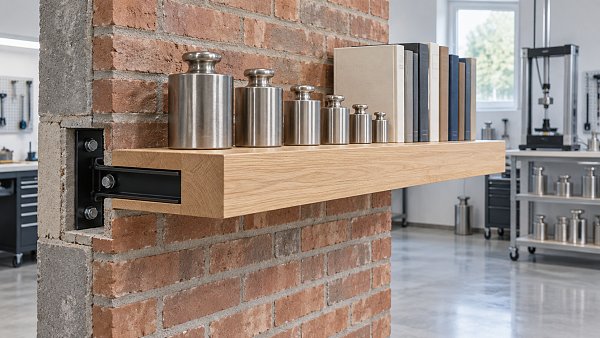
 Home DecorHow to compare floating wall shelves suppliers for consistent load capacityFloating wall shelves supplier comparison guide: evaluate load capacity, brackets, wall fixings, testing, and production consistency before you buy.Interior Sourcing LeadSep 23, 2026
 Office FurnitureWhen does a custom executive office desk justify its higher cost?Discover when a custom executive office desk is worth the investment—from tailored layouts and integrated technology to durable materials and long-term value.Interior Sourcing LeadSep 22, 2026
 Office FurnitureWhich high back ergonomic office chairs fit all-day desk work?High back ergonomic office chairs for all-day desk work: compare lumbar support, seat depth, armrests, recline, and materials to find a better fit.Interior Sourcing LeadSep 21, 2026
 Commercial LEDWhen does a 200W linear high bay provide enough light for a warehouse?Discover when a 200W linear high bay delivers sufficient warehouse lighting, with practical guidance on lumens, mounting height, aisle layout, and uniformity.Commercial Tech EditorSep 20, 2026