Industry News
Curation by industry experts
Hot Articles
Popular Tags
Bar Clamps Wholesale: Clamp Capacity and Rail Strength Explained
In the world of bar clamps wholesale, understanding clamp capacity and rail strength is essential for making smarter sourcing decisions. Whether you are comparing options for woodworking, metalworking, or industrial assembly, these two factors directly affect performance, durability, and buyer value. This guide explains how they work, what specifications matter most, and how procurement-focused buyers can evaluate products with greater confidence.
Why application context matters more than a simple spec sheet
For information-stage buyers, one of the biggest mistakes in bar clamps wholesale is assuming that a higher number always means a better product. In practice, clamp capacity and rail strength only become meaningful when matched to the actual job environment. A distributor serving cabinet workshops needs a very different product mix from an importer supplying heavy fabrication plants. The same bar clamp may perform well in one scenario and fail early in another.
That is why procurement teams should evaluate bar clamps wholesale through a scenario lens. Capacity determines the usable opening and throat reach needed to hold a workpiece. Rail strength determines how much force the bar can carry before flexing, twisting, or losing alignment. When these factors are misaligned with the intended use, buyers face higher return rates, damaged work, lower user satisfaction, and avoidable sourcing risk.
For B2B decision-makers, the goal is not merely to source clamps with attractive pricing. The goal is to identify the right balance of performance, durability, and market fit for each customer segment. This is especially relevant in global sourcing, where products may look similar across suppliers while differing significantly in steel grade, bar profile, jaw construction, and quality consistency.
Typical business scenarios where clamp capacity and rail strength drive outcomes
Most bar clamps wholesale inquiries fall into several recurring application categories. Each category places different pressure on the clamp design, which is why product selection should begin with end-use mapping rather than catalog filtering.
Scenario 1: Furniture and cabinet production needs long reach with stable pressure
In furniture and cabinet manufacturing, clamp capacity often becomes important because panels, frames, and carcass assemblies can be wide or awkwardly shaped. Buyers sourcing for these workshops should focus on usable opening length, throat depth, jaw alignment, and the clamp’s ability to maintain even pressure over time. Here, a generous nominal capacity is helpful only if the rail remains rigid during glue-up.
Rail strength is critical in this scenario because bar flex can cause uneven bonding, panel bowing, or misalignment at the corners. A stronger rail profile usually supports better force transfer and more reliable positioning. For bar clamps wholesale programs aimed at woodworking distributors, a practical assortment often includes mid-length and long-length models with reinforced rails and protective pads suited to finished surfaces.
Procurement teams should also ask whether the clamp was engineered for frequent tightening cycles or only occasional use. In professional shops, repetitive daily clamping can reveal weaknesses that are not obvious in a basic sample inspection.
Best-fit recommendation
Choose bar clamps with sufficient opening range for common panel sizes, but prioritize anti-flex rail design and consistent jaw parallelism over headline capacity alone.
Scenario 2: Light woodworking and retail channels value versatility over maximum force
Not every bar clamps wholesale program serves industrial users. For hardware stores, e-commerce sellers, and DIY-focused distributors, versatility is often more important than extreme rail strength. End users in this segment typically work on small boards, craft projects, shelving, and repair tasks. They want clamps that are easy to adjust, reasonably durable, and available in several common sizes.
In this setting, clamp capacity should match popular household and workshop applications. Oversized products may increase shipping cost and shelf burden without delivering better turnover. Rail strength still matters, but the sourcing priority becomes balanced value: enough rigidity to avoid frustration, without pushing the unit cost beyond what the channel can support.
For this audience, buyers should pay attention to packaging clarity, handle comfort, anti-slip pads, and whether the clamp can convert between spreader and clamping functions. These practical details often influence sales performance more than laboratory-style force claims.
Scenario 3: Metalworking and fabrication require stronger rails than many buyers expect
When bar clamps are used around metalworking benches, fixture setups, or fabrication support tasks, rail strength becomes the dominant concern. Even if the clamp is not replacing a dedicated welding clamp, the workpieces are heavier, surface contact is less forgiving, and side loading is more likely. In this environment, a weak rail can twist under pressure or lose jaw alignment, reducing holding reliability.
Clamp capacity remains relevant, but buyers should not confuse long reach with structural capability. A long clamp built with a thin or low-grade bar may create more risk than a shorter, stronger one. This is a common sourcing error in bar clamps wholesale, especially when comparing suppliers by appearance and price alone.
Ask suppliers for details such as bar dimensions, steel hardness, load testing approach, and failure thresholds. If the products are positioned for fabrication-adjacent use, request evidence that the rail maintains acceptable deflection limits under realistic clamping force.
Best-fit recommendation
For fabrication users, select shorter or medium-length models with heavy-duty rail construction, robust sliding heads, and dependable locking mechanisms, even if the nominal capacity range appears narrower.
Scenario 4: Assembly-line buyers need repeatability and durability more than broad SKU variety
Industrial assembly environments introduce a different decision logic. Here, clamps may be used repeatedly at the same workstation, by multiple operators, for standardized parts. The buying question is not simply whether the bar clamp can hold the workpiece once. It is whether it can hold it consistently across hundreds or thousands of cycles without drift, fatigue, or operator complaints.
In these scenarios, clamp capacity should closely match the part envelope to avoid wasted motion and ergonomic inefficiency. Rail strength matters because repetitive loading can expose long-term deformation that is not visible in initial inspection. Handle durability, sliding smoothness, and maintenance behavior become part of the sourcing equation.
For procurement managers evaluating bar clamps wholesale for OEM or assembly clients, it is wise to narrow the assortment to a few validated sizes rather than offering too many similar SKUs. Consistency usually creates more value than excessive range.
How to compare clamp capacity and rail strength across supplier offers
Supplier catalogs often present clamp capacity as a clean number, but rail strength may be implied rather than clearly stated. To make better bar clamps wholesale comparisons, buyers should build a simple review checklist that goes beyond surface specifications.
- Verify actual opening capacity under usable operating conditions, not only theoretical maximum span.
- Check rail cross-section, thickness, steel quality, and any reinforcement design.
- Confirm whether clamping force data is tested, estimated, or purely promotional.
- Review jaw material, pad durability, and the risk of surface marking in woodworking use.
- Assess consistency across samples, because uneven rail quality often leads to field complaints.
- Ask about warranty policy, replacement rates, and historical export markets.
Frequent misjudgments in bar clamps wholesale sourcing
A common misjudgment is selecting the longest available clamp range for every market segment. Larger capacity sounds attractive, but longer rails typically face greater deflection risk and may be unnecessary for many users. Another mistake is evaluating only clamp force claims without understanding whether the rail can maintain alignment under that force.
Buyers also sometimes overlook ergonomics and frequency of use. A clamp that performs well in occasional DIY settings may disappoint in professional workshops where daily cycle counts are much higher. Finally, some importers focus heavily on unit price while ignoring replacement cost, complaint handling, and brand damage caused by weak rail performance.
FAQ: practical questions information-stage buyers often ask
Is higher clamp capacity always better in bar clamps wholesale?
No. Higher capacity is only better when the target application truly requires it. Otherwise, it may add cost, shipping weight, and flex risk without improving user value.
What matters more, capacity or rail strength?
It depends on the scenario. Wide panel glue-ups need both, while fabrication and industrial use often place greater emphasis on rail strength and structural stability.
How can buyers verify rail strength when suppliers do not publish detailed data?
Request bar dimensions, steel specifications, test reports, and production consistency information. Sample comparison under realistic loading is often necessary before scaling a bar clamps wholesale order.
Final sourcing guidance for better-fit decisions
The smartest bar clamps wholesale strategy starts with segmenting your target use cases, not with chasing the lowest price or the biggest advertised specification. Furniture production, DIY retail, fabrication support, and industrial assembly each reward a different balance of clamp capacity and rail strength. By matching product architecture to actual application conditions, buyers can reduce sourcing risk, improve market fit, and build a stronger long-term assortment.
If you are still in the research phase, begin by mapping your top customer scenarios, defining the common workpiece sizes, and identifying how much structural rigidity the application really demands. That approach will help you compare bar clamps wholesale options with greater clarity and move toward supplier discussions based on performance relevance rather than generic claims.
Recommended News
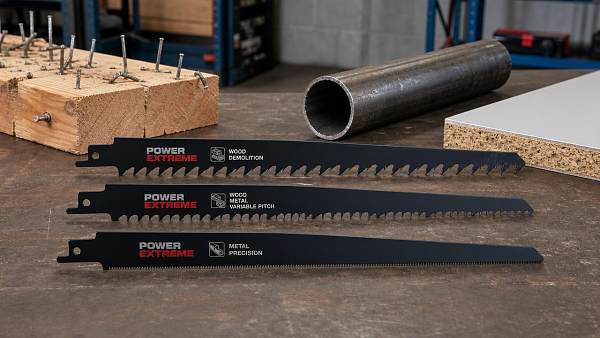
 Hand & Power ToolsReciprocating Saw Blades: Faster Demolition Starts With the Right Tooth DesignReciprocating saw blades work best when tooth design matches the job. Learn how to cut wood, metal, and mixed materials faster with better control, longer blade life, and fewer interruptions.Tooling & Hardware LeadMay 07, 2026
![]() Building HardwareStainless Steel Handrail Brackets for Coastal Projects: What to CheckStainless steel handrail brackets for coastal projects: learn what to check on grade, finish, fixings, and corrosion risk to avoid failures, ensure compliance, and choose with confidence.Tooling & Hardware LeadMay 07, 2026
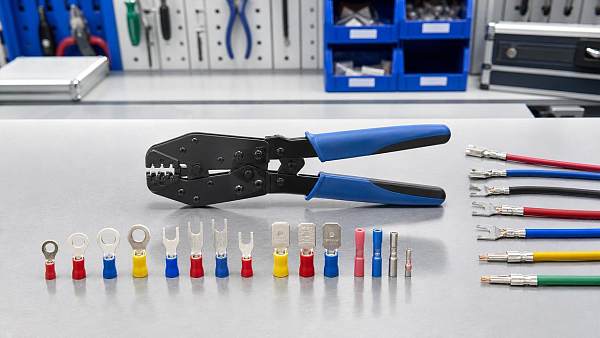
Building HardwareStainless Steel Handrail Brackets for Coastal Projects: What to CheckStainless steel handrail brackets for coastal projects: learn what to check on grade, finish, fixings, and corrosion risk to avoid failures, ensure compliance, and choose with confidence.Tooling & Hardware LeadMay 07, 2026 Hand & Power ToolsCrimping Tools Wholesale: How to Avoid Fit Issues Across TerminalsCrimping tools wholesale buyers: learn how to avoid terminal fit issues, compare key specs, and choose reliable suppliers to reduce rework, prevent failures, and improve repair consistency.Tooling & Hardware LeadMay 07, 2026
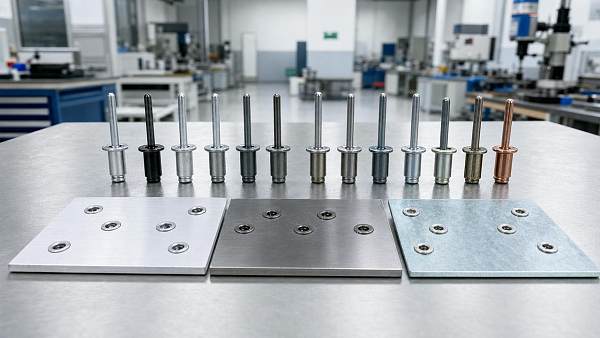
 Industrial FastenersBlind Rivets Wholesale: Material Matching Mistakes to AvoidBlind rivets wholesale buyers: avoid costly material matching mistakes. Learn how aluminum, steel, and stainless choices affect strength, corrosion, and long-term reliability.Tooling & Hardware LeadMay 07, 2026