Industry News
Curation by industry experts
Hot Articles
Popular Tags
Pneumatic Impact Wrench: Air Demand Mistakes That Hurt Performance
A pneumatic impact wrench can deliver powerful, reliable torque—but only when its air supply is matched correctly. Many operators focus on tool size and pressure while overlooking airflow demands, hose setup, and compressor limits. These common mistakes can reduce performance, increase wear, and slow down daily work. Understanding where air demand goes wrong is the first step to getting consistent results.
Why a checklist approach works better than guesswork
When a pneumatic impact wrench feels weak, inconsistent, or unusually loud, the tool itself is often blamed first. In many cases, however, the real problem is upstream: not enough air volume, too much pressure drop, poor fittings, excessive hose length, or a compressor that cannot keep up under load. A checklist helps operators verify the actual cause in the right order instead of replacing parts unnecessarily or increasing pressure in a way that creates more wear.
This matters in mixed industrial and workshop environments where productivity depends on repeatable fastening performance. A pneumatic impact wrench used for automotive repair, assembly, maintenance, tire service, hardware installation, or industrial fastening needs more than a correct PSI number. It needs stable CFM delivery at the tool, a proper hose path, and clean, dry air. The practical guide below focuses on what to check first, what standards to use for judgment, and how to correct the most common air demand mistakes.
First-check list: the 8 air supply points to confirm before blaming the tool
- Verify the pneumatic impact wrench air consumption rating in CFM or SCFM at the recommended operating pressure, not just the maximum pressure figure.
- Confirm the compressor can supply that airflow continuously, especially if other tools share the same line.
- Check the hose inside diameter. A hose that is too narrow can starve the wrench even when tank pressure appears normal.
- Measure total hose length from compressor to tool. Long runs increase pressure drop and reduce impact power.
- Inspect quick couplers, swivels, regulators, and fittings for internal restrictions that limit flow.
- Confirm regulator setting under working conditions, not only at idle. Pressure often falls once the trigger is pulled.
- Check for air leaks at connectors, hose damage, and worn seals that waste valuable flow.
- Make sure the air is clean and dry, with lubrication used according to the tool maker’s recommendations.
If operators review these eight points in sequence, they can usually identify why a pneumatic impact wrench underperforms without jumping to the wrong conclusion.
The most common air demand mistakes that hurt pneumatic impact wrench performance
1. Treating PSI as the only number that matters
Many users assume that if the compressor is set to the correct PSI, the pneumatic impact wrench should perform at full power. This is incomplete. Pressure is only part of the equation. The tool also needs enough airflow volume. A wrench may show 90 PSI at the tank or regulator, yet still deliver poor torque because the airflow collapses the moment the trigger is engaged. In practical terms, low CFM at the tool often feels like slow hammering, weak breakaway force, and longer fastening time.
2. Using an undersized hose
Hose diameter is one of the most overlooked restrictions. Operators may connect a high-demand pneumatic impact wrench to a small hose originally intended for blow guns or lighter air tools. The result is a bottleneck. Even a quality wrench cannot deliver rated output if airflow is choked before it reaches the inlet. For high-torque tools or longer runs, stepping up to a larger inside diameter often produces an immediate improvement.
3. Ignoring hose length and routing
Long hoses, coiled hoses, extra extensions, and unnecessary loops all add resistance. Operators may keep adding hose sections for convenience, but each added section can reduce effective flow. The pneumatic impact wrench then loses consistency, especially during repeated use. A shorter, straighter path with fewer joints is usually more effective than simply increasing the regulator setting.
4. Overlooking restrictive fittings and couplers
The air system can look acceptable from the outside while hidden restrictions exist inside quick-connect couplers, swivels, mini regulators, and adapters. These narrow passages can throttle the airflow enough to reduce tool impact energy. A pneumatic impact wrench that performs well on one workstation but poorly on another often reveals a fitting issue rather than a tool defect.
5. Relying on compressor tank pressure instead of real delivered air
A full tank can create false confidence. What matters is the compressor’s ability to sustain the required airflow while the pneumatic impact wrench is operating. A small compressor may handle short bursts but fail during continuous fastening, wheel service, or production use. If pressure drops quickly after several trigger pulls, the compressor may be undersized for the application.
6. Sharing one line with multiple air tools without recalculating demand
In busy workshops and industrial settings, several tools often run from the same system. If one operator uses a sander, another uses a blow gun, and a third uses a pneumatic impact wrench, available airflow can become unstable. This causes unpredictable torque output and slower cycles. Shared air systems should be evaluated based on simultaneous demand, not single-tool nameplate values.
7. Running dirty, wet, or poorly lubricated air
Air quality affects both immediate performance and tool life. Moisture can cause internal corrosion, contamination can wear moving parts, and incorrect lubrication can increase friction. A pneumatic impact wrench exposed to poor air quality may seem weak even when supply volume is adequate. Consistent maintenance of filters, drains, and lubricators is essential for stable output.
Quick judgment table: what symptom usually points to what problem
Scenario-based checks: what operators should prioritize in different work settings
Automotive and tire service
In tire bays and repair shops, a pneumatic impact wrench is often used in repeated short bursts. The key risk is assuming a small compressor is enough because the trigger is not held continuously. In reality, repeated wheel work can create a high average demand. Operators should prioritize hose diameter, quick coupler flow rating, and compressor recovery time. If lug nuts take progressively longer to remove, the air system should be checked before the wrench is replaced.
Maintenance and field service
Mobile work often involves long hoses, temporary setups, and multiple adapters. Here, the main risks are pressure drop and unnoticed leaks. A pneumatic impact wrench used in field conditions should have the shortest practical hose route and minimal accessory restrictions. Portable compressor capacity must also be reviewed against actual tool demand, not marketing labels alone.
Production or assembly environments
In repetitive fastening tasks, consistency matters as much as raw torque. Operators and supervisors should monitor line sharing, regulator stability, moisture control, and maintenance intervals. A pneumatic impact wrench that receives unstable airflow can introduce cycle variation, fastening inconsistency, and avoidable downtime.
Risk reminders: small oversights that create big performance losses
- Do not increase pressure above tool recommendations just to compensate for low airflow. This may increase wear without solving the core problem.
- Do not judge system adequacy by static gauge readings alone. Measure pressure while the pneumatic impact wrench is actually running.
- Do not mix high-demand and low-demand tools on the same line without reviewing simultaneous use.
- Do not assume every coupler is full-flow. Connection style and internal bore size matter.
- Do not skip routine draining and filter service. Moisture problems often build slowly and then appear as tool weakness.
Practical execution steps to restore full pneumatic impact wrench performance
- Read the tool specification for required operating pressure and air consumption.
- Measure pressure at or near the pneumatic impact wrench inlet during use, not at the tank only.
- Compare hose size and total length against the tool’s demand and upgrade if needed.
- Replace restrictive or worn couplers, swivels, and fittings with suitable flow-rated components.
- Check compressor output against real operating conditions, including other tools on the system.
- Inspect for leaks, drain moisture, clean filters, and apply lubrication as recommended.
- Retest the pneumatic impact wrench after each correction so the main cause is clearly identified.
FAQ: fast answers operators often need
Why does my pneumatic impact wrench have air pressure but low torque?
The most common reason is insufficient airflow volume at the tool. Narrow hoses, long runs, restrictive fittings, or a compressor with limited sustained CFM can all reduce torque even when pressure looks acceptable.
Can a bigger compressor improve impact wrench performance?
Yes, if the current compressor cannot maintain the required airflow under load. However, a larger compressor will not fully solve the issue if the hose, couplers, or regulator still restrict the air path.
How do I know if the hose is too small?
If the pneumatic impact wrench performs noticeably better with a shorter or larger hose, or if pressure drops significantly while the trigger is pulled, the original hose may be undersized for the demand.
Final checklist and next-step guidance
For most operators, the fastest way to improve a pneumatic impact wrench is to verify delivered airflow before changing the tool. Start with the core checklist: tool air requirement, compressor capacity, hose diameter, hose length, fitting restriction, pressure under load, leaks, and air quality. These checks prevent unnecessary downtime and help the wrench deliver the torque, speed, and durability it was designed for.
If you need to confirm setup suitability for a new workstation, a sourcing decision, or a larger equipment upgrade, prepare the following information first: wrench model, required CFM and PSI, hose size and run length, number of tools sharing the line, compressor output, work cycle, and current performance symptoms. With those details, it becomes much easier to evaluate compatibility, estimate improvement options, and choose a reliable pneumatic impact wrench air supply solution with confidence.
Recommended News
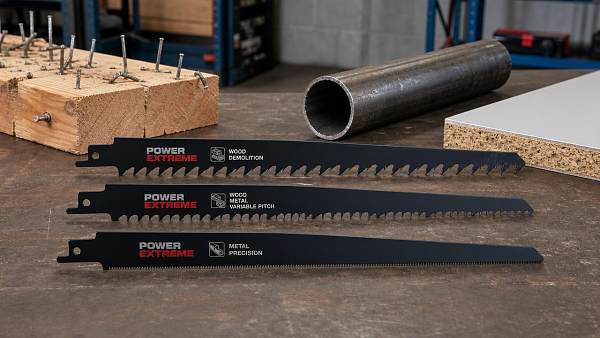
 Hand & Power ToolsReciprocating Saw Blades: Faster Demolition Starts With the Right Tooth DesignReciprocating saw blades work best when tooth design matches the job. Learn how to cut wood, metal, and mixed materials faster with better control, longer blade life, and fewer interruptions.Tooling & Hardware LeadMay 07, 2026
![]() Building HardwareStainless Steel Handrail Brackets for Coastal Projects: What to CheckStainless steel handrail brackets for coastal projects: learn what to check on grade, finish, fixings, and corrosion risk to avoid failures, ensure compliance, and choose with confidence.Tooling & Hardware LeadMay 07, 2026
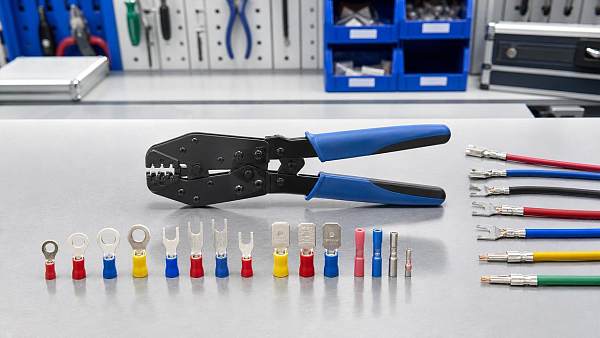
Building HardwareStainless Steel Handrail Brackets for Coastal Projects: What to CheckStainless steel handrail brackets for coastal projects: learn what to check on grade, finish, fixings, and corrosion risk to avoid failures, ensure compliance, and choose with confidence.Tooling & Hardware LeadMay 07, 2026 Hand & Power ToolsCrimping Tools Wholesale: How to Avoid Fit Issues Across TerminalsCrimping tools wholesale buyers: learn how to avoid terminal fit issues, compare key specs, and choose reliable suppliers to reduce rework, prevent failures, and improve repair consistency.Tooling & Hardware LeadMay 07, 2026
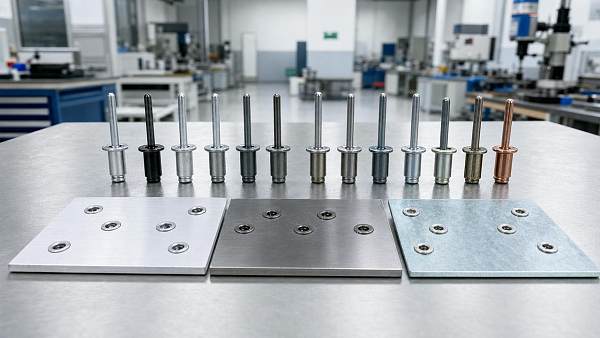
 Industrial FastenersBlind Rivets Wholesale: Material Matching Mistakes to AvoidBlind rivets wholesale buyers: avoid costly material matching mistakes. Learn how aluminum, steel, and stainless choices affect strength, corrosion, and long-term reliability.Tooling & Hardware LeadMay 07, 2026