Industry News
Curation by industry experts
Hot Articles
Popular Tags
Heavy Duty Gate Hinges: Load Ratings That Actually Matter in Use
When specifying heavy duty gate hinges, published load ratings alone rarely tell the full story. For technical evaluators, actual performance depends on gate width, hinge spacing, mounting conditions, cycle frequency, and environmental exposure. This article focuses on the load factors that truly matter in use, helping you assess hinge suitability with greater accuracy, lower risk, and better long-term reliability.
Why application context changes how heavy duty gate hinges should be evaluated
In procurement and technical review, the most common mistake is to compare heavy duty gate hinges by a single catalog number: maximum load per pair. In practice, that figure is only meaningful when the gate geometry, installation method, and operating pattern are close to the manufacturer’s test assumptions. A 400 kg gate on a short, rigid industrial access door behaves very differently from a 400 kg perimeter gate that is wide, wind-exposed, and opened dozens of times per day.
For technical evaluators, the useful question is not simply, “What is the hinge rated for?” but rather, “Under which use scenario will this hinge keep alignment, resist wear, and maintain safe operation over time?” That shift in thinking matters across hardware sourcing, facility engineering, and project specification. It also reduces downstream issues such as gate sag, weld cracking, premature bearing failure, excessive opening force, and repeated maintenance calls.
In other words, heavy duty gate hinges should be assessed as part of a working system: gate leaf, frame, post, fastener or weld interface, opening angle, automation load, and exposure conditions. The more demanding the use case, the less reliable a simple static load rating becomes as a decision tool.
The load factors that actually matter in use
Before comparing application scenarios, it helps to define the factors that create real hinge stress. These are the variables technical teams should verify first when selecting heavy duty gate hinges for commercial, industrial, agricultural, or infrastructure projects.
- Gate weight: Total mass is important, but it is only the starting point.
- Gate width and center of gravity: A wider leaf creates higher torque on the hinge set, even at the same weight.
- Hinge spacing: Greater vertical spacing can improve load distribution, while poor spacing amplifies stress.
- Mounting condition: Weld quality, post stiffness, plate thickness, and anchor performance often limit the system before the hinge body does.
- Duty cycle: A gate opened twice a day and one cycled hundreds of times a day do not need the same bearing design.
- Dynamic loads: Slamming, operator acceleration, vehicle impact risk, and wind gusts add transient forces beyond static rating values.
- Environmental exposure: Corrosion, dust, washdown, salt air, and temperature swings can reduce service life sharply.
- Maintenance access: Some heavy duty gate hinges perform well only when regularly lubricated and adjusted.
For technical evaluation, a hinge that looks oversized on paper may still be the wrong choice if it lacks corrosion resistance, sealed bearings, alignment tolerance, or compatible mounting geometry. Conversely, a lower published load rating may be acceptable in a compact, sheltered, low-cycle application with robust support structure.
Scenario comparison: where rating numbers mislead most often
The table below highlights how the same nominal load can translate into very different hinge requirements depending on actual use. This is where heavy duty gate hinges should be judged by application fit, not by catalog ranking alone.
Scenario 1: Industrial yard and logistics gates
This is one of the most demanding use cases for heavy duty gate hinges because the gate may be large, exposed, and opened many times during each shift. Technical evaluators in factories, warehouses, and distribution centers should pay special attention to bending moment rather than mass alone. A long gate leaf creates leverage that accelerates hinge pin wear and can distort weaker mounting plates.
In this scenario, heavy duty gate hinges should be assessed alongside the post section, reinforcement method, and vehicle protection plan. If forklifts or trucks operate nearby, accidental impact tolerance becomes relevant. If the gate is manually operated, friction level and starting force also matter because poor ergonomics often lead users to slam the gate, increasing dynamic stress.
Best-fit designs often include greasable bearings, substantial hinge barrels, reinforced weld zones, and clear guidance on maximum gate width at the stated load. If the supplier only provides a weight rating but no width or cycle guidance, that is a technical risk signal.
Scenario 2: Security and automated perimeter gates
Perimeter security gates commonly use heavy panels, privacy infills, or anti-climb designs. Once automation is added, hinge demands increase further. The actuator imposes repeated acceleration and deceleration loads, and any misalignment can transfer stress into both the hinge set and the operator arm. In these conditions, heavy duty gate hinges must be evaluated for dynamic cycling, not just static support.
Technical teams should confirm whether the hinge design is suitable for automated gates, including opening angle consistency, backlash control, and long-term alignment retention. If the gate closes against locks, access control hardware, or safety edges, small hinge deflection over time can create system-level failures. A hinge that survives the weight but loses positional accuracy is still a poor selection.
For these projects, ask suppliers for cycle expectations, evidence of field use in motorized systems, and guidance for gate stop integration. The most reliable heavy duty gate hinges in security applications are usually those backed by application-specific testing and installation details, not only by load claims.
Scenario 3: Agricultural and rural access gates
Agricultural settings present a different profile. Duty frequency may be moderate, but conditions are harsh: mud, dust, livestock impact, uneven posts, and limited maintenance. Here, technical evaluators should not over-prioritize polished specifications while ignoring service reality. Heavy duty gate hinges that require ideal alignment and frequent lubrication may underperform in the field.
In this scenario, practical durability often means simpler, tougher hardware with good contamination tolerance. Corrosion-resistant coatings, galvanized or stainless options, and grease paths that remain usable after exposure are especially valuable. The gate may also experience off-axis loads from animals leaning on it or from partial opening under rough handling.
A useful rule for agricultural applications is to evaluate heavy duty gate hinges by failure tolerance: if the post shifts slightly, if maintenance is delayed, or if the gate is handled roughly, will the hinge still operate safely? That question often matters more than top-line load capacity.
Scenario 4: Commercial and architectural gates
Commercial entrances, residential complexes, hospitality properties, and architectural enclosures often combine aesthetic expectations with moderate to high service demands. These gates may not be the heaviest in the market, but they are frequently wide, finish-sensitive, and expected to remain visually aligned. In such projects, hinge selection affects both performance and appearance.
Technical evaluators should consider visible hardware quality, surface finish life, smoothness of motion, and resistance to sag that would compromise reveal lines or latch engagement. Decorative metalwork can distribute weight unevenly, so the center of gravity should be checked rather than assumed. Heavy duty gate hinges for this scenario should support stable operation without creating maintenance-intensive adjustment issues for property teams.
This is also a case where over-specification can hurt if it introduces bulky hardware that conflicts with design intent. The right choice balances mechanical reserve, appearance, and installation precision.
How to compare heavy duty gate hinges by scenario instead of by brochure claims
A disciplined review process helps technical teams reduce sourcing risk. Instead of asking only for “heavy duty gate hinges rated above X kilograms,” compare candidates using scenario-relevant criteria.
Common misjudgments technical evaluators should avoid
- Using gate weight as the only filter: Width, operator force, and wind can be more decisive than mass.
- Ignoring support structure: Heavy duty gate hinges cannot compensate for weak posts, thin frames, or poor weld preparation.
- Assuming manual and automated gates need the same hinge: Automation changes the load profile significantly.
- Overlooking maintenance reality: A technically advanced hinge may underperform if the site will not lubricate or inspect it.
- Failing to verify environmental compatibility: Coastal, chemical, and washdown conditions can shorten hardware life dramatically.
Practical selection guidance for project and sourcing teams
When qualifying heavy duty gate hinges, build a short application profile before requesting quotations. Include gate weight, width, height, frame section, hinge spacing, opening frequency, manual or powered operation, environment, and target service life. This gives suppliers enough context to recommend a real solution instead of a generic rating match.
For multi-site buyers or OEMs, it is also useful to split specifications by scenario rather than trying to standardize a single hinge across every gate type. A warehouse service gate, a rural access gate, and an automated security gate may all need heavy duty gate hinges, but their ideal material, bearing style, and mounting details can differ substantially. Scenario-based specification usually delivers better lifecycle value than one-size-fits-all procurement.
If uncertainty remains, ask for installation drawings, field case references, or sample evaluation under representative loading conditions. Technical confidence comes from fit-for-use evidence, not from isolated catalog numbers.
Final takeaway: choose for use conditions, not headline ratings
The best heavy duty gate hinges are not simply those with the highest advertised load rating. They are the ones that match the real application: gate geometry, support strength, cycling pattern, automation, environment, and maintenance reality. For technical evaluators, the most reliable decisions come from comparing use scenarios and identifying what truly drives stress in each one.
If your team is reviewing suppliers or preparing a sourcing specification, start with the operating context and then validate the hinge rating against that context. That approach lowers failure risk, improves long-term gate performance, and supports smarter B2B purchasing decisions in hardware and access system projects.
Recommended News
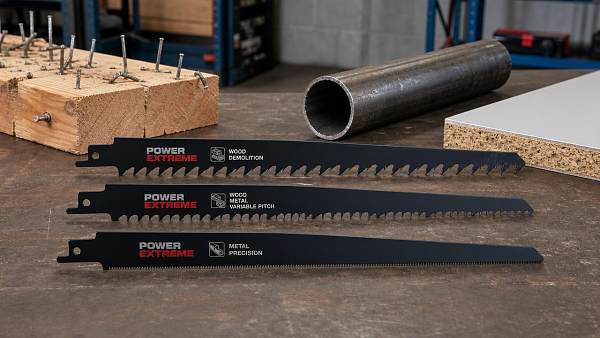
 Hand & Power ToolsReciprocating Saw Blades: Faster Demolition Starts With the Right Tooth DesignReciprocating saw blades work best when tooth design matches the job. Learn how to cut wood, metal, and mixed materials faster with better control, longer blade life, and fewer interruptions.Tooling & Hardware LeadMay 07, 2026
![]() Building HardwareStainless Steel Handrail Brackets for Coastal Projects: What to CheckStainless steel handrail brackets for coastal projects: learn what to check on grade, finish, fixings, and corrosion risk to avoid failures, ensure compliance, and choose with confidence.Tooling & Hardware LeadMay 07, 2026
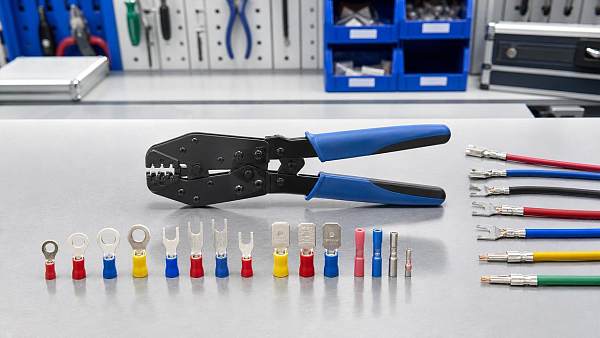
Building HardwareStainless Steel Handrail Brackets for Coastal Projects: What to CheckStainless steel handrail brackets for coastal projects: learn what to check on grade, finish, fixings, and corrosion risk to avoid failures, ensure compliance, and choose with confidence.Tooling & Hardware LeadMay 07, 2026 Hand & Power ToolsCrimping Tools Wholesale: How to Avoid Fit Issues Across TerminalsCrimping tools wholesale buyers: learn how to avoid terminal fit issues, compare key specs, and choose reliable suppliers to reduce rework, prevent failures, and improve repair consistency.Tooling & Hardware LeadMay 07, 2026
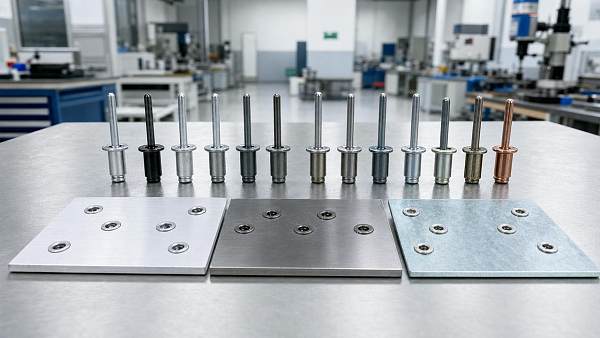
 Industrial FastenersBlind Rivets Wholesale: Material Matching Mistakes to AvoidBlind rivets wholesale buyers: avoid costly material matching mistakes. Learn how aluminum, steel, and stainless choices affect strength, corrosion, and long-term reliability.Tooling & Hardware LeadMay 07, 2026