Industry News
Curation by industry experts
Hot Articles
Popular Tags
Digital Laser Level Accuracy: What to Check Before You Trust the Reading
Before approving measurements on site or in inspection workflows, quality control and safety teams need to know whether a digital laser level is truly delivering reliable data. Small errors in calibration, surface conditions, mounting stability, or environmental interference can lead to costly rework and compliance risks. This guide outlines the key accuracy checks to make before you trust the reading.
What a digital laser level does and why accuracy matters
A digital laser level is a measurement tool designed to project horizontal, vertical, or cross-line references while also reporting angle, slope, or alignment data through digital sensors. In practical terms, it helps teams confirm whether an installed component, structural element, machine base, guardrail, lighting fixture, shelf system, or display line is truly level or plumb. For quality control personnel, the tool supports dimensional verification and installation acceptance. For safety managers, it helps reduce hazards caused by misalignment, unstable mounting, poor load distribution, or noncompliant installation.
Accuracy is not only a product specification printed on a data sheet. It is the real-world ability of the digital laser level to produce trustworthy readings under field conditions. A tool may be rated to tight tolerances in laboratory settings yet still produce unreliable results on a dusty floor, vibrating platform, reflective metal surface, or poorly mounted tripod. That gap between nominal accuracy and usable accuracy is exactly where inspection errors begin.
Across light manufacturing, warehousing, commercial fit-out, facility maintenance, and industrial assembly, small deviations can multiply quickly. A few millimeters of error in one station can affect machine alignment, packaging line performance, furniture assembly consistency, display installation appearance, or fastener stress distribution. In safety-critical situations, an incorrect reading may contribute to uneven support, tripping exposure, weak guarding, or incorrect installation of suspended or mounted equipment.
Why the industry pays close attention to verification before use
Modern operations depend on faster installation cycles, tighter tolerance expectations, and stronger audit trails. That means teams can no longer treat measurement devices as automatically reliable just because they power on and display a value. Buyers, inspectors, contractors, and compliance officers increasingly need documented evidence that a digital laser level was checked before key measurements were approved.
This trend is especially relevant in environments where multiple trades interact. For example, a lighting installer may rely on level lines for fixture runs, while a packaging equipment technician may use the same reference zone for machine setup. If the digital laser level is inaccurate, downstream teams may spend hours correcting problems that originated from one unchecked tool. In global sourcing and cross-border production networks, where rework affects schedules, freight, and acceptance criteria, confidence in measurement instruments becomes part of wider supply chain resilience.
From an E-E-A-T perspective, organizations that maintain strong verification practices also demonstrate operational maturity. They show that measurement decisions are evidence-based, repeatable, and aligned with internal quality systems rather than informal judgment.
Core factors that influence digital laser level accuracy
Before trusting a reading, it helps to understand what typically changes the performance of a digital laser level. Accuracy is affected by both the instrument itself and the conditions around it. The most common factors include calibration status, sensor health, leveling mechanism integrity, beam visibility, mounting stability, battery condition, environmental temperature, vibration, surface reflectivity, and operator handling.
Another important factor is range. Many tools perform well at short distance but show greater deviation as the beam extends across a larger work area. A reading that appears acceptable at two meters may not remain acceptable at ten or twenty meters. Quality control teams should therefore evaluate the digital laser level at the actual working distance, not only at bench-test distance.
Industry overview of common accuracy risks
What to check before you trust the reading
For QC and safety workflows, a structured pre-use check is more useful than a general visual inspection. The goal is to confirm that the digital laser level is suitable for the task, stable in the current environment, and able to produce repeatable results.
1. Confirm calibration status and traceability
Start with documentation. Check the calibration label, due date, serial number, and any service record tied to the tool. If your site works under ISO-based quality systems, GMP-related controls, contractor compliance programs, or internal metrology rules, confirm that the digital laser level is within the approved calibration interval. If the tool has been dropped or transported between sites without protective control, treat it as suspect until verified.
2. Run a simple field verification on a known reference
Do not rely only on the certificate. Use a known reference line, benchmark surface, or back-check method. A common approach is to project a horizontal line to a wall target, rotate the instrument 180 degrees, and compare the projected position. For vertical checks, compare against a known plumb feature. If the difference exceeds site tolerance, the reading should not be trusted. This step is critical because it reflects real operating conditions, not just lab performance.
3. Check mounting rigidity and base condition
A digital laser level is only as stable as the support beneath it. Inspect the tripod, magnetic bracket, wall mount, or floor base for looseness, wear, contamination, or movement. Watch for springy platforms, cable trays, mezzanines, forklifts passing nearby, or machines generating vibration. If the beam shifts when the area is disturbed, your setup is not stable enough for acceptance measurements.
4. Evaluate the measurement surface and target quality
Surface condition matters more than many users realize. Highly reflective metal, glossy coatings, transparent panels, textured fabric backdrops, dusty concrete, and bright display materials can distort beam visibility or encourage inaccurate target marking. If the workpiece or environment creates a weak or scattered beam, use a proper target plate, receiver, or matte reference point. Quality teams should note whether the visible line is crisp and repeatable rather than broad or fuzzy.
5. Review battery health and warm-up behavior
Low battery voltage can affect beam strength and electronics stability in some devices. Confirm charge level before inspection begins, and where relevant allow the digital laser level to stabilize after moving from storage to the work area. Extreme temperature changes may require a short acclimation period before readings become consistent.
6. Test repeatability, not just a single reading
A trustworthy instrument should deliver the same result when the same condition is measured repeatedly. Take multiple readings from the same setup, then re-seat the tool and repeat. If the displayed angle, line position, or level result changes meaningfully without any process change, the issue may be internal drift, unstable mounting, or operator inconsistency. Repeatability is often the fastest way to detect a questionable digital laser level in the field.
Where these checks create the most value
The value of checking a digital laser level becomes most visible in tasks where acceptance criteria, safety margins, and rework costs are tightly linked. This applies across multiple sectors covered by global sourcing and manufacturing networks.
Typical application categories
A practical decision framework for quality and safety teams
To decide whether a digital laser level reading is trustworthy, it helps to classify the situation into three levels: routine, controlled-critical, and high-risk. In a routine task, such as general layout marking, a quick calibration check and repeatability test may be enough. In a controlled-critical task, such as equipment alignment or suspended fixture positioning, teams should add reference verification, environmental review, and documented sign-off. In a high-risk task, such as installations affecting guarding, load-bearing supports, or compliance-sensitive systems, measurement confirmation should be independent and ideally cross-checked with a second method or second instrument.
This framework prevents overconfidence. It also aligns resource use with risk. Not every job needs the same level of control, but every approved reading should match the consequence of failure.
Common warning signs that the reading should not be accepted
Certain warning signs should immediately trigger a hold on acceptance. These include a beam that drifts after setup, inconsistent readings after repositioning, damaged housing near the compensator area, unstable tripod locks, expired calibration, unexplained deviation from known references, poor line visibility in bright conditions, and readings that conflict with physical fit or visual alignment. If the digital laser level appears correct but installed components still look obviously off, trust the discrepancy and investigate instead of forcing the measurement to fit the schedule.
Implementation tips for stronger control and documentation
Organizations can improve trust in measurement results by standardizing how a digital laser level is introduced into workflows. Useful controls include a pre-use checklist, a documented field verification method, defined environmental limits, role-based operator training, and a clear rule for what happens when tolerance is exceeded. Many teams also benefit from storing verification records alongside inspection reports, maintenance logs, or handover packages. That way, if a dispute arises later, the organization can show not just what was measured, but why the result was credible at the time.
For companies operating in international trade or serving demanding export markets, this discipline adds more than internal order. It supports supplier credibility, reduces rejection risk, and strengthens the trust signals buyers look for when evaluating operational capability.
Final takeaway
A digital laser level can be a highly effective tool, but no reading should be trusted by default. Accuracy depends on calibration, setup, environment, repeatability, and task risk. For quality control and safety management teams, the best approach is simple: verify the tool, verify the condition, and verify the result before approving the work. In environments where precision, compliance, and operational continuity matter, that extra discipline is not a delay. It is a control measure that protects quality outcomes, worker safety, and business performance.
Recommended News
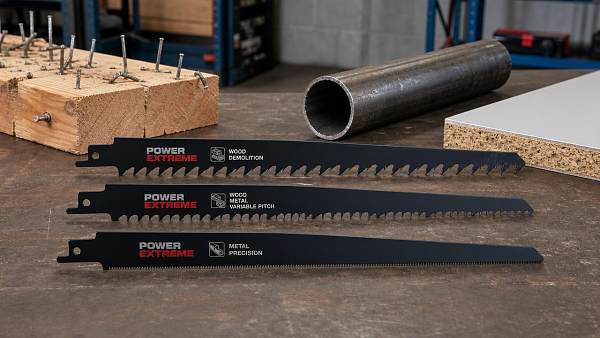
 Hand & Power ToolsReciprocating Saw Blades: Faster Demolition Starts With the Right Tooth DesignReciprocating saw blades work best when tooth design matches the job. Learn how to cut wood, metal, and mixed materials faster with better control, longer blade life, and fewer interruptions.Tooling & Hardware LeadMay 07, 2026
![]() Building HardwareStainless Steel Handrail Brackets for Coastal Projects: What to CheckStainless steel handrail brackets for coastal projects: learn what to check on grade, finish, fixings, and corrosion risk to avoid failures, ensure compliance, and choose with confidence.Tooling & Hardware LeadMay 07, 2026
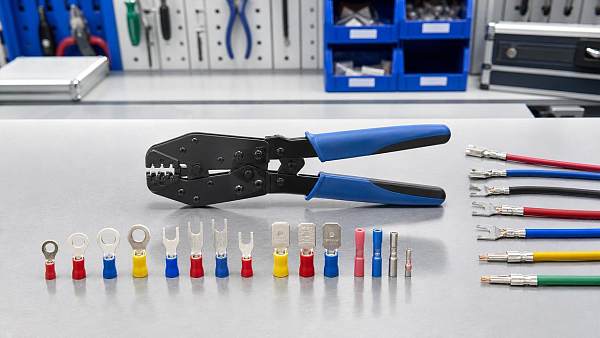
Building HardwareStainless Steel Handrail Brackets for Coastal Projects: What to CheckStainless steel handrail brackets for coastal projects: learn what to check on grade, finish, fixings, and corrosion risk to avoid failures, ensure compliance, and choose with confidence.Tooling & Hardware LeadMay 07, 2026 Hand & Power ToolsCrimping Tools Wholesale: How to Avoid Fit Issues Across TerminalsCrimping tools wholesale buyers: learn how to avoid terminal fit issues, compare key specs, and choose reliable suppliers to reduce rework, prevent failures, and improve repair consistency.Tooling & Hardware LeadMay 07, 2026
 Industrial FastenersBlind Rivets Wholesale: Material Matching Mistakes to AvoidBlind rivets wholesale buyers: avoid costly material matching mistakes. Learn how aluminum, steel, and stainless choices affect strength, corrosion, and long-term reliability.Tooling & Hardware LeadMay 07, 2026