Industry News
Curation by industry experts
Hot Articles
Popular Tags
Manufacturing Standards Guide: Key Compliance Checks and Common Gaps
Manufacturing standards are not the same thing as certification
A useful manufacturing standards guide starts by clearing up one of the most common misunderstandings on the factory floor: passing an audit and running a compliant operation are related, but they are not interchangeable. Standards define the expected condition of a system, product, process, or workplace. Certification is only one way of showing that those expectations have been assessed against a framework such as ISO 9001 for quality management, ISO 14001 for environmental management, or ISO 45001 for occupational health and safety. In practice, most quality and safety failures do not begin with the absence of a certificate. They begin with weak control of routine details that standards are supposed to discipline.
That distinction matters because many production teams still treat compliance as a document exercise led by QA shortly before a customer visit. Experienced managers know the opposite is true. The standards that actually protect output, shipment schedules, and worker safety are built into purchasing controls, incoming inspection, equipment maintenance, process validation, labeling, chemical handling, training records, and change management. When those controls drift, the paperwork usually looks fine until an external audit, product complaint, or incident forces a closer look.
For companies operating across textiles, packaging, hardware, lighting, furniture, or other light manufacturing categories, the pressure is even higher. Buyers are no longer satisfied with a generic statement that a supplier is “compliant.” They want traceability, evidence of process discipline, product safety alignment with destination-market rules, and a credible way to manage corrective action when something goes wrong.
What a standards check is really examining
When auditors or customer technical teams assess manufacturing controls, they are usually testing a few basic questions.
Can the factory prove what was made, from which materials, under which conditions, by trained personnel, using controlled equipment, against an approved specification? And if a nonconformity is found, can it isolate the affected lot and prevent recurrence?
Those questions sound simple, but they cut across nearly every department. Material traceability, for example, is not just a warehouse concern. It depends on approved supplier lists, receiving inspection criteria, lot identification, storage segregation, ERP or manual record discipline, and production travelers that stay accurate after line changes. The same goes for safety compliance. A factory may have visible PPE signage, but that alone does not demonstrate conformity with an occupational health and safety management system if hazard identification, incident reporting, machine guarding review, and contractor control are inconsistent.
The checks that matter most
Across sectors, the most reliable compliance checks tend to cluster around a few control points.
None of these checks are exotic. That is exactly why they are so often underestimated. Most audit failures do not come from rare technical scenarios; they come from ordinary controls that were assumed to be stable.
Where common gaps usually appear
The first weak point is usually the interface between systems. A purchasing team approves a material substitution because supply is tight, but engineering change control is not updated in time. Production runs to the new input, QC inspects against the old standard, and shipping releases product with mixed documentation. That is not just an administrative issue. In regulated or customer-specific environments, undocumented substitutions can trigger nonconformance even when the product appears functional.
Another repeated gap is overreliance on final inspection. Many factories still operate as if quality can be sorted out at the end of the line. Standards-based systems do not assume that. They expect process assurance upstream: validated settings, controlled work sequence, clear acceptance criteria, and evidence that abnormalities are escalated before large volumes are affected. Final inspection is useful, but it is a weak substitute for process control when variation is already built into production.
Record integrity is another problem area. A form may be complete, signed, and archived, yet still fail a meaningful compliance review if timestamps are inconsistent, inspection values appear copied, or rework decisions are not traceable to disposition authority. In other words, records are not there just to exist. They have to tell a believable operational story.
Safety managers see a similar pattern. A site can look orderly during a walkthrough and still carry material risk if near-miss reporting is weak, temporary fixes remain in place, or machine modifications are made without reassessing hazards. Standards such as ISO 45001 push organizations to treat safety as a managed system, not a visual condition.
Why sector context changes the compliance focus
A manufacturing standards guide has to acknowledge that “compliance” means different things depending on the product category and export destination. In textiles, restricted substances, fiber composition accuracy, and test method alignment may sit close to the center of buyer scrutiny. In packaging, migration limits, food-contact suitability, print consistency, and labeling controls may matter more. Hardware and fastener production tends to draw attention to dimensional control, plating consistency, mechanical properties, and batch traceability. Lighting products often face a heavier product safety and electrical compliance burden, which can extend beyond factory systems into market-specific conformity requirements. Furniture can introduce issues around material declarations, structural testing, flammability in some markets, and finish-related chemical controls.
The point is not that every factory needs every standard. It is that a credible compliance program starts with the standards and regulations that are actually triggered by the product, process, and destination market. Many internal teams lose time preparing for frameworks that are visible in sales materials but less relevant to their operational risk than basic specification control, product testing alignment, or supplier qualification.
A certificate does not close the audit question
This is another area where buyers and factories often talk past each other. A supplier may present ISO certificates, social audit reports, and test summaries, expecting that to settle the matter. A technically mature buyer will still ask how nonconforming product is contained, how CAPA is verified, how subcontractors are controlled, and how the site manages traceability under production pressure. That is not redundant. Certificates show that a framework exists; they do not prove the framework is performing well this month, on this shift, for this product family.
For quality control teams, the practical takeaway is straightforward: prepare evidence that shows the system working in real conditions. Trend charts, deviation logs, retraining records, maintenance closure evidence, and lot-level traceability are often more persuasive than broad compliance claims.
How to judge whether your controls are actually robust
A strong internal review does not ask only whether a procedure exists. It asks whether the procedure survives normal disruption. Can the team maintain traceability during urgent rescheduling? Does the line stop when a critical parameter drifts, or does output continue while someone “watches it closely”? If a calibrated gauge is found out of tolerance, is there a defined impact review for previously accepted product? When a worker is transferred between lines, is competency reconfirmed or assumed?
These are useful stress tests because they expose the gap between nominal compliance and operational compliance. Well-written systems fail every day when they depend too heavily on memory, heroics, or the presence of one experienced supervisor.
One disciplined way to assess this is to sample backward from shipment to source. Take a finished lot and try to reconstruct the full chain: approved order requirements, material batches, in-process checks, equipment status, operator authorization, deviation handling, and release decision. If that chain breaks in two or three places, the issue is not clerical. It is structural.
What experienced teams fix first
The first priority is usually version control for specifications and work instructions, because a surprising number of downstream problems begin there. After that, most mature teams focus on traceability discipline, response plans for abnormal conditions, and tighter linkage between corrective action and root cause evidence. Safety teams often prioritize machine-specific risk review, permit and contractor controls where applicable, and better closure of near-miss findings.
It is also worth simplifying where possible. Overbuilt forms and excessive signatures can create the illusion of control while weakening execution. Good standards management is not about producing more paperwork. It is about making the critical controls visible, repeatable, and hard to bypass.
The practical meaning of a good manufacturing standards guide
In day-to-day operations, a good manufacturing standards guide is less about listing every framework a factory has heard of and more about teaching people what to verify before a customer, regulator, or incident forces the question. For quality and safety managers, that means looking past certificates and asking whether product, people, equipment, and records stay under control when production becomes messy. If the answer is uncertain, the gap is already there. The value of standards is not in their labels. It is in whether they still hold when the line is busy, material changes arrive late, and someone has to decide whether the process is still acceptable.
Recommended News
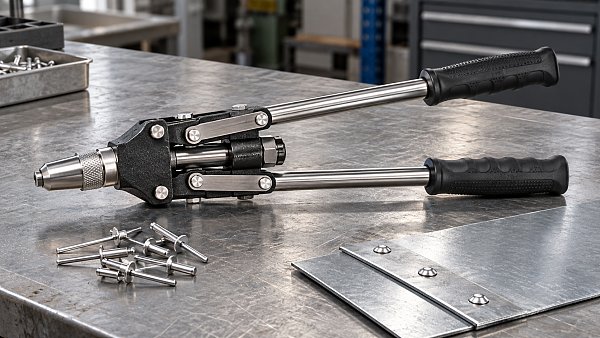
 Hand & Power ToolsDo you need a long handle rivet gun for stainless steel rivets?Need a long handle rivet gun for stainless steel rivets? Discover when extra leverage helps, which tool ratings matter, and how to choose the right riveter for your job.Tooling & Hardware LeadOct 26, 2026
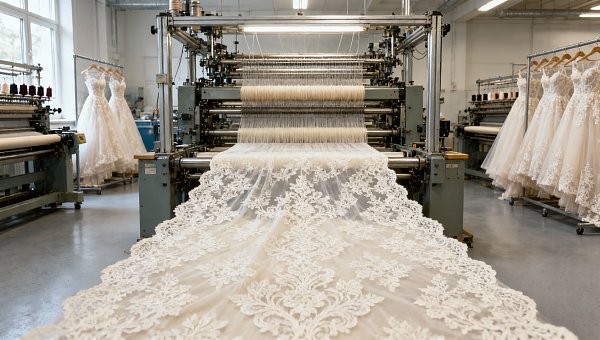
 Textile MachineryItalian Textile Machinery Orders Rise 7% in Q3 2026 as Overseas Demand LeadsItalian textile machinery orders rose 7% in Q3 2026 as overseas demand climbed 8% and domestic orders fell 4%. Explore ACIMIT's figures and what they mean for manufacturers.Textile Industry AnalystOct 25, 2026
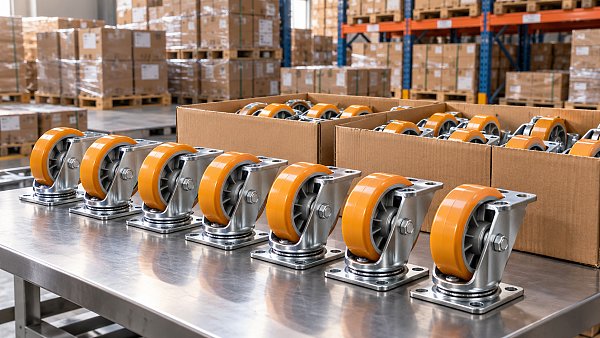
 Supply Chain InsightsHow order size affects wholesale heavy-duty swivel caster pricesSourcing swivel heavy duty casters wholesale? Discover how order size, volume discounts, freight, and inventory costs shape pricing so you can negotiate a better deal.Oct 25, 2026
 Commercial LEDSignify Q3 2026 Earnings: €28 Million Tariff Refund Lifts ProfitExplore Signify Q3 2026 earnings: a reported €28 million tariff refund lifts profit as comparable sales fall 3.4%. Discover the implications for lighting costs and demand.Commercial Tech EditorOct 24, 2026