Industry News
Curation by industry experts
Hot Articles
Popular Tags
How to choose a washable kitchen floor mat that stays in place
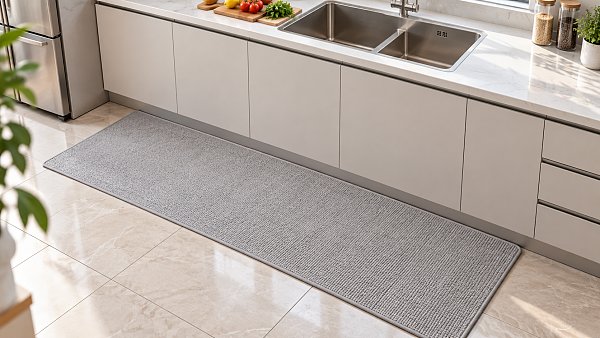
A washable kitchen floor mat is worth choosing carefully if you spend time at the sink or stove and want a softer surface that is easy to clean. For most households, a low-profile mat with a grippy backing, a washable construction, and dimensions suited to the available floor space is a practical starting point. The best choice, however, depends on the floor beneath it: a backing that feels secure on one surface may move on another, especially when water or crumbs get underneath.
Before comparing colors or patterns, check three things: whether the whole mat can be washed in the way you expect, whether its backing is suitable for your flooring, and whether its edges will lie flat where people walk. A mat that performs well on all three counts is more useful than a thick, comfortable one that slides or cannot be cleaned properly.
Start with the floor, not the mat
Kitchen floors vary in texture, finish, and exposure to moisture. Smooth tile can be slippery when wet; textured tile has grooves that may reduce the area of contact with a backing. Vinyl, laminate, sealed wood, and stone each have their own care restrictions. Even two floors made from the same material can behave differently if their finishes are different.
Look for a mat whose manufacturer identifies the backing material and gives guidance for your floor type. A vague “non-slip” claim tells you little about where the product is intended to work. Rubber or rubber-like backing can provide useful grip, but compatibility with the floor finish still matters. Some flooring manufacturers caution against certain backings or prolonged contact because they may trap moisture, discolor the surface, or affect the finish.
If you have a recently installed floor, check its care instructions before buying. The same applies to older or refinished wood, where the condition of the finish may be difficult to judge. Avoid assuming that a mat is suitable simply because it is marketed for kitchens.
Consider where water will go
In front of a sink, the mat will encounter splashes as well as routine cleaning. A damp floor can reduce traction and, if moisture stays trapped, may create problems for the flooring underneath. Choose a mat that can be lifted and dried easily, and make a habit of checking the floor below it.
Waterproof or water-resistant surfaces can make spills easier to wipe up, but they do not eliminate the need to clean underneath. Liquid can travel around an edge, and a waterproof surface may keep moisture from evaporating through the mat. On a floor that is sensitive to standing water, prompt drying is more important than any label on the mat.
Read “washable” as a set of instructions
Washable can mean machine washable, hand washable, hose washable, or simply wipe clean. These are different levels of convenience. If your main reason for buying is to put the mat in a washing machine, check that the product instructions explicitly allow the entire mat to be machine washed. Some designs have a removable fabric cover; others need to be cleaned as a single piece.
Before ordering, look for answers to these practical questions:
- Will it fit in your machine? Check the mat’s dimensions and bulk against the capacity of your washer. A large or heavy mat may be awkward to wash and difficult for the machine to balance.
- What happens after washing? Some mats must be laid flat or hung to dry, while others have specific dryer restrictions. Think about where you will dry it and whether the kitchen can be without it during that time.
- What cleaning products are allowed? Heat, bleach, harsh detergents, or fabric softener may be restricted for some materials. Follow the care label rather than assuming your usual laundry routine is suitable.
- Is the backing washable too? A washable top is less useful if the backing requires separate care or cannot tolerate the same cleaning method.
For a busy cooking area, also consider what you are likely to spill. A smooth surface may be quick to wipe after oil or sauce splashes, while a textile surface may feel softer but require more thorough cleaning. Patterns can make marks less visible, but they do not prevent food residue from building up.
If you prefer a cushioned foam mat, read the instructions especially closely. Some are designed for wiping rather than machine washing. That can still be a sensible choice if comfort is your priority and you are happy to clean the surface by hand.
Choose a backing that stays flat and makes contact
Grip depends on more than the name of a material. The backing needs enough contact with a reasonably clean, dry floor, and the mat itself needs to lie flat. Dust, flour, grease, and cleaning-product residue can interfere with that contact. So can a curled corner or a thick seam that lifts part of the mat off the floor.
When examining a product, look at the underside as well as the decorative face. A backing that covers most of the mat may provide more consistent contact than a few isolated grip points, although the actual result still depends on the materials and the floor. Texture can help, but a pronounced pattern is not proof that the mat will stay put.
Edges deserve particular attention. A low, tapered edge can make it easier to step onto the mat and may be less likely to catch a foot than a raised edge. It should also remain flat after the mat is unrolled and after cleaning. No edge shape removes the risk entirely, especially in a narrow walkway or in a household where someone uses a walker or has difficulty lifting their feet.
If a mat moves, check the floor and backing for moisture or residue first. Clean and dry both according to their respective care instructions, then reposition the mat. Do not rely on a mat that continues to shift under normal use. An additional non-slip underlay may help with some combinations, but only if both the mat and flooring instructions permit it; an unsuitable pad can introduce its own compatibility or trip problems.
Expect grip to change with use
Backing can wear, stiffen, crack, or peel over time, particularly if it is cleaned in ways the manufacturer does not recommend. Washing may remove residue and improve contact, but it can also expose deterioration. After each wash, check that the underside remains intact and that the corners settle flat before putting the mat back into service.
Replace a mat when it will no longer stay in position, when its edges remain curled, or when the backing leaves residue on the floor. Those are more useful replacement signals than appearance alone.
Balance comfort with thickness and placement
Comfort matters most where you stand for longer periods, such as at the sink or a frequently used prep counter. A cushioned mat can feel better underfoot than a thin textile mat, but added thickness also raises the edge and can make the mat harder to wash or dry. It may be a poor fit in a passage where people regularly cross the mat rather than stand on it.
For an area near a stove, consider how the mat will be cleaned after grease splashes and whether it can be positioned away from direct heat. Follow any placement restrictions on the product label. Do not assume that a kitchen mat is suitable for contact with hot cookware or flames.
Measure the intended space before shopping. Include the path of cabinet doors, drawers, the dishwasher door, and any nearby door that swings over the floor. Leave enough room for the mat to lie flat without pressing against cabinets or walls. If the mat extends into a main walkway, its edges will be encountered more often, so a thinner profile may be preferable.
Length should match the work area rather than cover as much floor as possible. A long runner can serve both a sink and an adjacent counter, but it is also larger to lift and clean. Two smaller mats may be easier to handle, although each adds another set of edges to the floor. Where space is tight, one compact mat placed at the spot where you stand most often can be the more practical choice.
Match the mat to your cleaning routine
The best option is often determined by what you will realistically do after a spill. For a household that wants to launder the mat regularly, a lightweight, machine-washable design with a compatible backing is a good candidate. Check that it fits the washer and that you have space to dry it completely.
For someone who values cushioning and cleans up as they cook, a wipe-clean mat may be easier to maintain, provided the product’s care instructions match that routine. If the floor is especially sensitive to trapped moisture, a mat that is easy to lift, inspect, and dry underneath may be preferable to a heavier design.
Once the mat arrives, place it on a clean, dry floor and check it under ordinary foot pressure before relying on it. Open nearby doors and drawers, walk across its edges, and make sure it does not bunch or shift. Recheck it after the first cleaning: a mat that still lies flat, grips the floor, and fits your routine is the one most likely to remain useful in the kitchen.
Recommended News
 Carton & PlasticsGeopolitical Tensions and Supply Disruptions Heighten Polymer Price VolatilityPolymer price volatility is challenging packaging manufacturers as geopolitical tensions disrupt supply chains. Explore the impact on costs and production planning.Packaging Supply ExpertOct 30, 2026
 Home DecorHow to choose a washable kitchen floor mat that stays in placeChoose a washable kitchen floor mat that stays put. Discover how to compare backing, floor compatibility, comfort, and cleaning care before you buy.Interior Sourcing LeadOct 30, 2026
 Policy & RegulationsChina Issues Disposable Underwear Standard FZ/T 64125-2026China’s disposable underwear standard FZ/T 64125-2026 takes effect November 1, 2026. Explore key safety and testing requirements to prepare your products and supplier reviews.Oct 29, 2026
 Smart LightingWhen do smart lighting systems for hotels pay for themselves?When do smart lighting systems for hotels pay for themselves? Learn how to calculate net savings, uncover hidden costs, and identify upgrades that deliver measurable returns before you invest.Commercial Tech EditorOct 29, 2026