Industry News
Curation by industry experts
Hot Articles
Popular Tags
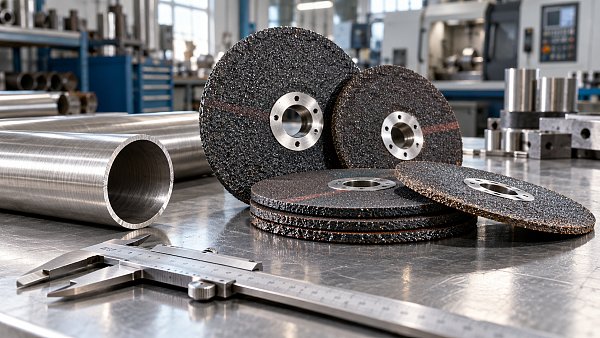
How to choose resin-bonded cutting wheels for stainless steel
Two cutting wheels can carry the same diameter, fit the same grinder, and produce very different results on stainless steel. One may cut quickly but leave a burr that slows assembly. Another may last longer yet require enough pressure to distort thin tubing. A low purchase price tells the evaluator little about either outcome.
Choosing resin bonded cutting wheels for stainless steel means balancing abrasive formulation, wheel geometry, machine compatibility, and contamination control. The defensible choice is not simply the fastest disc or the one with the longest life. It is the wheel that consistently produces acceptable cuts, safely, at the lowest total process cost. That requires reading specifications carefully—and testing supplier claims against the actual job.
Define the cut before comparing the wheel
“Suitable for stainless steel” is a starting point, not a complete specification. Cutting a thin-wall 304 tube is a different task from sectioning a solid 316 bar. Workpiece geometry, access, clamping, and finish requirements can matter as much as the stainless grade.
Before requesting samples, document these application conditions:
- Material: stainless grade, product form, wall thickness or cross-section, and any coating or surface treatment.
- Equipment: handheld grinder or stationary cut-off machine, spindle speed, power, arbor size, guard arrangement, and approved wheel dimensions.
- Cut quality: allowable burr, squareness, dimensional loss, discoloration, and downstream finishing requirements.
- Production conditions: cuts per shift, operator access, workholding, and whether the work area also processes carbon steel.
- Acceptance criteria: limits for contamination, rework, cycle time, and consumable cost.
For sanitary equipment or corrosion-sensitive assemblies, contamination controls may eliminate a candidate before cutting speed becomes relevant. For repetitive fabrication, operator effort and predictable wheel consumption may carry more weight. Agree on these priorities before the trial; otherwise, different departments can interpret the same results differently.
Read the abrasive specification as a system
A resin-bonded wheel combines abrasive grains, a resin bond, fillers or processing additives, and, where specified, reinforcement. Performance comes from the combination. Selecting by abrasive name alone overlooks how the wheel releases worn grains, withstands cutting loads, and manages heat.
Aluminum oxide, zirconia alumina, or ceramic?
Aluminum oxide is a common baseline for stainless steel cutting. A well-matched formulation can provide a practical balance of cutting action and cost, particularly where production volumes do not justify a more expensive abrasive.
Zirconia alumina and ceramic-containing formulations may offer advantages in demanding applications. However, abrasive labels do not establish a performance ranking. Grain characteristics, blend proportions, bond design, and available machine power all affect whether the additional purchase cost is recovered.
Some high-performance grains need sufficient cutting pressure to fracture and expose fresh edges effectively. A wheel that performs well on a powerful production machine may behave differently on a lower-powered handheld grinder. Ask suppliers which operating conditions their recommendations assume.
Bond grade is not abrasive hardness
The wheel’s grade describes its relative grain-retention strength, not how hard the abrasive mineral is. Stainless steel’s tendency to retain heat and work-harden makes a free-cutting wheel valuable. If dull grains remain trapped too long, rubbing can increase temperature and cutting effort.
A softer grade may release those grains more readily, but excessive shedding shortens wheel life. Conversely, a harder grade is not automatically more economical. Treat grade letters and product codes as supplier-specific selection information rather than a universal comparison scale.
Thickness and profile: where cut speed meets control
Thin cutting discs remove less material per cut. That narrower kerf can reduce cutting effort and material loss, making thin wheels attractive for sheet, tube, and light sections. The trade-off is reduced tolerance for twisting, lateral loading, and unstable workholding.
A thicker wheel may offer greater robustness in heavier cutting, but its wider kerf requires more material removal. It can also change burr formation, heat input, and the power needed to maintain progress. Neither option compensates for a workpiece that moves or pinches the disc.
Flat Type 41 and depressed-center Type 42 cutting wheels have different mounting and clearance implications. Follow the machine and wheel manufacturers’ instructions rather than assuming either profile is interchangeable. A cut-off wheel must not be used for side grinding unless it is explicitly designed and marked for that operation.
What does “INOX” actually confirm?
INOX labeling generally identifies a product intended for stainless steel, often with controlled iron, sulfur, and chlorine content. It does not, by itself, establish a universal chemical specification or guarantee a contamination-free finished component.
Some suppliers state limits such as no more than 0.1% each of iron, sulfur, and chlorine. Where such a limit matters, request the actual declaration: which substances are measured, the reporting basis, test method, and whether the evidence applies to the product family or the supplied batch. Do not assume every stainless-rated wheel meets the same threshold.
“Iron-free” should not be interpreted as analytically zero iron. Marketing terminology needs a documented definition. Critical applications may require tighter purchasing conditions or additional verification agreed with the supplier.
The wheel is only one possible contamination source. A stainless-rated disc previously used on carbon steel can transfer ferrous material. Shared workbenches, clamps, brushes, and handling equipment can undermine an otherwise sound specification. Segregate stainless consumables and contact surfaces where the process requires it.
If corrosion performance is critical, assess the finished component under the relevant inspection and cleaning requirements. A wheel chemistry declaration cannot replace required post-fabrication cleaning, pickling, passivation, or surface verification.
Machine compatibility is a pass-or-fail gate
No performance advantage justifies a mismatch between wheel and machine. Check the full dimensional specification: outside diameter, thickness, bore, wheel type, and mounting requirements. Do not modify a bore or improvise adapters to make an unsuitable wheel fit.
The machine’s maximum possible spindle speed must not exceed the wheel’s marked maximum operating speed. If the machine is adjustable, use only settings and controls permitted by both manufacturers. Check the stated rotational speed and peripheral-speed rating; matching diameter alone is insufficient.
- Use the correct guard and specified mounting flanges for cut-off work.
- Confirm that the machine permits the selected wheel type and dimensions.
- Inspect wheels for damage, deformation, moisture exposure, and illegible markings.
- Observe marked expiry dates, storage requirements, and manufacturer instructions for resin-bonded products.
- Secure the workpiece so the kerf does not close and trap the wheel.
Applicable references may include EN 12413 for bonded abrasive product safety and ANSI B7.1 for abrasive-wheel use, care, and protection, depending on the market and workplace requirements. Request evidence supporting any claimed conformity rather than treating a printed logo as sufficient verification.
Operational controls remain essential: appropriate eye and face protection, hearing protection, spark management, and exposure controls for dust. Stainless steel cutting can generate hazardous metal-containing particulate; assess extraction and respiratory protection through the workplace risk assessment.
Run a trial that reveals differences—not operator habits
A useful trial should resemble production closely enough to predict results while controlling the variables that could obscure them. Comparing one wheel on thin tube with another on solid bar produces numbers, but not a purchasing decision.
Use the same material grade and section, machine, workholding, and acceptance criteria. For handheld cutting, use a trained operator and a consistent technique. When practical, rotate the test order and repeat cuts across several wheels so that operator fatigue or one unusual sample does not determine the outcome.
Record more than average cutting time:
- Cutting performance: time per cut, interruptions, stalling, and pressure required to maintain progress.
- Wheel consumption: wheel loss over a defined cutting task and total acceptable cuts per wheel.
- Part quality: burr, squareness, kerf width, dimensional consistency, and discoloration.
- Downstream work: deburring, cleaning, edge correction, and rejected parts.
- Operator observations: tracking, vibration, and changes in cutting behavior as the wheel wears.
Define the usable end point in advance, following manufacturer restrictions and practical access requirements. As diameter decreases, cutting reach and peripheral speed at a fixed spindle speed change. A wheel’s early performance may therefore differ from its behavior near the agreed replacement point.
Discoloration is a useful warning sign, but not a standalone measure of metallurgical damage. Similarly, a visually clean edge does not prove that contamination is absent. Use additional inspection when the application’s risk warrants it.
Compare cost per acceptable cut
The cheapest wheel can become the expensive option when it adds handling, finishing, or scrap. A practical comparison uses:
Cost per acceptable cut = (wheel cost consumed + cutting labor + wheel-change labor + finishing/rework cost + attributable scrap cost) ÷ accepted cuts.
Keep the calculation consistent across candidates. If machine time has an established internal cost, include it without double-counting labor. Where some costs are uncertain, present them separately rather than hiding assumptions inside a single precise-looking figure.
A faster disc is valuable only if the process can use that speed. If deburring is the bottleneck, a slightly slower wheel producing cleaner edges may improve throughput more. Likewise, longer wheel life has limited value if it comes with greater operator effort or unstable cut quality.
Turn the successful trial into a purchasing specification
Once a candidate passes, preserve what was actually evaluated. Specify the approved product code, dimensions, wheel type, speed rating, stainless suitability, required chemical declarations, labeling, shelf-life conditions, and lot traceability. Record the machine and application limits alongside the approval.
For recurring or international sourcing, ask how the supplier manages formulation changes, manufacturing-site changes, storage, and substitutions. A visually similar replacement is not necessarily equivalent. Significant changes should trigger a documented review and, where appropriate, another cutting trial.
The strongest selection is therefore a controlled match between wheel, machine, material, and quality requirement. Resin bonded cutting wheels earn approval through safe compatibility, documented contamination controls, and repeatable production results—not through abrasive labels or unit price alone.
Recommended News
 Export UpdatesChina’s Textile and Apparel Exports Rise 21.5% in September, Up 5.1% Year to DateChina’s textile and apparel exports rose 21.5% in September and 5.1% year to date. Explore the figures and key signals to watch for sustained industry growth.Oct 23, 2026
 Hand & Power ToolsHow to choose resin-bonded cutting wheels for stainless steelChoose resin bonded cutting wheels for stainless steel with confidence. Compare abrasives, thickness, safety, and cost per cut to find the right wheel for cleaner cuts and less rework.Tooling & Hardware LeadOct 23, 2026
 Export UpdatesChina’s Textile and Apparel Exports Rise 5.1% to $232.97 Billion in January–September 2026China’s textile and apparel exports rose 5.1% to $232.97 billion in January–September 2026. Explore September’s surge and key considerations for bridal suppliers.Oct 22, 2026
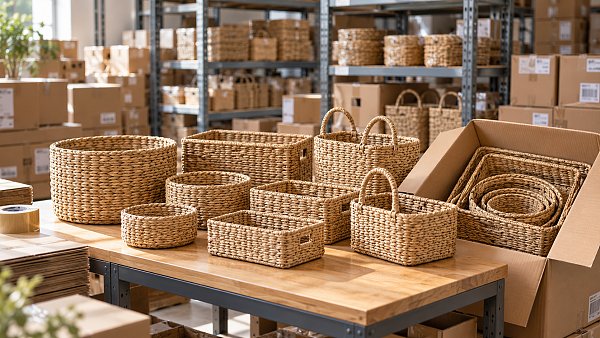
 Home DecorCan wholesale woven storage basket suppliers mix styles in one order?Can a wholesale woven storage baskets supplier mix styles in one order? Explore MOQ rules, packing options, and cost considerations to build a smarter assortment before you buy.Interior Sourcing LeadOct 22, 2026