Industry News
Curation by industry experts
Hot Articles
Popular Tags
Mean Well LED Driver Selection for Stable Output
Selecting a mean well led driver is rarely a minor specification task. In lighting systems, stable output affects lumen consistency, thermal behavior, dimming response, and service life. For commercial and industrial projects, the driver often determines whether a design performs predictably in the field or creates avoidable maintenance and compliance issues later.
That is why driver evaluation has moved closer to broader sourcing strategy. Across global supply chains, especially in Lighting & Displays, reliable component choices support not only product performance but also risk control, documentation quality, and long-term replacement planning.
What stable output really means in LED driver selection
A mean well led driver is an electrical power supply designed for LED systems. Its job is not just to deliver power. It must deliver the right power, in the right form, under changing operating conditions.
Stable output usually refers to controlled current or voltage with limited fluctuation. In practice, this stability affects brightness uniformity, LED junction temperature, color consistency, and system reliability.
For technical review, stable output should be read as a system result, not a single datasheet claim. Input variation, ambient temperature, wiring length, load profile, and dimming method all influence actual driver behavior.
Why this topic matters now
Lighting projects are becoming more integrated with controls, energy targets, and certification requirements. A driver that looked acceptable in a basic fixture may not remain suitable in a digitally managed building or a harsh industrial environment.
At the same time, supply chain resilience has become a purchasing priority. Platforms such as Global Supply Review highlight a wider industry shift: component decisions now connect engineering performance with sourcing visibility, compliance confidence, and lifecycle planning.
This makes mean well led driver selection relevant beyond electronics. It influences procurement standardization, maintenance forecasting, and the ability to scale product lines across regions with different electrical and regulatory demands.
Start with the load, not the catalog
One of the most common mistakes is selecting the driver family first. A better approach begins with the LED load and the operating environment.
Current versus voltage architecture
Many LED modules require constant current. Others, such as certain strip lights or signage assemblies, are built around constant voltage. The wrong architecture can create unstable output even when the wattage appears correct.
For a mean well led driver review, confirm the following before comparing models:
- Rated forward voltage range of the LED load
- Required operating current or voltage
- Total power demand at actual operating temperature
- Expected dimming or control interface
- Tolerance for ripple, flicker, or startup delay
Headroom matters
A driver should not be selected at its absolute limit unless the application is tightly controlled. Moderate power headroom supports thermal stability and can reduce stress during input fluctuation or peak ambient conditions.
In many cases, loading a driver at roughly 80 to 90 percent of its rating offers a more reliable operating window. Exact targets depend on enclosure, airflow, and duty cycle.
Key parameters that affect stable output
Not every datasheet line has equal value. Some parameters have direct impact on field stability and should receive closer attention.
A mean well led driver may look strong on nominal figures, yet become less attractive when derating or harmonic performance is examined under realistic conditions.
Application context changes the best choice
The right driver for indoor retail lighting is not automatically the right choice for outdoor signage, horticulture, or industrial high-bay systems.
Indoor commercial lighting
Low flicker, quiet dimming, compact dimensions, and compatibility with building controls often dominate the evaluation. Power factor and energy reporting may also be project requirements.
Outdoor and harsh environments
Ingress protection, surge immunity, and temperature tolerance become more important. Here, a mean well led driver should be assessed together with enclosure design and cable routing.
Industrial and infrastructure use
Long operating hours raise the value of thermal margin and service life modeling. Replaceability, documentation clarity, and product continuity often matter as much as initial performance.
Dimming, controls, and compatibility checks
Output stability can be lost when the control interface is poorly matched. A driver may regulate correctly at full load yet behave inconsistently during dimming transitions.
When reviewing a mean well led driver for controlled environments, check whether the system uses 0-10V, PWM, DALI, resistance dimming, or smart control gateways. Compatibility should be confirmed at both minimum and maximum dimming levels.
- Minimum dim level without visible flicker
- Startup behavior after power interruption
- Response speed for sensors and occupancy controls
- Interaction with emergency lighting circuits
- EMI performance in dense electrical environments
These checks are especially useful when lighting products are exported into multiple control ecosystems. Documentation quality becomes part of technical suitability.
Compliance, sourcing, and lifecycle considerations
In cross-border trade, a mean well led driver is rarely evaluated on electrical performance alone. Certifications, traceability, and supply continuity affect whether a component can support a stable product program.
Relevant checks often include safety approvals, EMC conformity, RoHS status, and regional market acceptance. In some categories, ESG-related documentation and packaging discipline also influence supplier approval.
This broader view aligns with how sourcing intelligence platforms such as GSR approach light manufacturing categories. Component selection now sits inside a larger framework of risk visibility, qualification efficiency, and digital trust signals.
A practical review path before specification
A useful evaluation sequence keeps performance and sourcing in the same workflow.
- Define LED load, control method, and environmental limits.
- Match constant current or constant voltage architecture.
- Review output range, derating, and thermal limits.
- Check flicker, ripple, and dimming behavior under real load.
- Confirm certifications and market-specific compliance.
- Assess supply continuity, replacement strategy, and documentation depth.
That process helps compare more than price and wattage. It also reduces the risk of late redesigns, site failures, and qualification delays.
Closing perspective
A mean well led driver should be treated as a performance-critical component, not a generic accessory. Stable output depends on fit between driver topology, LED load, control scheme, thermal environment, and compliance needs.
The next step is to turn project assumptions into a clear evaluation matrix. Compare electrical behavior, environmental tolerance, control compatibility, and supply-chain readiness side by side. That approach usually leads to a more durable specification and fewer downstream surprises.
Recommended News
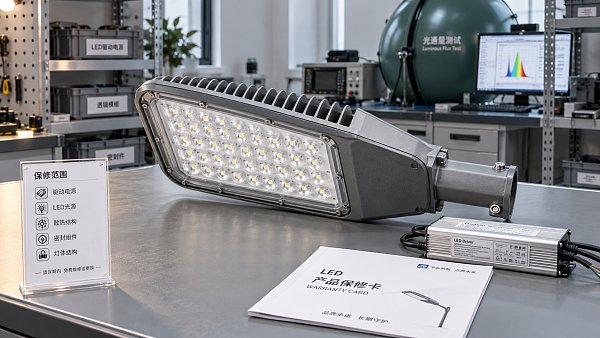
 Commercial LEDHow to assess an LED street light exporter’s warranty coverageAssess an led street lights exporter beyond warranty length. Learn how to verify coverage, uncover hidden costs, and negotiate stronger terms before you buy.Commercial Tech EditorOct 17, 2026
 Carton & PlasticsWhen should you heat seal aluminum foil zipper bags for food storage?When should you heat seal aluminum foil zipper bags? Learn when stronger closures matter, how to protect dry foods, and which sealing checks help ensure reliable storage.Packaging Supply ExpertOct 16, 2026
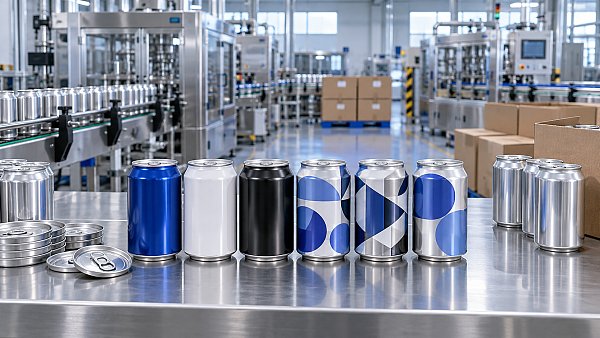
 Supply Chain InsightsHow to find a custom-printed ring-pull can supplier for small ordersFind a custom printed ring pull cans supplier for small orders. Compare MOQs, printing options, samples, and delivered costs to launch confidently without excess inventory.Oct 15, 2026
 Household Tissue & Hygiene PackagingCan Household Tissue Packaging Be Fully Compostable?Can household tissue packaging be made fully compostable? Explore certified materials, home vs. industrial composting, and practical sourcing tips to choose the right pack.Packaging Supply ExpertOct 14, 2026