Industry News
Curation by industry experts
Hot Articles
Popular Tags
Commercial LED Lighting for Warehouses: Cost vs. Light Performance
Commercial LED Lighting for Warehouses: Cost vs. Light Performance
Choosing commercial LED lighting for warehouses is no longer just about cutting energy bills.
The bigger question is how cost affects visibility, safety, uptime, and long-term ownership.
For sourcing teams, that balance matters more than the lowest unit price.
A cheaper fixture can create expensive problems later.
Poor light uniformity, driver failures, and weak warranties often erase early savings.
This is why commercial LED lighting for warehouses should be evaluated as an operating asset, not a commodity.
From a procurement perspective, the goal is simple.
Buy a system that delivers reliable light performance at the lowest realistic lifecycle cost.
Why Cost Alone Misleads Warehouse Lighting Decisions
In many tenders, warehouse lighting comparisons still begin with fixture price.
That approach is fast, but it rarely captures business impact.
Commercial LED lighting for warehouses affects labor accuracy, forklift safety, scanning speed, and maintenance planning.
A low-cost fixture may still consume more power per usable lux.
It may also produce glare, dark aisles, or early lumen depreciation.
In actual operations, those issues turn into complaints, service calls, and rework.
The better signal is cost per effective performance delivered over time.
That means looking beyond wattage and asking how the lighting system supports warehouse output.
What Light Performance Really Means in Warehouses
Not all light quality is visible in a supplier brochure.
When reviewing commercial LED lighting for warehouses, performance should be defined with operational use in mind.
Key lighting metrics usually include:
- Lux level at task height, not only fixture output
- Uniformity across aisles, racks, and loading zones
- Glare control for drivers and pickers
- Color temperature suited to the facility environment
- CRI for label reading and product identification
- L70 or L80 lifetime and driver durability
- Sensor compatibility and dimming response
High-bay applications need more than bright fixtures.
They need controlled distribution that reaches the floor and shelf faces correctly.
This becomes even more important in narrow aisles and tall racking systems.
A fixture with higher lumen output is not automatically the better choice.
How to Compare Commercial LED Lighting for Warehouses on Total Cost
A disciplined sourcing process should separate price from value.
The most useful comparison model includes five cost layers.
- Fixture and control hardware cost
- Installation cost, including mounting height and rewiring needs
- Energy cost over the expected operating schedule
- Maintenance cost, especially lift access and downtime
- Failure risk cost linked to warranty terms and supplier response
This framework changes the discussion quickly.
For example, a lower-priced high bay may save 12 percent upfront.
But if it runs at lower efficacy and fails earlier, the payback disappears.
Commercial LED lighting for warehouses often operates for long hours.
That makes energy and maintenance more decisive than invoice price alone.
In high-use facilities, even a small efficiency gain can materially improve total ownership cost.
Specification Points That Deserve Closer Review
Spec sheets can look similar while product quality differs sharply.
That is why commercial LED lighting for warehouses should be checked line by line.
Focus on these details during supplier evaluation:
- Actual lumens, not only theoretical chip output
- System efficacy in lm/W
- Beam angle options for wide or narrow aisle layouts
- IP rating and thermal design for dusty or hot environments
- Surge protection and driver brand consistency
- THD and power factor for facility power quality
- Certifications such as UL, ETL, DLC, CE, or RoHS where relevant
- Warranty length, exclusions, and claims process
The more serious signal is test transparency.
Reliable suppliers can usually provide photometric files, third-party reports, and clear component disclosures.
If those documents are vague, risk is usually being shifted to the buyer.
A Practical Cost vs. Performance Comparison
This is where commercial LED lighting for warehouses becomes a strategic buying category.
The right decision protects cost control without sacrificing operational lighting quality.
Common Procurement Risks and How to Reduce Them
Several sourcing mistakes appear again and again in warehouse lighting projects.
The most common risks include:
- Comparing fixtures without a lighting layout simulation
- Using generic lux targets across different warehouse zones
- Ignoring maintenance access cost at high mounting points
- Accepting warranty language that excludes drivers or labor
- Buying on wattage claims without checking real photometric results
A more reliable sourcing method starts with site-specific data.
Mounting height, aisle width, rack density, ambient temperature, and operating hours all matter.
Once those variables are clear, commercial LED lighting for warehouses can be quoted more accurately.
That also improves supplier accountability after installation.
Questions Worth Asking Suppliers Before Awarding the Order
Good questions usually reveal more than polished sales decks.
Before selecting commercial LED lighting for warehouses, ask suppliers to confirm:
- What light levels will be delivered at floor and rack positions?
- Which driver and LED components are used consistently across production lots?
- What is the expected lumen maintenance under actual warehouse temperatures?
- How are failure claims handled across regions?
- Can the supplier support controls integration for occupancy or daylight harvesting?
- What references exist for similar warehouse projects?
These questions help filter out products that look competitive only on paper.
They also support a cleaner negotiation around price, service, and risk sharing.
Where Market Trends Are Shifting Buyer Priorities
Recent buying behavior shows a clearer move toward smarter warehouse lighting systems.
Energy prices remain important, but they are no longer the only trigger.
More buyers now want commercial LED lighting for warehouses that supports ESG reporting, automation, and facility digitization.
That usually means stronger interest in controls, monitoring, and longer-life components.
The stronger signal is this.
Buyers are moving from product sourcing to performance sourcing.
That shift rewards suppliers who can prove lifecycle value with credible technical evidence.
Final Buying Takeaway
Commercial LED lighting for warehouses should be purchased with a full cost and performance lens.
The best option is rarely the cheapest fixture.
It is the solution that delivers dependable light, lower maintenance exposure, and efficient energy use for the actual site.
In practical terms, buyers should compare photometric performance, component quality, controls readiness, and warranty depth together.
That is the clearest way to protect operating budgets and warehouse performance at the same time.
For organizations sourcing commercial LED lighting for warehouses across global markets, disciplined evaluation creates better pricing leverage and fewer surprises after deployment.
Recommended News
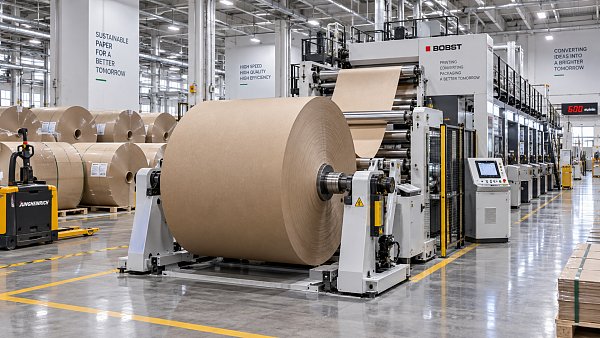
 Office Paper & Printing PaperHow roll diameter affects downtime when using jumbo paper rollsJumbo paper rolls can cut changeovers and downtime—if your unwinder, handling, and tension control can support them. Find the optimal roll diameter for smoother output.Packaging Supply ExpertSep 25, 2026
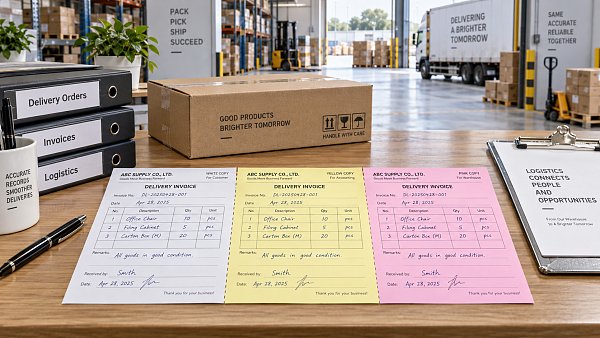
 Office Paper & Printing PaperWhen does carbonless paper for invoices reduce billing errors?Carbonless paper for invoices reduces billing errors by creating clear, consistent copies for deliveries, service calls, and approvals. Learn when it strengthens billing control.Packaging Supply ExpertSep 24, 2026
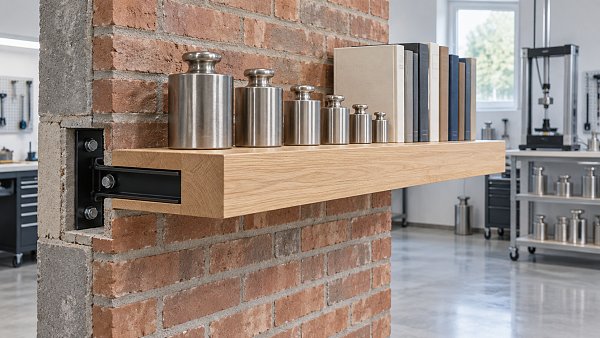
 Home DecorHow to compare floating wall shelves suppliers for consistent load capacityFloating wall shelves supplier comparison guide: evaluate load capacity, brackets, wall fixings, testing, and production consistency before you buy.Interior Sourcing LeadSep 23, 2026
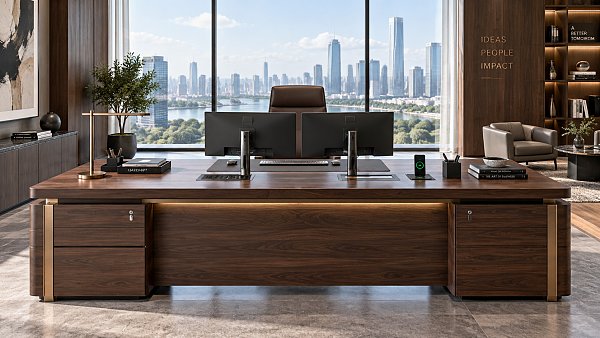
 Office FurnitureWhen does a custom executive office desk justify its higher cost?Discover when a custom executive office desk is worth the investment—from tailored layouts and integrated technology to durable materials and long-term value.Interior Sourcing LeadSep 22, 2026