Industry News
Curation by industry experts
Hot Articles
Popular Tags
Decorative Lighting Installation Mistakes That Affect Safety and Finish
Decorative lighting installation matters long before the switch is turned on
Decorative lighting installation shapes both appearance and operating risk.
A fixture may look refined in a catalog, yet fail on site because mounting, wiring, spacing, or surface protection were handled poorly.
In practice, the most expensive mistakes are rarely dramatic at first.
A loose canopy, heat trapped in a niche, chipped plating, or uneven alignment can slowly turn decorative lighting installation into a safety issue and a finish problem.
That is why careful installation remains a practical concern across lighting, displays, furniture, and commercial fit-out projects covered by Global Supply Review.
The core question is not only whether a product meets specification.
It is whether the selected decorative lighting installation method matches the real site, the substrate, the load, the maintenance routine, and the visual standard expected after handover.
Actual site conditions change what counts as a mistake
Different spaces create different failure patterns.
A hospitality ceiling, a retail display wall, and a residential stair void may all use decorative fixtures, but they do not tolerate the same installation errors.
In high-traffic interiors, impact resistance and secure fixing often matter more than in low-use private rooms.
In premium settings, slight asymmetry or scratched finishes become visible immediately under layered light.
Moisture, cleaning frequency, vibration, and access height also change the judgment standard.
A decorative lighting installation that seems acceptable during commissioning may become difficult to maintain after six months if replacement access was never planned.
A common misread is treating decorative fixtures as purely aesthetic items.
Once integrated into building finishes and electrical systems, they behave like coordinated assemblies, not isolated products.
In finished interiors, surface damage often starts during installation
This is one of the most frequent issues in decorative lighting installation.
The fixture may pass electrical checks, yet still fail visually because installers rushed through unpacking, handling, drilling, or final tightening.
Brass tones, powder-coated bodies, glass pendants, and mirror-polished trims are especially vulnerable.
Damage often appears where tools meet visible hardware.
Over-tightened screws can distort escutcheons, while unprotected contact with ladders or metal belts leaves fine scratches that only show after cleaning and full illumination.
The better approach is to separate electrical completion from final exposed-part installation wherever possible.
Protective films should remain in place until the dusty works are finished.
If a fixture includes custom shades or decorative glass, the acceptance checklist should include finish uniformity, edge integrity, and tone consistency under operating light.
Why this matters more in display and hospitality settings
Retail and hospitality environments expose small finish defects quickly.
Reflective surfaces, camera use, and close visual inspection raise the standard beyond simple functionality.
In those settings, decorative lighting installation should be planned with mock-up approval, handling protocols, and final alignment verification, not just electrical sign-off.
Suspended and ceiling-mounted fixtures fail differently
Weight support is still underestimated in decorative lighting installation.
The mistake is not always choosing a fixture that is too heavy.
More often, the problem lies in assuming the finished ceiling can carry what only the structural slab should support.
Large chandeliers, clustered pendants, and statement luminaires need anchor decisions early.
If support points are improvised after gypsum board closure, crews may cut wider openings, weaken edges, and create visible patchwork around canopies.
Long drops introduce another issue: movement.
Airflow from HVAC, door pressure, or nearby circulation can cause swing, cable twist, or repeated strain at connectors.
This matters in lobbies, stairwells, and double-height atriums where visual stability is part of the finish quality.
- Confirm the actual supporting structure before ordering drop length and canopy size.
- Check whether service access remains possible after decorative trims are installed.
- Review sway control if the fixture hangs in an air-moving zone.
- Match fasteners to substrate type, not only to fixture weight.
Wiring errors become more serious when fixtures are integrated into joinery or displays
Integrated decorative lighting installation carries a different set of risks.
In shelving, millwork, mirrors, and branded displays, wiring is often hidden in tighter cavities with less cooling space.
This increases the chance of heat buildup, pinched cables, and inaccessible drivers.
The visual effect may look seamless on day one.
Still, replacement becomes costly if the only way to reach a failed component is to dismantle finished panels.
A recurring mistake is placing drivers wherever there is empty space rather than where heat dissipation and future access are manageable.
Another is mixing incompatible dimming components, which leads to flicker, noise, shortened life, or unstable light output.
For integrated applications, decorative lighting installation should be reviewed as part of the full assembly.
That includes cable routing, ventilation gaps, driver position, access panels, and the tolerance between lighting hardware and finish materials.
Spacing and alignment mistakes often undermine the whole visual concept
Not every installation problem is electrical.
Decorative lighting installation also fails when the rhythm of the layout ignores the architecture, furniture placement, or viewing angle.
A row of pendants centered to the room may still look wrong if the dining table, reception desk, or stair line is offset.
Wall sconces create similar issues.
Even small deviations in height become obvious when fixtures are installed in mirrored pairs or against strong vertical finishes.
In actual projects, alignment should be checked from the user viewpoint, not only from measured drawings.
That is especially true in decorative retail, luxury residential spaces, and hospitality corridors where lighting participates in the visual identity of the room.
Different environments demand different installation priorities
It helps to compare decorative lighting installation by use condition rather than by fixture category alone.
That is usually where better decisions emerge.
Where teams misjudge decorative lighting installation most often
Several mistakes repeat across otherwise well-managed projects.
- Choosing by product sheet only, without confirming site substrate, void depth, or heat conditions.
- Assuming similar-looking rooms need the same drop length, beam angle, or driver arrangement.
- Prioritizing unit cost while ignoring rework, ceiling repair, finish replacement, or maintenance access.
- Treating decorative lighting installation as a late-stage task after ceilings, joinery, and controls are already fixed.
- Skipping live mock-ups, especially where fixture scale and sightline balance are central to the result.
These are not minor coordination issues.
They directly affect safety, finish quality, lifecycle cost, and the credibility of the completed environment.
A practical way to reduce rework before installation begins
The most reliable decorative lighting installation process begins with a short but disciplined review.
- Map each fixture to its real substrate, not the design assumption.
- Check visible finish risks during transport, storage, lifting, and final tightening.
- Confirm driver location, dimming compatibility, and future replacement route.
- Review sightlines using finished furniture, display elements, or circulation paths.
- Record load, access height, and cleaning method as part of handover documentation.
For businesses working across global supply chains, this review also supports cleaner specification control.
That fits the wider GSR focus on evidence-based decisions across lighting and adjacent manufacturing sectors.
When decorative lighting installation is evaluated in context, not in isolation, quality becomes easier to protect.
The next step is straightforward: define the exact use setting, compare installation constraints, and confirm what the site will demand after opening, not only on installation day.
Recommended News
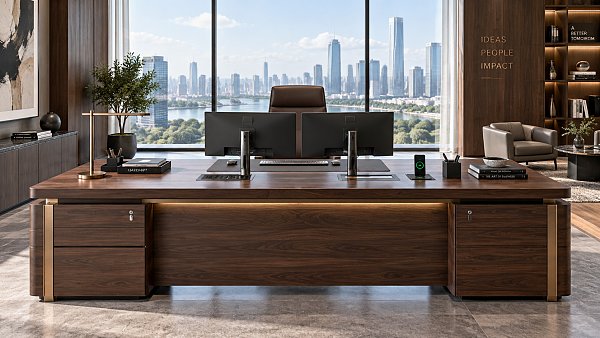
 Office FurnitureWhen does a custom executive office desk justify its higher cost?Discover when a custom executive office desk is worth the investment—from tailored layouts and integrated technology to durable materials and long-term value.Interior Sourcing LeadSep 22, 2026
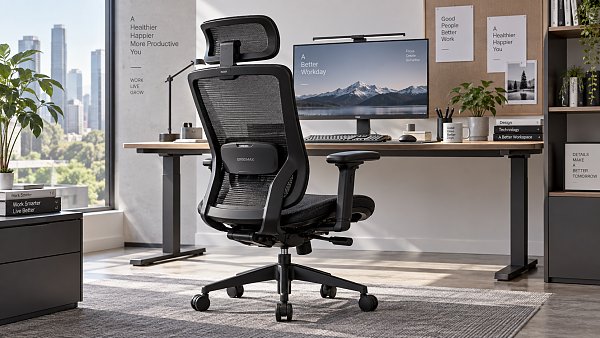
 Office FurnitureWhich high back ergonomic office chairs fit all-day desk work?High back ergonomic office chairs for all-day desk work: compare lumbar support, seat depth, armrests, recline, and materials to find a better fit.Interior Sourcing LeadSep 21, 2026
 Commercial LEDWhen does a 200W linear high bay provide enough light for a warehouse?Discover when a 200W linear high bay delivers sufficient warehouse lighting, with practical guidance on lumens, mounting height, aisle layout, and uniformity.Commercial Tech EditorSep 20, 2026
 Home DecorWhat to check before ordering wholesale nesting side tables in EuropeWholesale nesting side tables Europe: assess materials, stability, compliance, packaging, landed cost, and supplier reliability before ordering with confidence.Interior Sourcing LeadSep 19, 2026