Industry News
Curation by industry experts
Hot Articles
Popular Tags
EU Rule Takes Effect: LED Backdrops Must Meet EN IEC 62471:2026
On July 1, 2026, the EU began mandatory implementation of EN IEC 62471:2026 for commercial LED lighting, bringing wedding photography backdrop lights, ring lights, and smart dimming systems into a stricter photobiological safety compliance framework. For exporters, buyers, testing-related service providers, and delivery teams, the development deserves attention because products without the required certification may face customs refusal or removal from sale, while the tighter blue light radiation threshold directly affects compliance cost and shipment scheduling.

What Has Taken Effect on July 1
The confirmed change is that, from July 1, 2026, the EU has made the updated photobiological safety standard EN IEC 62471:2026 mandatory for commercial LED lighting equipment. The scope covers products including wedding photography backdrop lights, ring lights, and smart dimming systems. Products that have not obtained the relevant certification may be refused customs clearance or removed from the market. The update also significantly tightens the blue light radiation limit, with the R503-class limit reduced by 32%.
Where the Pressure Is Likely to Appear First
Export orders may face a stricter pre-shipment checkpoint
From an industry perspective, exporters are likely to feel the impact first because certification status now connects directly to customs clearance and market access. The practical effect is not limited to product design; it also reaches order confirmation, shipment planning, and document readiness. What deserves closer attention is whether the product category, technical file set, and certification evidence are aligned before goods are dispatched.
Manufacturing and specification matching may become more sensitive
Manufacturing businesses involved in wedding photography lighting and related LED systems may face a more demanding compliance review around blue light radiation performance. Analysis shows that the tighter limit can affect specification alignment, especially for products positioned as commercial lighting tools. This makes technical review, model selection, and version control more important in production and delivery arrangements.
Procurement and channel participants may need to recheck sellable inventory
Buyers, distributors, and channel operators may be affected because uncertified products risk being blocked at entry or removed from sale. In practice, this means procurement teams may need to verify whether current or planned products fall within the covered scope and whether supporting compliance documents are available before purchase commitments or listing decisions are made.
Testing and certification-related services may see timing risk move forward
For testing-related and certification-related service providers, the rule change matters because client demand is likely to focus more heavily on timing, document completeness, and product classification. Observably, the compliance issue is not only whether a product can be tested, but whether certification work can be completed early enough to avoid disrupting promised delivery windows.
What Companies Should Review Now
Check whether covered product lines are being treated consistently
Companies dealing in backdrop lights, ring lights, and smart dimming systems should review whether internal product categorization matches the scope now subject to mandatory application. This is especially relevant where one business serves both photography use cases and broader commercial lighting demand.
Reassess certification files and technical documentation
Analysis shows that documentation discipline is likely to matter more once customs clearance and market availability depend on certification status. Businesses should pay closer attention to whether test reports, technical descriptions, and compliance materials are complete and internally consistent. The input information does not provide detailed execution rules, so this should be treated as a compliance checkpoint to monitor rather than a fixed documentation formula.
Build more margin into procurement and delivery schedules
The confirmed information already points to higher compliance costs and pressure on lead times for Chinese LED lighting exporters. It is more appropriate to understand this as a scheduling and planning issue as much as a technical one. Procurement teams, suppliers, and export operations should therefore watch for changes in certification timing, shipment sequencing, and customer delivery commitments.
Watch for changes in tender wording and buyer requirements
Observably, once a standard becomes mandatory, its influence can extend beyond border control into commercial documentation. Even though no specific tender language or buyer-side rule has been provided in the input, companies should continue watching how certification requirements are reflected in purchase specifications, contract documents, and after-sales traceability expectations.
Why This Looks Like an Execution Signal
Analysis shows that this development is better understood as an implemented compliance change rather than a tentative policy discussion, because the effective date is clear and the consequence for uncertified products is explicit. At the same time, the market still needs to observe how certification expectations, documentation review, and commercial acceptance are applied in day-to-day transactions. What deserves closer attention is not only the standard text itself, but also how buyers, service providers, and cross-border trade participants translate it into operational checks.
How the Market Should Read This Development
At this stage, the event points to a rule change that has already moved into execution and that can affect compliance review, export planning, and delivery coordination for commercial LED lighting tied to wedding photography and related applications. A measured reading is more appropriate than a dramatic one: the immediate significance lies in certification readiness, document control, and schedule management, while the full market response still requires continued observation.
Basis of This Article and What Still Needs Verification
This article is based on the user-provided news title, event date, and event summary. For developments of this kind, commonly relevant source types may include official announcements, regulator releases, customs or trade authority information, industry association updates, standards organization documents, and reporting by authoritative media. No specific official source link was provided in the input, so the exact official reference still needs to be verified on an ongoing basis. Further observation is also needed on implementation details, certification interpretation, changes in tender documents, industry feedback, and how companies are adjusting execution in practice.
Recommended News
 Eco PackagingWhat affects the price of kraft paper rolls bought wholesale?Kraft paper rolls wholesale pricing depends on grade, basis weight, roll size, order volume, freight, and certifications. Learn how to compare landed costs and choose reliable value.Packaging Supply ExpertOct 03, 2026
 Commercial LEDHow to evaluate a canopy lights factory before placing a bulk orderCanopy lights factory evaluation guide: verify specifications, compliance, quality control, capacity, and after-sales support before placing a bulk order.Commercial Tech EditorOct 02, 2026
 Commercial LEDHow to choose lighting systems that meet workplace safety needsLighting systems for workplace safety: learn how to control glare, improve visibility, meet environmental demands, and protect workers with reliable, compliant lighting choices.Commercial Tech EditorOct 01, 2026
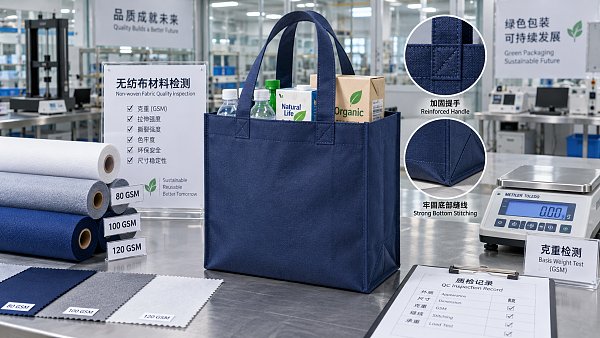
 Fabrics & YarnsWhat fabric weight works best for reusable non woven fabric bags?Non woven fabric for bags: discover the best GSM range for durability, load capacity, print quality, and cost-effective reusable bag sourcing.Textile Industry AnalystSep 30, 2026