Industry News
Curation by industry experts
Hot Articles
Popular Tags
Solar Street Lights Wholesale IP65: What to Check Before Ordering
Solar Street Lights Wholesale IP65: What to Check Before Ordering
When evaluating solar street lights wholesale IP65 options, price alone is a weak buying signal.
A low quote can hide short battery life, unstable lumen output, poor sealing, or missing certification.
That usually leads to higher replacement costs, delayed projects, and warranty disputes.
For procurement decisions, the real question is simple: will the product perform reliably for the full project lifecycle?
This is where a structured review of solar street lights wholesale IP65 specifications becomes essential.
Before placing an order, check the waterproof rating, battery chemistry, controller logic, lighting performance, compliance documents, and supplier execution history.
Why IP65 Matters in Wholesale Solar Street Light Projects
IP65 means the fixture should resist dust ingress and low-pressure water jets from multiple directions.
For outdoor lighting, that sounds basic, but the difference between claimed and tested performance is significant.
In actual business use, failures often start at cable entries, gaskets, housing joints, or poorly sealed battery compartments.
Moisture intrusion does not always cause immediate failure.
More often, it causes corrosion, dimming, controller instability, and shortened battery life over time.
So when comparing solar street lights wholesale IP65 offers, ask whether the rating is self-declared or supported by a recognized test report.
Key questions to raise
- Who issued the IP65 test report?
- Does the report cover the exact model being quoted?
- Were accessories, brackets, and cable glands included in testing?
- What is the housing material and sealing method?
- How is condensation managed inside the luminaire?
Check the Core Performance Data, Not Just the Headline Specs
Many solar street lights wholesale IP65 listings highlight wattage first.
That can be misleading because wattage alone does not define usable road illumination.
What matters more is delivered lumens, beam distribution, mounting height, spacing, and autonomy days.
A good quotation should connect these values to a real project scenario.
For example, a parking lot, village road, industrial park, or municipal pathway will need different optical performance.
If the supplier cannot provide a lighting simulation or application guidance, the risk shifts back to the buyer.
Performance points worth verifying
- LED brand, efficacy, and lumen maintenance data
- Actual lumen output instead of theoretical chip lumens
- Beam angle and light distribution type
- Recommended pole height and installation spacing
- Backup days under cloudy conditions
- Dimming schedule and motion sensor logic
Battery Quality Often Determines the Real ROI
Battery performance is one of the biggest risk areas in solar street lights wholesale IP65 sourcing.
The fixture may look solid, but weak cells can destroy project economics within two years.
Recent market changes make this even more important.
Some suppliers switch cell grades or reduce battery capacity while keeping the same external design.
This also means a sample can perform differently from mass production.
For most projects, lithium iron phosphate batteries are preferred for safety, cycle life, and thermal stability.
Still, the battery chemistry alone is not enough. Cell grade, BMS quality, charging logic, and temperature protection all matter.
Battery checklist before ordering
- Battery type: LiFePO4, lithium-ion, or gel
- Rated capacity in Wh, not only Ah
- Cell brand, grade, and traceability
- Cycle life at stated depth of discharge
- High and low temperature protection range
- Battery replacement method and spare parts availability
Do Not Ignore Solar Panel and Controller Matching
Strong solar street lights wholesale IP65 performance depends on system balance.
An oversized lamp with an undersized panel will fail during cloudy periods.
A weak controller can also waste charging efficiency or damage the battery over time.
Ask suppliers how the system is designed for the target geography.
Solar irradiation in Africa, Southeast Asia, the Middle East, and Northern Europe differs widely.
Without location-based design assumptions, comparisons between wholesale offers are not reliable.
Ask for these technical details
- Solar panel wattage and conversion efficiency
- Monocrystalline or polycrystalline panel type
- MPPT or PWM controller
- Charging time under standard sunlight conditions
- Autonomy calculation basis for rainy days
- Programmable operating profile after full charge
Certification, Compliance, and Testing Documents Need Close Review
For procurement teams, documents are not a formality.
They are one of the clearest signals of supplier discipline and product consistency.
When sourcing solar street lights wholesale IP65, ask for complete and recent documentation.
Depending on the destination market, this may include CE, RoHS, IEC-related reports, MSDS, UN38.3, and battery transport paperwork.
Pay attention to model numbers, report dates, issuing laboratories, and product photos in each file.
A common issue is recycled certification used across multiple unrelated models.
Minimum document pack to request
- IP65 test report for the quoted model
- IES file or photometric report
- Battery transport documents such as UN38.3 and MSDS
- Product specification sheet with revision date
- Warranty policy with covered failure scenarios
- Factory audit, if the project size justifies it
Supplier Reliability Is as Important as Product Specs
A technically decent product can still become a procurement problem if the supplier lacks process control.
This is especially true in solar street lights wholesale IP65 projects with multiple SKUs or staged deliveries.
Lead time slippage, carton inconsistency, poor labeling, and slow after-sales support create hidden costs.
A more reliable signal is the supplier’s ability to answer detailed questions clearly and consistently.
That usually reflects internal engineering support and stronger quality control.
Commercial checks that reduce sourcing risk
- Mass production lead time and peak season capacity
- Sample-to-production consistency controls
- Incoming material inspection process
- Aging test and final inspection procedure
- Spare parts policy and warranty claim response time
- Export experience in the target market
A Practical Comparison Framework for Solar Street Lights Wholesale IP65
To compare offers efficiently, use a weighted review instead of looking only at unit cost.
This makes vendor discussions more objective and helps explain decisions internally.
Final Checks Before You Issue the Purchase Order
Before confirming solar street lights wholesale IP65 orders, tighten the final details.
Confirm the approved sample, carton marks, accessory list, user settings, and inspection standard in writing.
Also confirm replacement ratios for minor defects and response terms for field failures.
These details often decide whether a project stays profitable after installation.
The best solar street lights wholesale IP65 deal is rarely the cheapest initial offer.
It is the one that balances compliance, durability, energy autonomy, and dependable supplier execution.
A disciplined review process turns solar street lights wholesale IP65 sourcing from a price exercise into a controlled purchasing decision with stronger long-term ROI.
Recommended News
 Eco PackagingWhat affects the price of kraft paper rolls bought wholesale?Kraft paper rolls wholesale pricing depends on grade, basis weight, roll size, order volume, freight, and certifications. Learn how to compare landed costs and choose reliable value.Packaging Supply ExpertOct 03, 2026
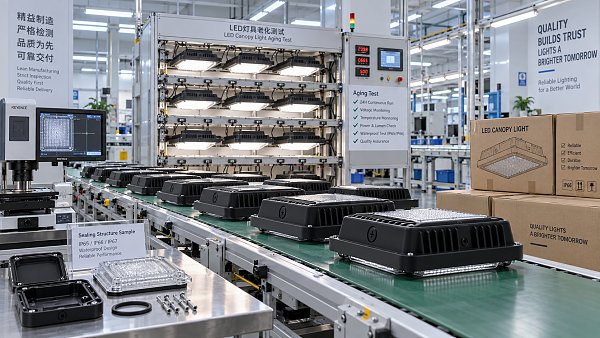
 Commercial LEDHow to evaluate a canopy lights factory before placing a bulk orderCanopy lights factory evaluation guide: verify specifications, compliance, quality control, capacity, and after-sales support before placing a bulk order.Commercial Tech EditorOct 02, 2026
 Commercial LEDHow to choose lighting systems that meet workplace safety needsLighting systems for workplace safety: learn how to control glare, improve visibility, meet environmental demands, and protect workers with reliable, compliant lighting choices.Commercial Tech EditorOct 01, 2026
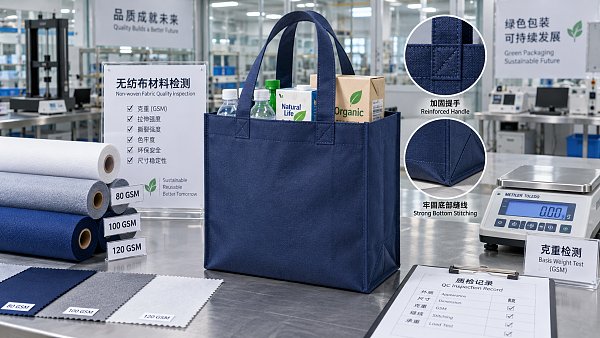
 Fabrics & YarnsWhat fabric weight works best for reusable non woven fabric bags?Non woven fabric for bags: discover the best GSM range for durability, load capacity, print quality, and cost-effective reusable bag sourcing.Textile Industry AnalystSep 30, 2026