Industry News
Curation by industry experts
Hot Articles
Popular Tags
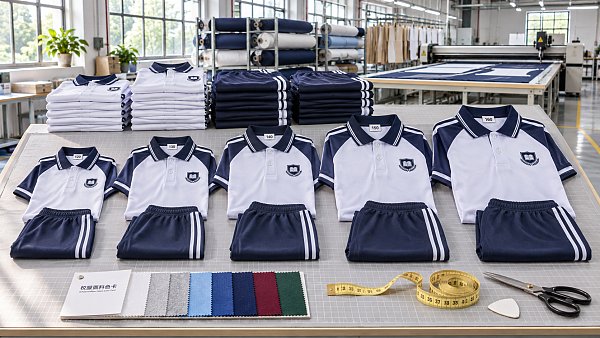
How do minimum order quantities affect custom school uniform costs?
Minimum order quantities (MOQs) can significantly influence the price of custom school uniforms wholesale, but the lowest unit cost does not always mean the lowest total spend. Larger orders may reduce production costs, while smaller batches can increase setup fees and limit fabric or customization options. For procurement professionals, understanding these trade-offs is essential to balancing budgets, inventory risk, and school requirements. This guide explains how MOQs shape uniform pricing and what to consider when negotiating with suppliers.
Why uniform suppliers set minimum order quantities
A school uniform order involves more than sewing a specified number of garments. Before production begins, a supplier may need to develop patterns, prepare samples, source fabric and trims, set up embroidery or printing, and schedule cutting and sewing lines. Some of those costs change little whether the order is small or large.
An MOQ helps the supplier spread those costs across enough pieces to make the production run viable. A fabric mill or trim provider may also impose its own minimum, which the garment factory passes on to the buyer. This is particularly relevant when a school requires a unique shade, woven label, plaid or custom-made button.
The stated minimum is rarely the whole story. A supplier might accept a total order at one quantity but require separate minimums for each style, fabric color or decoration. The practical question is not simply “What is your MOQ?” but “At what level does each minimum apply?”
Where the quantity changes the price
The most visible effect is the quoted garment price. As quantities rise, setup expenses can be allocated over more units, and a supplier may be able to buy materials or plan production more efficiently. That does not mean every additional piece costs less: price breaks depend on the supplier’s capacity, material commitments and order structure.
Look beyond the unit price for the following cost drivers:
- Fabric: A stock fabric may be available in smaller quantities than a custom-dyed or specially woven material. Unused custom fabric may still have to be purchased or paid for.
- Development: Pattern work, grading, samples and approvals may be billed separately or included in the garment price. Ask whether those charges recur on repeat orders.
- Decoration: Embroidery digitizing, screen preparation, woven badges and labels can each have setup charges or their own minimums.
- Production: Frequent changes between styles, colors and sizes can reduce the efficiencies expected from a larger headline order.
- Delivery: Freight, duties where applicable, local handling and storage can materially change the delivered cost, especially when comparing shipment sizes.
A quote with no visible setup fee is not necessarily cheaper. The supplier may have built that cost into the unit price. Request both an itemized quote and a clear statement of what is included before comparing offers.
Understand the minimum at every level
School uniform programs are rarely a single garment in a single size. A purchase may cover polos, trousers, skirts and blazers, each with different fabrics, colors and size distributions. An order that looks substantial in total can become several small production runs when divided by style.
For example, a supplier may allow several sizes of the same polo to count toward one style minimum, while treating a different fabric color as a separate run. Another may permit colors to be combined for sewing but require a minimum quantity for each dyed fabric. Neither approach is inherently wrong, but the distinction affects both price and feasibility.
Ask suppliers to specify minimums for the order as a whole, each garment style, each color and fabric, custom trims, and any repeat order. Confirm whether children’s and adult sizing can be combined, whether size ratios are restricted, and whether overproduction or underproduction is permitted. These details should appear on the quotation or purchase order, not just in an email conversation.
Compare total cost, not just the price break
A larger order may produce an attractive unit price while tying up money in sizes that take years to sell or distribute. In a school setting, demand can shift with enrollment, uniform policy, student growth and changes to the school crest. A low-cost garment that becomes obsolete is not a saving.
For each quantity option, estimate the purchase cost plus development, freight, import charges where applicable, storage, financing and the likely cost of surplus. Then consider the opposite risk: an order that is too small can lead to emergency replenishment, a higher repeat-order price, extra freight or a fabric mismatch.
A useful way to assess a price break is to compare the saving on units expected to be used with the full cost of the additional stock required to obtain it. Include any value that might realistically be recovered from surplus, but do not assume all excess garments can be sold. If a larger order only makes sense when every unusual size is consumed, the discount may not justify the commitment.
Build the forecast by size and garment
Total enrollment is a starting point, not a finished order plan. Review previous issue or sales records by size where available, expected new entrants, replacement demand and any planned uniform changes. Separate mandatory garments from optional items: their replenishment patterns may be quite different.
Where historical data is limited, agree on a conservative initial size curve with the school and identify how shortfalls will be handled. Avoid filling the MOQ with a uniform quantity of every size simply because it makes the spreadsheet easier. Excess in a rarely requested size will not solve a shortage in a popular one.
Ways to manage a high MOQ without compromising the brief
The best response to a high minimum is not always to negotiate the factory downward. Sometimes the specification itself creates the constraint. Changing a custom-dyed fabric to an approved stock color, for instance, may remove a mill minimum while preserving the garment’s appearance closely enough for the school’s needs. That decision still requires a physical color approval and confirmation of continuity for future orders.
Other options depend on the source of the minimum:
- Consolidate compatible demand. Schools using the same base garment may be able to combine production and add individual badges later. Check whether decoration, packaging and ownership can remain separate.
- Standardize components. Shared fabric, buttons or labels across styles can simplify purchasing, provided performance and appearance requirements are still met.
- Consider a stocked base garment. Adding an embroidered crest to an existing style may suit smaller programs, although size availability and future stock continuity should be checked.
- Discuss staged deliveries. A supplier may produce the full quantity but release it in batches. This can reduce space pressure, but does not automatically reduce the buyer’s financial commitment.
- Explore a replenishment agreement. A forecast or committed volume may support planning, but the contract should state what the buyer must purchase and what the supplier will actually reserve.
For staged arrangements, establish who owns finished goods or unused fabric, where they are stored, when payment is due and what happens if the design changes. A delayed delivery date is not the same as a right to cancel.
Negotiate around the real constraint
Before asking for an exception, find out whether the constraint comes from the garment factory, the fabric mill, a trim supplier or a particular decoration process. A factory may have flexibility on its sewing minimum but little control over the minimum for a unique fabric. In that case, agreeing to purchase the fabric balance or selecting an available material may be more productive than requesting a lower garment MOQ.
Request pricing at several quantities around the expected requirement, including one below and one above it if the supplier will quote them. Use the same specification, size breakdown and delivery terms for each option. Ask the supplier to identify one-time charges, recurring charges and assumptions about fabric consumption. A meaningful comparison requires knowing whether quotes use the same delivery point and whether freight, insurance and import costs are included.
Also clarify the validity period of the quote and what can trigger a price revision. Fabric availability, exchange rates, order timing and changes after sample approval can all affect a final offer. The supplier should explain any conditions rather than leaving them for the invoice.
Protect quality and replenishment when ordering in volume
A favorable MOQ is useful only if the garments remain acceptable through repeated washing and everyday wear. Before committing to a large run, define the fabric composition, weight or other agreed construction details, color standard, measurements and tolerances, decoration placement, labeling and packaging. Determine which samples must be approved and whether relevant testing or documentation is required for the destination market.
Sustainability claims also need a clear scope. If recycled content or a particular sourcing requirement matters, ask what evidence applies to the actual material and order. A general statement about a supplier’s practices does not by itself establish the composition or origin of every garment.
For repeat orders, agree how approved fabric, color references, patterns and decoration files will be retained. Ask what happens if a fabric is discontinued or a dye lot differs. A small replenishment order may carry a higher price or longer lead time than the initial run, so include those terms in the original discussion.
Global Supply Review’s sourcing perspective is useful here: garment price, material availability and delivery risk are connected decisions, not separate purchasing exercises. Before issuing a purchase order, reconcile the supplier’s minimums with the school’s size forecast, confirm the delivered-cost assumptions and document a realistic plan for replenishment. That gives the buyer a stronger basis for choosing a quantity than the lowest quoted price alone.
Recommended News
 Garment MfgHow do minimum order quantities affect custom school uniform costs?Custom school uniforms wholesale costs depend on minimum order quantities. Learn how to compare price breaks, manage inventory risk, and negotiate better terms.Textile Industry AnalystNov 18, 2026
 Eco PackagingVietnam Briefing Checklist Highlights EU Packaging Rules for BuyersEU packaging rules affect buyers sourcing from Vietnam. Explore the Vietnam Briefing checklist and key PPWR questions to verify before placing an order.Packaging Supply ExpertNov 17, 2026
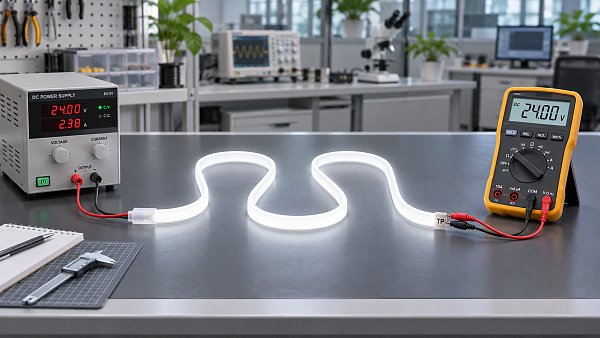
 Commercial LEDHow to check voltage drop when buying 12V neon rope lights wholesaleBuying neon rope lights wholesale 12v? Learn how to test voltage drop, compare supplier claims, and avoid costly brightness issues before placing an order.Commercial Tech EditorNov 17, 2026
 Policy & RegulationsEU Proposal to Restrict Chinese Furniture Imports Draws Strong Industry OppositionEU proposal to restrict Chinese furniture imports faces industry opposition. Explore potential supply chain and cost impacts, and what buyers should watch.Nov 16, 2026