Industry News
Curation by industry experts
Hot Articles
Popular Tags
Wholesale Underwater LED Lights Manufacturer: Key Certifications and Failure Risks
A reliable wholesale underwater LED lights manufacturer is judged less by catalog size than by proof of durability, electrical safety, and production discipline.
In underwater lighting projects, one weak seal, one overstated certification, or one unstable driver can turn a specification issue into a warranty, compliance, or brand problem.
That is why supplier evaluation now sits closer to risk management than simple price comparison, especially in global sourcing where product claims travel faster than verified performance.
Within the Lighting & Displays segment tracked by Global Supply Review, underwater LED lighting stands out because environmental exposure, electrical integration, and installation costs all raise the consequences of product failure.
Why underwater LED sourcing requires a different standard
Underwater luminaires operate in conditions that expose design shortcuts quickly.
Water ingress, thermal buildup, corrosion, pressure variation, and chemical exposure from pools or fountains all affect service life.
For that reason, a wholesale underwater LED lights manufacturer must demonstrate more than assembly capability.
The supplier should show control over housing materials, sealing systems, optical stability, driver quality, and testing methods across batches.
This matters across several applications: swimming pools, spa systems, landscape water features, marine docks, aquarium installations, and architectural fountains.
Each setting has different exposure profiles, but all of them punish weak engineering.
What a credible manufacturer should be able to prove
A serious wholesale underwater LED lights manufacturer should be ready with technical files, test records, and traceable compliance documents.
The conversation should move beyond brochure language into verifiable evidence.
Core certifications and standards
Not every project needs the same compliance package, but several certifications appear repeatedly in responsible sourcing reviews.
A document itself is not enough.
The stronger question is whether the certification applies to the exact model, configuration, and production site being quoted.
Technical evidence beyond certificates
Good manufacturers usually provide data that reveals how the product behaves over time.
- LM-80 or related LED package data for lumen maintenance
- Salt spray testing for corrosion resistance
- Thermal test results at rated operating conditions
- Driver life estimates and surge protection levels
- Material details for stainless steel grade, lens type, and sealing compound
These details help separate a true wholesale underwater LED lights manufacturer from a trading source with limited technical control.
Failure risks that often stay hidden during quoting
The most expensive failures are rarely visible in a sample photo or short factory presentation.
Several weak points deserve closer attention before approving volume orders.
Seal failure and water ingress
IP68 claims are common, but sealing quality varies widely.
Failure may come from poor gasket compression, inconsistent potting, cable entry weakness, or housing distortion during thermal cycling.
A wholesale underwater LED lights manufacturer should explain how sealing consistency is controlled in mass production, not only in test samples.
Corrosion and material mismatch
Stainless steel is not a guarantee by itself.
Lower grades may discolor or pit in chlorinated or saline environments, especially around fasteners and welded points.
Marine projects and coastal landscapes require closer material review than decorative indoor water features.
Driver instability and thermal stress
Many underwater LED failures begin in the driver, not the LED chip.
Voltage fluctuation, weak surge protection, and poor heat dissipation shorten life and create inconsistent color or flicker.
In practical terms, replacement costs may far exceed the original unit price because access to underwater fixtures is labor intensive.
Optical inconsistency and color drift
Architectural and hospitality projects often depend on tight visual consistency.
If binning control is weak, fixtures from different batches can create visible mismatch in color temperature or output intensity.
That becomes a site-level problem, not a minor product defect.
How to evaluate suppliers in a global sourcing environment
In a fragmented market, supplier evaluation works best when commercial review and technical review happen together.
This is where a data-led sourcing approach, similar to the editorial discipline promoted by Global Supply Review, becomes useful.
Instead of relying on claims, compare evidence across factories with the same checklist.
Questions worth asking before sample approval
- Which certifications apply to the exact underwater LED model being quoted?
- Are testing reports issued by an independent laboratory or created internally?
- What stainless steel grade and lens material are used?
- How are cable glands, potting, and sealing inspected during production?
- What is the accepted failure rate in final inspection and during warranty returns?
- Can the factory maintain the same driver and LED bin after pilot orders scale up?
Answers should be specific.
Vague confidence statements usually indicate weak process control or outsourced production layers.
Application differences that change sourcing priorities
Not every underwater lighting project values the same performance profile.
A wholesale underwater LED lights manufacturer should be able to discuss these differences with technical clarity.
This is why the lowest quote can be misleading.
A cheaper fixture may still produce a higher project cost once maintenance cycles, replacement access, and compliance exposure are included.
A practical decision framework
A useful sourcing process for underwater lighting usually has four stages.
- Define the environment clearly: pool chemistry, water depth, operating hours, voltage conditions, and maintenance access.
- Screen each wholesale underwater LED lights manufacturer by certification relevance, not by logo count alone.
- Test samples under realistic conditions, including immersion time, switching cycles, and temperature variation.
- Confirm scale-up stability through production records, warranty terms, and component traceability.
This approach reduces the chance of selecting a supplier that performs well only in prototypes or showroom samples.
Where the next decision should focus
The strongest next step is to build a comparison sheet that combines certifications, material specifications, driver data, warranty logic, and application fit.
That gives a clearer picture than price tables alone.
For any wholesale underwater LED lights manufacturer under review, the central question remains simple: can the supplier prove stable, compliant performance in the exact environment where the fixture will operate?
When that question is answered with documents, test evidence, and production consistency, sourcing decisions become more defensible and project risk becomes easier to manage.
Recommended News
 Commercial LEDHow to choose lighting systems that meet workplace safety needsLighting systems for workplace safety: learn how to control glare, improve visibility, meet environmental demands, and protect workers with reliable, compliant lighting choices.Commercial Tech EditorOct 01, 2026
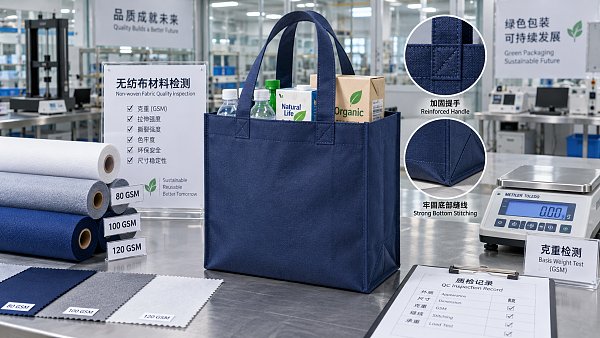
 Fabrics & YarnsWhat fabric weight works best for reusable non woven fabric bags?Non woven fabric for bags: discover the best GSM range for durability, load capacity, print quality, and cost-effective reusable bag sourcing.Textile Industry AnalystSep 30, 2026
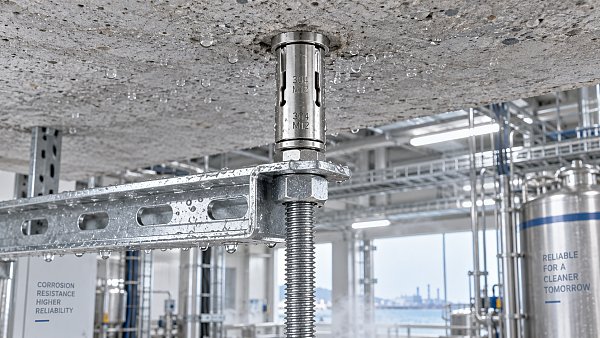
 Industrial FastenersWhen do zinc drop in anchors need corrosion-resistant coatings?Zinc drop in anchors need corrosion-resistant coatings in damp, outdoor, chloride-rich, or chemical environments. Learn how to select durable, approved protection.Tooling & Hardware LeadSep 29, 2026
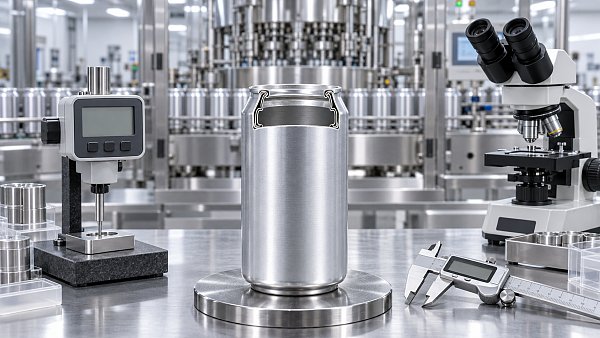
 Carton & PlasticsHow to assess seam quality in 250ml aluminum beverage cansLearn how to assess seam quality in 250ml aluminum beverage cans with practical visual checks, precise measurements, teardown methods, and defect-control guidance.Packaging Supply ExpertSep 28, 2026