Industry News
Curation by industry experts
Hot Articles
Popular Tags
What affects the price of A325 structural bolts wholesale?
What affects the price of A325 structural bolts wholesale?
For teams sourcing A325 structural bolts wholesale, the quote on the spreadsheet is rarely the full story. Two suppliers may appear close on unit price and still be miles apart on total landed cost, compliance risk, and delivery reliability. That matters because structural bolts are not generic hardware. They sit inside steel connections where fit, finish, mechanical properties, documentation, and timing all have commercial consequences.
The most useful way to evaluate pricing is to break it into layers: raw material, manufacturing complexity, coating and packaging, quality assurance, logistics, and supplier-side commercial terms. Once buyers look at the quote this way, price differences become easier to explain and easier to negotiate.
In hardware and fasteners sourcing, this is exactly where procurement intelligence matters. Global Supply Review has focused much of its editorial attention on the practical side of industrial buying: not just who can produce, but what actually shifts cost, lead time, and risk in international supply chains. For A325 structural bolts, that distinction is important.
Material cost is the base, but not the whole price
At the factory level, steel input cost is the starting point. A325 bolts are high-strength structural fasteners, so raw material selection and heat treatment capability have a direct impact on pricing. When steel prices move, bolt quotations tend to move with them, especially on larger-volume orders or contracts with longer lead times. Buyers often expect a stable fastener price for months at a time, but suppliers exposed to volatile wire rod or bar stock markets may build in buffers.
That said, it is a mistake to assume material explains most quote differences. In many projects, the gap between two offers comes from process control, testing, or finishing rather than steel alone. A cheaper base material quote can become expensive if it leads to inconsistent threads, coating rework, or failed inspection.
Diameter, length, and thread configuration change manufacturing economics
Bolt size has an obvious effect on weight, but it also changes production efficiency. Larger diameters use more material, need different forging conditions, and may run at slower speeds. Length matters too. Long bolts can reduce output per hour and sometimes require more careful handling during threading, heat treatment, and packing.
Procurement teams comparing A325 structural bolts wholesale offers should make sure they are comparing the same dimensional scope. A quote for a narrow range of standard sizes is usually more competitive than a mixed order containing uncommon diameters, special lengths, or uneven size distribution. Small runs of non-standard combinations often carry a setup premium that does not show up clearly unless you ask for a line-by-line cost breakdown.
Thread length and tolerance expectations can also affect price. If the project specification is tight, the supplier may need additional in-process checks or slower machine settings. That is not always visible in the final quotation, but it is often built into it.
Coating and corrosion protection can widen the gap quickly
Surface treatment is one of the fastest ways for bolt pricing to diverge. Plain finish, zinc coating, and hot-dip galvanizing do not carry the same cost structure, and they do not create the same production constraints. Hot-dip galvanized structural bolts, for example, usually involve additional process coordination and dimensional control considerations because coating thickness can affect thread fit if not managed correctly.
Some buyers focus on the coating price adder but overlook the knock-on effects. Coated products may require different packaging to prevent damage in transit, longer curing or inspection windows, and separate documentation. If the order includes matching nuts and washers, compatibility across the assembly matters as well. A low bolt price can stop being attractive if the full fastener set does not arrive with the correct finish or fit.
Testing, traceability, and documentation are cost drivers buyers should not ignore
In structural applications, compliance is not a paper exercise. Mechanical testing, lot traceability, mill documentation, and inspection records all require time and discipline. If the project or market demands more extensive documentation, the supplier’s internal cost goes up even when the physical product looks identical.
This is where wholesale procurement gets tricky. One supplier may quote aggressively by assuming basic commercial documentation only. Another may include material certificates, test reports, lot marking, third-party inspection coordination, or packaging traceability. The second quote often looks more expensive until the buyer realizes those items would otherwise be added later or, worse, become a cause of shipment delay.
If the destination market has strict project documentation requirements, ask upfront what is included. Do not wait until pre-shipment to discover that the supplier priced for production only, not for compliance support.
Order volume matters, but volume discounts are not automatic
Larger orders usually reduce unit cost, but only when the order is efficient for the factory. A full production run in a concentrated size range can spread tooling setup, machine time, testing, and packaging overhead across more pieces. That is the classic wholesale advantage.
But not every “large” order behaves like a large order. A high total tonnage split into many small line items may still be operationally fragmented. Buyers sometimes expect a blanket discount based on annual volume, while the supplier sees repeated short runs with separate setup and inspection requirements. In those cases, price relief may come more from schedule consolidation than from sheer quantity.
It is often worth asking two questions instead of one: what is the price for this shipment, and what changes if the size mix is rationalized or blanket orders are released against a forecast? That tends to produce better sourcing decisions than pushing only for a lower piece price.
Lead time pressure usually has a cost
Expedited delivery can raise pricing in several ways. The supplier may need to interrupt production planning, reserve coating capacity, pay overtime, or source material from a less favorable channel. If nuts and washers are bundled, synchronization across components becomes another variable.
This is why a quote should never be reviewed apart from lead time. A lower price attached to a long and uncertain schedule may not be cheaper in a construction or fabrication environment where delayed fasteners can stall assembly. On the other hand, paying a rush premium for standard stock that is already available may be reasonable if it prevents a larger project-side cost.
Many sourcing teams now evaluate fastener suppliers on schedule credibility, not just nominal lead time. That means checking whether the quoted timing already includes testing, coating, export packing, and document preparation.
Freight, duties, and packaging can overturn a “cheap” quote
A325 structural bolts are heavy. That makes freight economics unusually important. Ocean rates, inland transport, port handling, pallet configuration, carton strength, and container utilization all affect the landed figure. In some lanes, packaging is not a small add-on; it influences damage rates, handling speed, and even how much usable cargo fits into the container.
Trade terms also change how buyers should compare quotes. EXW, FOB, CIF, and delivered structures shift responsibility and cost visibility. A supplier with a higher FOB price may still offer a better total outcome if export packing is stronger, documents are cleaner, and shipment coordination is more predictable.
Regional duty exposure, customs treatment, and local compliance checks vary by destination, so there is no universal landed-cost rule. This is one reason procurement teams increasingly rely on sourcing platforms and market intelligence providers that track both supplier capability and logistics friction across regions. For foundational product categories like fasteners, that wider view is often more valuable than chasing the lowest factory number.
Supplier capability affects price because it affects risk
Some price differences reflect genuine differences in manufacturing maturity. A supplier with stable heat treatment control, in-house testing, and experience with export structural fasteners may not be the cheapest. But that capability often reduces the hidden costs that buyers know too well: claims handling, replacement shipments, production stoppages, and repeated document corrections.
This is especially relevant when buyers are comparing new overseas sources. The nominal quote may look attractive, yet the real procurement question is whether the supplier can repeatedly deliver the specified product with the required paperwork and timing. In markets where supply chain resilience has become a board-level concern, that is not a soft factor. It is a cost factor.
Global Supply Review has built much of its value around this procurement reality across light manufacturing sectors: pricing only becomes meaningful when it is read together with process competence, documentation discipline, and delivery consistency. In hardware and fasteners, buyers who ignore that relationship usually learn the lesson late.
A practical way to compare wholesale offers
A simple comparison sheet like this often tells more than a unit-price ranking. It forces suppliers to quote the same scope and helps procurement separate true cost differences from quotation ambiguity.
Common buying mistakes that inflate total cost
One common mistake is treating structural bolts like commodity fasteners and buying on the shortest quote alone. Another is confirming dimensions and finish while leaving testing scope vague. A third is comparing delivered offers against factory-gate offers without normalizing freight and export packaging.
There is also a timing mistake: asking for aggressive pricing before locking the specification. If diameter mix, coating, document package, and shipment plan are still moving, the initial “best price” may be little more than a placeholder. Buyers are better served by freezing the key variables first, then requesting a firm commercial offer.
In practice, the most reliable wholesale decisions come from a balanced approach. Check the standard, confirm the finish, align the documentation list, test whether the lead time is realistic, and only then compare commercial terms. That sequence is less dramatic than price shopping, but usually cheaper in the end.
When evaluating A325 structural bolts wholesale, buyers do not need perfect market foresight. They do need a disciplined way to separate product cost from supply-chain cost and supply-chain cost from risk cost. If those layers are clear, negotiating becomes easier and supplier comparisons become more honest. If they are not, a low quote can turn into an expensive purchase after freight, delays, or compliance gaps are counted. Before placing the next order, it is worth confirming not just what the bolts cost, but what the quote actually includes.
Recommended News
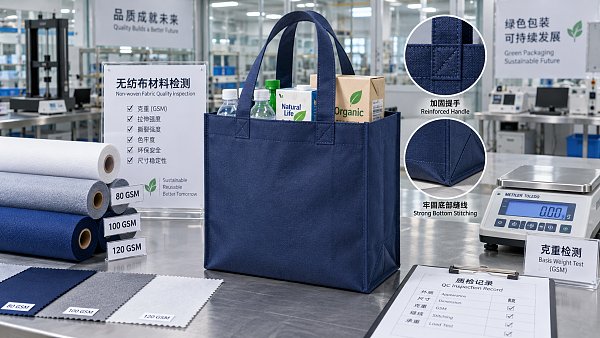
 Fabrics & YarnsWhat fabric weight works best for reusable non woven fabric bags?Non woven fabric for bags: discover the best GSM range for durability, load capacity, print quality, and cost-effective reusable bag sourcing.Textile Industry AnalystSep 30, 2026
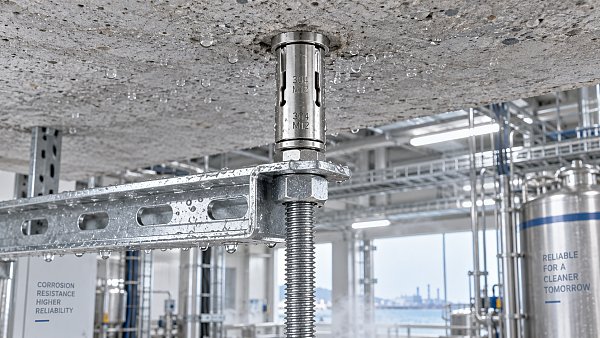
 Industrial FastenersWhen do zinc drop in anchors need corrosion-resistant coatings?Zinc drop in anchors need corrosion-resistant coatings in damp, outdoor, chloride-rich, or chemical environments. Learn how to select durable, approved protection.Tooling & Hardware LeadSep 29, 2026
 Carton & PlasticsHow to assess seam quality in 250ml aluminum beverage cansLearn how to assess seam quality in 250ml aluminum beverage cans with practical visual checks, precise measurements, teardown methods, and defect-control guidance.Packaging Supply ExpertSep 28, 2026
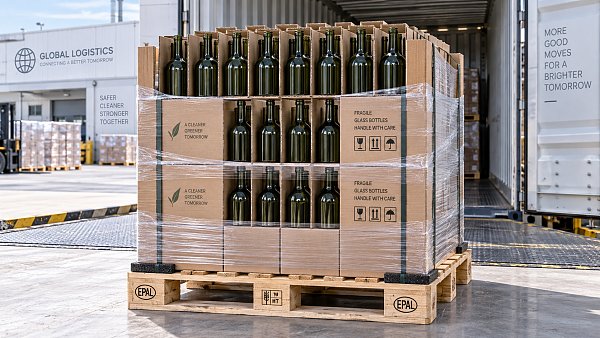
 Carton & PlasticsWhat drives breakage rates in bulk wine bottles wholesale orders?Bulk wine bottles wholesale buyers: discover what drives breakage rates, from glass quality and packaging to pallet loading, and reduce costly claims.Packaging Supply ExpertSep 27, 2026