Industry News
Curation by industry experts
Hot Articles
Popular Tags
Kuala Lumpur 2026 Photo Expo to Open Aug. 21, Tightening Local Sourcing and Compliance Signals
On August 21, 2026, the Kuala Lumpur International Photography Professional Expo will open for a three-day run, and the clearest signal in this event is not the exhibition calendar itself but the compliance framework attached to it. The show is positioning cross-border procurement around imaging consumables and packaging, while requiring exhibitors to present ISO 14001 and EN71 compliance evidence and using a Malaysia-China green clearance pre-review channel. For exporters, buyers, and supply-chain service providers tied to cartons, plastics, printing equipment, eco packaging, and textile machinery, this is worth attention because it links sourcing access more directly to documentation, certification, and customs readiness.
A trade show format that now carries procurement rules
The 2026 Malaysia Kuala Lumpur International Photography Professional Expo is scheduled for August 21 to 23, 2026.
According to the provided information, it is described as the only B2B exhibition in Southeast Asia covering the full photography industry chain. For the first time, it will set up a dedicated cross-border supply zone for imaging consumables and packaging, with a focus on connecting Chinese exporters in Carton & Plastics, Printing Equipment, Eco Packaging, and Textile Machinery.
The exhibition also requires participating exhibitors to provide ISO 14001 and EN71 compliance proof, and it will open a Malaysia-China green clearance pre-review channel.

Where the pressure now falls along the chain
Exporters and manufacturers will face a tighter document review
For Chinese export-oriented firms in cartons, plastics, printing equipment, eco packaging, and textile machinery, the likely impact is at the quotation, qualification, and pre-shipment stages. Analysis suggests that buyers will use the exhibition setting to screen suppliers earlier on environmental management and product-safety documentation, rather than treating those items as post-order paperwork. That makes ISO 14001 and EN71 evidence more than a formality; it becomes part of market access and procurement comparison.
Buyers may shift from price-only comparison to compliance-led sourcing
From a procurement perspective, the new cross-border supply zone suggests that sourcing decisions may be evaluated alongside compliance readiness and clearance efficiency. What deserves closer attention is whether buyers treat the green pre-review channel as a practical advantage in delivery timing and import preparation. If so, suppliers that can present complete certificates, test records, and shipment files cleanly may enter the shortlist more easily than those with weaker documentation discipline.
Service providers will need to match customs and certification timelines
Supply-chain service providers, testing bodies, and certification-related intermediaries may see demand rise around document review, pre-clearance preparation, and traceability support. At this stage, it is more appropriate to understand this as a change in execution expectations rather than a confirmed regulatory overhaul. The operational burden is likely to sit in matching production records, safety files, and customs submissions to the requirements used by the exhibition and by counterpart buyers.
What companies should check before treating this as a usable channel
Verify the current validity of ISO 14001 and EN71 materials
Companies considering participation or targeting procurement leads from the expo should first confirm that their ISO 14001 and EN71 documents are current, consistent, and ready for review. If product scope, factory scope, or certificate holder details do not match the actual shipment profile, the compliance signal can weaken quickly in buyer screening.
Align product files with the cross-border supply zone focus
The dedicated supply zone centers on imaging consumables and packaging, so exporters should review whether technical descriptions, material declarations, and product classifications are aligned with those categories. Analysis suggests that mismatched labeling or incomplete technical files could become a practical obstacle even if the product itself is commercially suitable.
Prepare for faster pre-review, not just later-stage customs clearance
The green clearance pre-review channel indicates that customs preparation may begin before the transaction is fully closed. Companies should therefore check whether their internal teams can produce complete shipment documents, certification sets, and traceability records early enough to support buyer-side qualification.
Watch for the final operational wording used on the ground
Because the provided information does not include a formal regulatory notice, the most useful next step is to watch how the exhibition actually applies these requirements in exhibitor onboarding, buyer matching, and clearance preparation. That will determine whether the change remains a procurement signal or becomes a repeatable market entry rule.
How this should be read for now
From an industry perspective, this is best understood as an execution signal. The exhibition is not only showcasing demand; it is also making compliance evidence, environmental management, and green clearance readiness part of the commercial interface. That matters because it can influence which suppliers are seen as usable, which documents are checked first, and which product categories are treated as lower-friction cross-border options.
At this stage, the clearest conclusion is cautious: the event points to a more rules-aware procurement environment, but the real effect will depend on how strictly the exhibitor requirements and pre-review channel are applied in practice.What the available information is based on
This article is based on the title, event date, and summary provided by the user. No specific official source link was included in the input, so the concrete source document remains unverified here. For a final compliance judgment, the most relevant source types to continue checking are official exhibition notices, organizer releases, regulatory or customs-related guidance, trade association updates, standards documents, and authoritative media reports. The next items to observe are the detailed enforcement wording, certificate review practice, clearance handling, and any buyer feedback that appears during the August 21-23 event window.
Recommended News
 Industrial FastenersWhen do zinc drop in anchors need corrosion-resistant coatings?Zinc drop in anchors need corrosion-resistant coatings in damp, outdoor, chloride-rich, or chemical environments. Learn how to select durable, approved protection.Tooling & Hardware LeadSep 29, 2026
 Carton & PlasticsHow to assess seam quality in 250ml aluminum beverage cansLearn how to assess seam quality in 250ml aluminum beverage cans with practical visual checks, precise measurements, teardown methods, and defect-control guidance.Packaging Supply ExpertSep 28, 2026
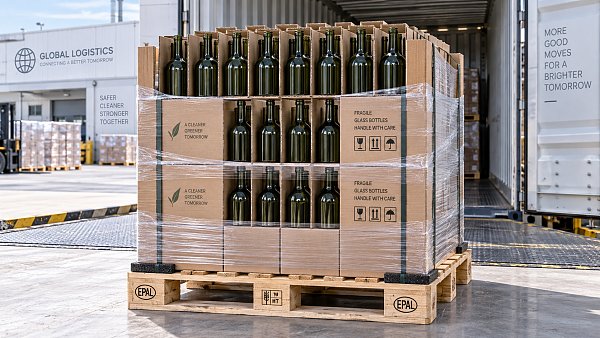
 Carton & PlasticsWhat drives breakage rates in bulk wine bottles wholesale orders?Bulk wine bottles wholesale buyers: discover what drives breakage rates, from glass quality and packaging to pallet loading, and reduce costly claims.Packaging Supply ExpertSep 27, 2026
 Office FurnitureHow supplier scorecards reduce risk in furniture procurementFurniture procurement supplier management becomes more resilient with supplier scorecards that track quality, delivery, compliance, and corrective actions. Learn how to reduce sourcing risk.Interior Sourcing LeadSep 26, 2026