Industry News
Curation by industry experts
Hot Articles
Popular Tags
Indonesia BPOM New Regulation: Imported Building Material Packaging Must Include Indonesian Language Labels and Recycling Symbols by July 2026, Chinese Exporters Need 45-Day Lead Time for Label Redesign and Filing
Indonesia BPOM New Regulation: Imported Building Material Packaging Must Include Indonesian Language Labels and Recycling Symbols by July 2026
Introduction
On March 27, 2026, Indonesia's National Agency of Drug and Food Control (BPOM) issued Regulation No. SE HK.02.02.02.01234, mandating that all imported building material packaging must display Indonesian-language ingredient lists and standardized recycling symbols starting July 1, 2026. Non-compliant products will face customs clearance rejection. This regulation directly impacts China's annual $1.2 billion building material exports to Indonesia, particularly affecting adhesive bags, waterproofing membrane cartons, and gypsum board wrapping films. The policy requires immediate attention from exporters, manufacturers, and supply chain operators to avoid trade disruptions.
Event Overview
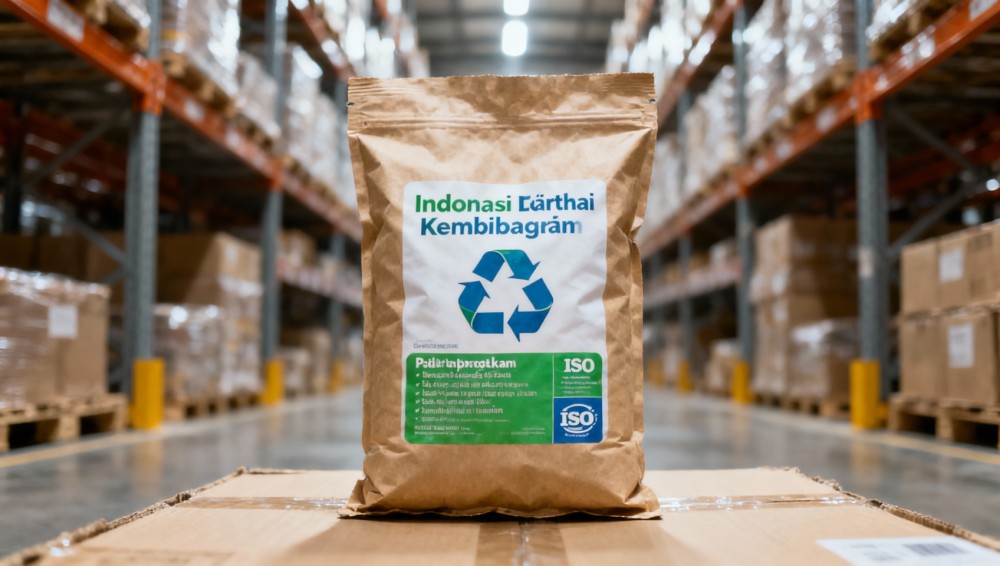
The BPOM regulation specifies three key requirements for imported building materials: (1) Full ingredient disclosure in Indonesian language, (2) Standardized recycling symbols meeting ISO 7000-1135 specifications, and (3) Minimum 10-point font size for all mandatory text. The enforcement date is fixed for July 1, 2026, with no transitional grace period. Chinese exporters must complete label redesigns and submit documentation to BPOM's Electronic Product Registration (e-Reg) system at least 45 days before shipment.
Impact on Specific Sectors
Direct Export Enterprises
Building material manufacturers exporting to Indonesia must immediately audit all packaging designs. Analysis shows typical label modifications require reformatting 30-40% of packaging surface area, potentially increasing production costs by 2-3% for products like tile adhesives and waterproof coatings.
Supply Chain Service Providers
Logistics operators handling Indonesia-bound shipments should prepare for extended customs clearance times. Current industry data indicates similar labeling regulations increased inspection rates by 15-20% during initial implementation phases.
Raw Material Suppliers
Chemical manufacturers providing ingredients for construction products must verify their Indonesian nomenclature aligns with BPOM's Substance Identification Database (SID), particularly for polymer-based materials used in sealants and adhesives.
Key Action Points for Businesses
Prioritize High-Volume Products
Exporters should first update packaging for top-selling items like cement additives and joint compounds, which account for over 60% of China-Indonesia building material trade.
Verify Symbol Compliance
The recycling symbols must use specific color codes (Pantone 355C for green, Pantone 286C for blue) and maintain 15mm minimum diameter. Third-party verification is recommended before mass production.
Establish Document Trails
Maintain bilingual (Indonesian-English) technical files for all product formulations, as BPOM may request supporting documentation during random inspections.
Industry Perspective
From an industry standpoint, this regulation signals Indonesia's tightening control over construction material standards, following similar moves in Vietnam (2024) and Thailand (2025). Observers note the 45-day processing requirement creates a bottleneck for just-in-time shipments, potentially favoring exporters with local Indonesian partners who can handle last-minute adjustments. The regulation's emphasis on recycling labeling also suggests future extended producer responsibility (EPR) requirements may follow.
Conclusion
This BPOM regulation represents a concrete operational requirement rather than a preliminary policy signal. While the compliance process is straightforward for individual products, the scale of affected shipments (estimated 8,000+ annual container loads from China) makes systematic preparation essential. Exporters should treat this as both a compliance exercise and an opportunity to demonstrate environmental responsibility to Indonesian buyers.
Information Sources
- BPOM Regulation No. SE HK.02.02.02.01234 (March 27, 2026)
- China Customs Export Data for Building Materials (2025 Annual Report)
- Indonesian Packaging Standards SNI 19-8964-2025 (Pending verification for alignment)
Recommended News
 Carton & PlasticsHow to assess seam quality in 250ml aluminum beverage cansLearn how to assess seam quality in 250ml aluminum beverage cans with practical visual checks, precise measurements, teardown methods, and defect-control guidance.Packaging Supply ExpertSep 28, 2026
 Carton & PlasticsWhat drives breakage rates in bulk wine bottles wholesale orders?Bulk wine bottles wholesale buyers: discover what drives breakage rates, from glass quality and packaging to pallet loading, and reduce costly claims.Packaging Supply ExpertSep 27, 2026
 Office FurnitureHow supplier scorecards reduce risk in furniture procurementFurniture procurement supplier management becomes more resilient with supplier scorecards that track quality, delivery, compliance, and corrective actions. Learn how to reduce sourcing risk.Interior Sourcing LeadSep 26, 2026
 Office Paper & Printing PaperHow roll diameter affects downtime when using jumbo paper rollsJumbo paper rolls can cut changeovers and downtime—if your unwinder, handling, and tension control can support them. Find the optimal roll diameter for smoother output.Packaging Supply ExpertSep 25, 2026