Industry News
Curation by industry experts
Hot Articles
Popular Tags
U.S. FDA Updates 21 CFR Part 177.1520: New Phthalate Migration Limits for PP/PE Food Containers Impact Chinese Export Orders
U.S. FDA Updates 21 CFR Part 177.1520: New Phthalate Migration Limits for PP/PE Food Containers Impact Chinese Export Orders

Introduction
On March 26, 2026, the U.S. FDA announced revisions to 21 CFR Part 177.1520, introducing new migration limits (≤0.1 mg/kg) for four phthalates (including DEHP and DBP) in PP/PE food containers like ready-to-eat meal boxes and salad cups. With a short 90-day transition period, this update directly affects over 1,000 Chinese injection molding packaging manufacturers in Guangdong and Zhejiang, involving annual exports worth $1.2 billion. The food packaging and export manufacturing sectors should closely monitor compliance requirements and supply chain adjustments.
Event Overview
The FDA's amendment to 21 CFR Part 177.1520 specifically targets polyethylene (PE) and polypropylene (PP) containers used for ready-to-eat foods. The new regulation sets migration limits for four phthalates: DEHP, DBP, BBP, and DINP. The rule takes effect after a 90-day transition period from the publication date (March 26, 2026). Public comments are accepted until May 10, 2026.
Industries Affected
1. Food Packaging Manufacturers
Chinese injection molding factories producing PP/PE containers for the U.S. market must immediately review material formulations. Non-compliant products shipped after the 90-day window risk rejection at U.S. ports. Factories may need to reformulate masterbatch or adjust processing temperatures to meet migration limits.
2. Raw Material Suppliers
Suppliers of plastic resins, colorants, and additives face demand shifts toward phthalate-free alternatives. The regulation could accelerate adoption of bio-based plasticizers in the supply chain.
3. Export Trade Intermediaries
Trading companies handling U.S.-bound food packaging orders must update compliance documentation. Existing contracts may require renegotiation for additional testing costs (estimated $800–$1,200 per SKU).
Key Action Points for Businesses
1. Immediate Compliance Review
Manufacturers should conduct gap analyses on current products using FDA-recognized migration test methods (e.g., FDA-FC). Priority should be given to high-volume SKUs like 8–16 oz salad containers.
2. Supply Chain Coordination
Engage material suppliers to obtain updated compliance statements and SDS documentation. Consider dual sourcing for critical raw materials to mitigate reformulation risks.
3. Client Communication Strategy
Proactively notify U.S. buyers about potential delivery timeline impacts. For Q3 2026 shipments, build in 2–3 weeks buffer for possible retesting requirements.
Industry Perspective
From an industry standpoint, this regulation signals the FDA's heightened scrutiny on endocrine disruptors in food contact materials. While the immediate focus is on phthalates, manufacturers should anticipate broader chemical restrictions in polymer food packaging. The short 90-day implementation period—unlike the typical 180-day transition for similar rules—indicates regulatory urgency. Companies with existing EU REACH compliance frameworks may adapt faster, given overlapping substance restrictions.
Conclusion
This FDA update represents a material-specific regulatory shift rather than a blanket food packaging overhaul. For Chinese exporters, the critical path involves verifying formulation compliance while maintaining cost competitiveness against Southeast Asian producers unaffected by the rule. The regulation's narrow scope on four phthalates suggests targeted risk management, but businesses should treat this as a precursor to expanded polymer additive controls.
Source Information
• U.S. FDA Federal Register Notice (March 26, 2026)
• China Plastic Processing Industry Association (PP/PE sector data)
• Ongoing: Monitoring FDA comment period outcomes (closes May 10, 2026)
Recommended News
 Carton & PlasticsHow to assess seam quality in 250ml aluminum beverage cansLearn how to assess seam quality in 250ml aluminum beverage cans with practical visual checks, precise measurements, teardown methods, and defect-control guidance.Packaging Supply ExpertSep 28, 2026
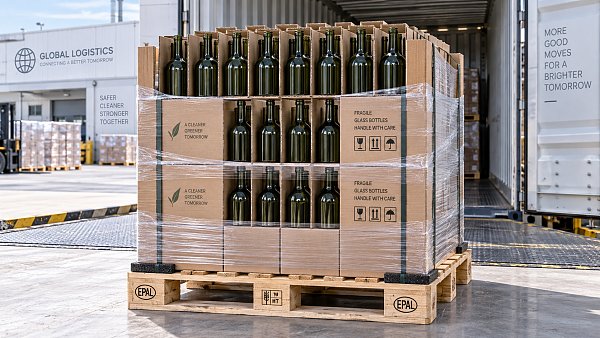
 Carton & PlasticsWhat drives breakage rates in bulk wine bottles wholesale orders?Bulk wine bottles wholesale buyers: discover what drives breakage rates, from glass quality and packaging to pallet loading, and reduce costly claims.Packaging Supply ExpertSep 27, 2026
 Office FurnitureHow supplier scorecards reduce risk in furniture procurementFurniture procurement supplier management becomes more resilient with supplier scorecards that track quality, delivery, compliance, and corrective actions. Learn how to reduce sourcing risk.Interior Sourcing LeadSep 26, 2026
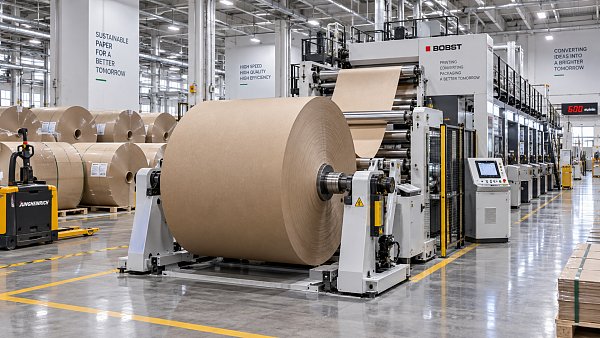
 Office Paper & Printing PaperHow roll diameter affects downtime when using jumbo paper rollsJumbo paper rolls can cut changeovers and downtime—if your unwinder, handling, and tension control can support them. Find the optimal roll diameter for smoother output.Packaging Supply ExpertSep 25, 2026