Industry News
Curation by industry experts
Hot Articles
Popular Tags
EU Plans to Extend Environmental Tax Pilot to Printing and Packaging Industry, Forcing Chinese Exporters to Accelerate Water-Based Process Transition
EU Plans to Extend Environmental Tax Pilot to Printing and Packaging Industry, Forcing Chinese Exporters to Accelerate Water-Based Process Transition
Introduction
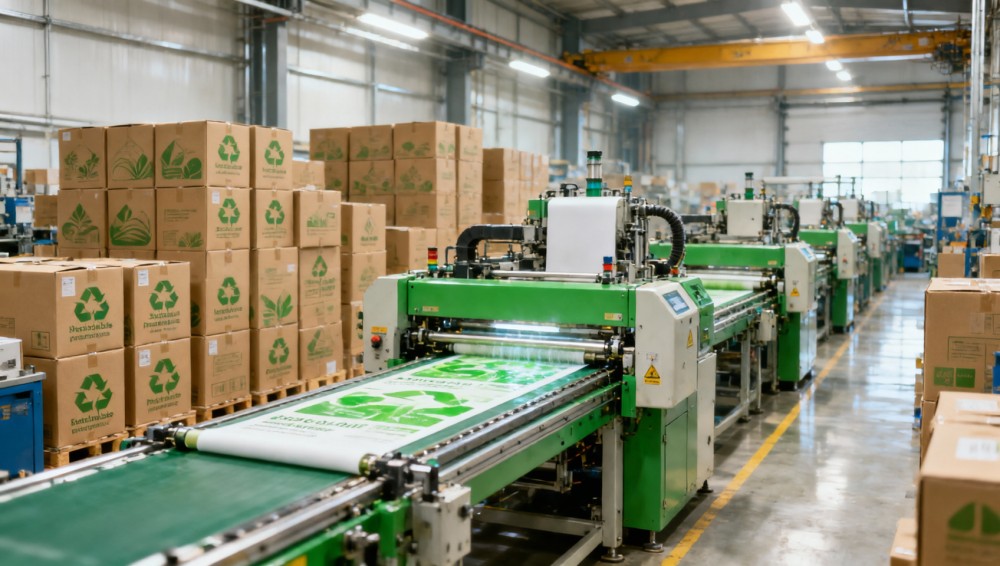
On March 18, 2026, the European Parliament disclosed in a closed-door briefing that the European Commission is advancing plans to extend the Environmental Tax Scheme (ETS II) to key industries emitting volatile organic compounds (VOCs), including printing and packaging. The policy, expected to cover all EU member states by 2027, could impose additional costs of €12–18 per kilogram of VOC emissions on businesses failing to adopt water-based or UV processes. This development is particularly critical for Chinese exporters supplying packaging and printing materials to the EU, as it may force them to accelerate sustainable process transitions or risk losing orders due to increased costs for their downstream clients.
Event Overview
The European Commission’s proposal to expand ETS II to VOC-intensive sectors like printing and packaging was confirmed in an internal briefing on March 18, 2026. Germany and the Netherlands have already initiated pilot calculations to assess the financial impact. If implemented as planned, the tax will apply to all EU member states by 2027, targeting businesses with direct VOC emissions. The current pilot phase suggests a cost range of €12–18 per kilogram of VOC emissions, which could significantly affect non-compliant exporters.
Impact on Sub-Sectors
Direct Exporters to the EU
Chinese manufacturers supplying printed packaging materials to EU-based brands will face immediate pressure. If their production relies on solvent-based inks or adhesives, their EU clients may pass on the additional carbon costs, making their products less competitive. This could lead to order reductions or shifts to compliant suppliers.
Raw Material Suppliers
Suppliers of solvent-based inks, coatings, and adhesives may see declining demand as exporters switch to water-based alternatives. Conversely, providers of eco-friendly raw materials could benefit from increased orders.
Printing and Packaging Processors
Small and medium-sized enterprises (SMEs) in China’s printing and packaging sector, which often lack the capital for rapid technological upgrades, may struggle to meet the new requirements. Larger firms with existing water-based or UV capabilities could gain a competitive edge.
Key Focus Areas and Recommended Actions
Monitor Policy Developments Closely
Exporters should track official EU communications and national-level implementations, particularly in key markets like Germany and the Netherlands, where pilot programs are underway.
Assess Process Transition Feasibility
Evaluate the cost and timeline for adopting water-based or UV processes. Prioritize high-volume product lines that are most exposed to EU demand.
Engage with Downstream Clients Early
Proactively communicate with EU buyers to understand their tolerance for cost increases and explore joint solutions, such as phased transitions or split sourcing strategies.
Explore Alternative Markets
Diversify exports to regions with less stringent VOC regulations to mitigate reliance on the EU market during the transition period.
Editor’s Perspective / Industry Observation
From an industry standpoint, this move signals the EU’s escalating commitment to environmental regulations, extending beyond carbon emissions to include VOC-intensive sectors. While the policy is still in the pilot phase, its potential ripple effects are already evident. Exporters should treat this as a wake-up call rather than a distant threat, given the lead time required for process upgrades. The printing and packaging industry, in particular, must weigh short-term costs against long-term market access risks.
Conclusion
The EU’s proposed expansion of ETS II underscores the growing intersection of trade and environmental compliance. For Chinese exporters, this is less about immediate penalties and more about future-proofing operations against tightening regulations. The wisest approach is to interpret the policy as a directional signal and begin incremental transitions, leveraging pilot-phase insights to stay ahead of full implementation.
Source Information
Primary source: European Parliament closed-door briefing, March 18, 2026. Note: Pilot calculations in Germany and the Netherlands are ongoing, and final tax rates may be adjusted based on trial outcomes.
Recommended News
 Industrial FastenersWhen do zinc drop in anchors need corrosion-resistant coatings?Zinc drop in anchors need corrosion-resistant coatings in damp, outdoor, chloride-rich, or chemical environments. Learn how to select durable, approved protection.Tooling & Hardware LeadSep 29, 2026
 Carton & PlasticsHow to assess seam quality in 250ml aluminum beverage cansLearn how to assess seam quality in 250ml aluminum beverage cans with practical visual checks, precise measurements, teardown methods, and defect-control guidance.Packaging Supply ExpertSep 28, 2026
 Carton & PlasticsWhat drives breakage rates in bulk wine bottles wholesale orders?Bulk wine bottles wholesale buyers: discover what drives breakage rates, from glass quality and packaging to pallet loading, and reduce costly claims.Packaging Supply ExpertSep 27, 2026
 Office FurnitureHow supplier scorecards reduce risk in furniture procurementFurniture procurement supplier management becomes more resilient with supplier scorecards that track quality, delivery, compliance, and corrective actions. Learn how to reduce sourcing risk.Interior Sourcing LeadSep 26, 2026