Industry News
Curation by industry experts
Hot Articles
Popular Tags
Architectural Glass Fittings: Key Details That Affect Installation Results
Architectural glass fittings play a decisive role in installation accuracy, structural stability, and long-term performance. For technical evaluators, even small details in material grade, tolerance control, load capacity, and surface treatment can directly influence project results. This article highlights the key factors that determine whether fittings will support safe, precise, and efficient glass installation across demanding commercial and architectural applications.
Why do architectural glass fittings matter so much in technical evaluation?
Architectural glass fittings are often treated as secondary hardware, yet they are one of the main variables behind whether a glass system installs cleanly, performs reliably, and remains serviceable over time. In frameless doors, balustrades, partitions, façades, canopies, and shower systems, the fitting is the direct interface between glass and structure. If that interface is poorly designed or poorly manufactured, even premium glass cannot compensate for the resulting stress concentration, alignment issues, or premature wear.
For technical assessment teams, the importance of architectural glass fittings lies in predictability. A fitting should not only meet a catalog description; it must match the actual glass thickness, hole pattern, edge finish, support condition, and service environment of the project. A hinge that looks robust on paper may still fail in use if its clamping surface is uneven, its gaskets are incompatible with the glass type, or its machining tolerance forces field adjustments beyond acceptable limits.
This is also why professional buyers and evaluators increasingly review fittings as engineered components rather than accessories. They look at mechanical data, corrosion behavior, dimensional stability, installation repeatability, and post-installation maintenance risk. In large commercial projects, small inconsistencies across batches can translate into delays, rework, safety concerns, and costly warranty claims. That makes architectural glass fittings a technical decision with procurement consequences, not just a finishing detail.
Which specifications should evaluators check first before approving architectural glass fittings?
The first review step is not appearance. It is compatibility between the fitting and the intended system. Technical evaluators should confirm five priorities early: base material, dimensional tolerance, load performance, glass contact design, and surface protection. These factors have the greatest effect on installation outcomes.
Material grade is fundamental. Stainless steel is widely used for architectural glass fittings, but not all stainless performs equally. Grade 304 may be adequate indoors in stable conditions, while 316 is often preferred for coastal, high-humidity, or chemically aggressive environments. Zinc alloy or aluminum may be acceptable in lighter-duty interior applications, but they require closer scrutiny for load, wear, and corrosion resistance. The evaluator should ask not only what the nominal material is, but whether the supplier can verify composition consistency and finishing quality across production lots.
Tolerance control is equally important. A spider fitting, patch fitting, clamp, connector, or hinge may technically fit the drawing but still create installation problems if slot positions, countersinks, or clamping faces vary too much. Tight tolerance reduces the need for on-site improvisation. It also helps installers maintain uniform joint lines, plumb alignment, and consistent glass pressure distribution. In technical review, dimensional reports and sample checks often reveal more than marketing claims.
Load capacity should be verified in context, not in isolation. The rated capacity of architectural glass fittings must be read together with mounting orientation, dynamic use, glass size, point support layout, and required safety factors. A fitting suitable for a static partition may not be appropriate for a high-cycle swing door or a balustrade exposed to crowd loading and vibration. Evaluators should also review whether test methods align with recognized standards and whether the supplier distinguishes between ultimate load and recommended working load.
Finally, glass contact design matters more than many teams expect. Gaskets, bushings, liners, and contact pads should prevent direct metal-to-glass stress while maintaining secure clamping. Inconsistent elastomer hardness, uneven pad thickness, or poor edge geometry can create hidden breakage risk. This area often determines whether the installation remains stable after thermal movement, repeated operation, and long-term settlement.
How do tolerance, machining accuracy, and hole alignment affect installation results?
In practice, many installation failures start as tolerance failures. Architectural glass fittings depend on precise interaction between fabricated glass, drilled holes, anchors, brackets, and building structure. When the fitting geometry is off by even a few millimeters, installers may be forced to enlarge holes, shim unevenly, apply excess torque, or accept visible misalignment. These quick fixes can compromise both aesthetics and structural behavior.
Hole alignment is especially critical for patch fittings, point-fixed glazing, and spider systems. If the actual hole center distance does not match the fitting body or bolt assembly, the glass panel may experience eccentric loading. Over time, this can lead to edge chipping, fitting loosening, or stress cracks around drilled zones. Technical evaluators should compare fabrication drawings, fitting tolerances, and mock-up results rather than assuming interchangeability between suppliers.
Machining accuracy also affects installation speed. Well-made architectural glass fittings reduce site adjustment, improve repeatability across multiple openings, and support cleaner sequencing with glass fabricators and installers. On large jobs, this translates into measurable productivity gains. Poorly machined hardware does the opposite: crews spend time correcting alignment, replacing incompatible components, and negotiating responsibility between trades.
For evaluators, one useful approach is to request a pre-approval package that includes tolerance charts, hole-position drawings, installation instructions, and sample assemblies. Reviewing a physical sample with actual glass thickness often exposes hidden issues such as gasket compression inconsistency, screw interference, or limited adjustment range. This step is inexpensive compared with field rectification after fabrication is complete.
What role do load capacity and safety margins play in different applications?
Not all architectural glass fittings operate under the same risk profile. A technical evaluator should classify the application before assessing hardware suitability. Doors face repetitive dynamic loads, impact, and closing forces. Balustrades and railings must resist lateral loads and accidental human pressure. Façade fittings experience wind load, thermal movement, and long-term environmental exposure. Canopy fittings may face combined dead load, live load, and weather-driven movement. Each use case requires a different level of scrutiny.
This means rated capacity alone is not enough. Evaluators need to understand how the fitting was tested, what configuration was used, and whether the test reflects real service conditions. For example, a hinge may pass static load testing but still underperform in cycle durability if bearings, pins, or internal springs are weak. Likewise, a clamp may support the design load in a lab but become unreliable if friction-based holding is affected by gasket aging or moisture.
Safety margin should also be evaluated alongside failure mode. A good fitting should not fail abruptly without warning. In many architectural settings, gradual wear, visible deformation, or controlled service degradation is preferable to brittle breakage. For this reason, experienced specifiers often favor architectural glass fittings with documented performance history, traceable testing, and conservative load recommendations.
In global sourcing, this is where editorial-grade due diligence becomes valuable. Procurement teams comparing multiple manufacturers should ask for application-specific data rather than generic brochures. The more visible and safety-critical the glazing system, the more important it becomes to align fitting selection with project risk, local code expectations, and maintenance access after handover.
How important are surface treatment and corrosion resistance for long-term performance?
Surface treatment influences both appearance and service life. Architectural glass fittings are exposed to hand contact, moisture, cleaning chemicals, urban pollution, and in some cases salt spray or industrial contaminants. A polished or satin finish may look similar at delivery, but its durability depends on substrate quality, finishing process, and post-processing control. Surface defects can become corrosion initiation points, especially in aggressive environments.
For stainless steel fittings, technical evaluators should pay attention to passivation quality, weld finishing, and whether hidden areas are equally protected. Corrosion often starts in crevices, around fasteners, or in areas where drainage is poor. For powder-coated or anodized components, coating adhesion, thickness consistency, and scratch resistance deserve careful review. In exposed architectural applications, appearance failure can become a commercial problem even before structural failure occurs.
Maintenance expectations should be addressed during evaluation. Some architectural glass fittings perform well only when cleaned regularly and installed in controlled conditions. Others are better suited for low-maintenance public spaces. If the project is a transport hub, hospitality venue, office tower, or high-use retail environment, the finish should tolerate frequent cleaning and human contact without rapid degradation.
In short, corrosion resistance is not just a materials question. It is a system question involving metal grade, finish quality, fastener compatibility, drainage, sealants, and environmental exposure. Technical evaluators who connect these variables early are more likely to prevent performance disputes later.
What common mistakes lead to poor outcomes when selecting architectural glass fittings?
One common mistake is selecting fittings primarily by visual design or unit price. While aesthetics matter in architectural hardware, visual similarity does not mean engineering equivalence. Two patch fittings may look nearly identical, yet differ significantly in metal density, clamping geometry, gasket quality, or pin durability. Technical evaluators should challenge any assumption that appearance guarantees performance.
Another mistake is failing to coordinate hardware review with glass fabrication details. Architectural glass fittings often require exact glass thickness, hole size, hole position, edge clearance, and tempering or lamination considerations. If hardware is finalized too late, the fabricated glass may no longer match the installation needs, causing delays and redesign pressure. Early coordination between supplier, fabricator, and site team is essential.
A third issue is overlooking environmental conditions. Evaluators sometimes approve interior-grade fittings for semi-exposed or humid locations because the drawings do not clearly communicate service risk. Over time, that mismatch leads to finish deterioration, seized moving parts, or weakened fasteners. A realistic exposure assessment should be part of every technical review.
Finally, many projects underestimate the value of installation guidance. Even high-quality architectural glass fittings can perform poorly if torque values, gasket orientation, anchor selection, or adjustment procedures are unclear. Suppliers that provide complete installation documentation, sample assemblies, and after-sales technical support often reduce project uncertainty more than those offering only a lower purchase price.
What quick evaluation table can help compare options more efficiently?
For busy technical teams, a simple comparison table can improve consistency when reviewing architectural glass fittings from different sources. The goal is not to replace detailed engineering review, but to create a practical screening tool before deeper approval.
Before sourcing or approving a solution, what questions should technical evaluators ask?
Before moving from review to purchase, technical evaluators should confirm a focused set of questions. Is the selected fitting proven for the exact application, not just a similar one? Are the glass thickness, hole pattern, and support conditions fully coordinated? Can the supplier provide test evidence, dimensional consistency records, and installation instructions? What finish and material grade are appropriate for the actual environment? And if replacement parts or service are needed later, is there a clear support path?
These questions help shift the discussion from generic hardware supply to project-specific performance. In many cases, the best architectural glass fittings are not simply the most expensive or the most visually refined. They are the ones that combine reliable engineering, manufacturability, documentation quality, and application fit. That combination supports safer installation, fewer site corrections, and stronger lifecycle value.
For procurement and technical teams working across global suppliers, this is where structured market intelligence and disciplined comparison become highly valuable. If you need to confirm a fitting type, verify supplier capability, compare material options, review technical documentation, or narrow down sourcing directions, it is best to start by aligning on application details, compliance expectations, service environment, and performance priorities before discussing lead time, quotation, or partnership terms.
Recommended News
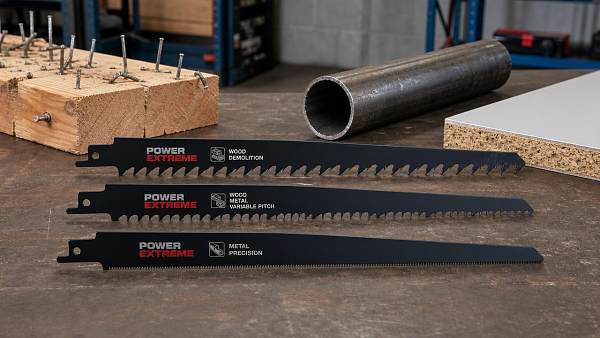
 Hand & Power ToolsReciprocating Saw Blades: Faster Demolition Starts With the Right Tooth DesignReciprocating saw blades work best when tooth design matches the job. Learn how to cut wood, metal, and mixed materials faster with better control, longer blade life, and fewer interruptions.Tooling & Hardware LeadMay 07, 2026
![]() Building HardwareStainless Steel Handrail Brackets for Coastal Projects: What to CheckStainless steel handrail brackets for coastal projects: learn what to check on grade, finish, fixings, and corrosion risk to avoid failures, ensure compliance, and choose with confidence.Tooling & Hardware LeadMay 07, 2026
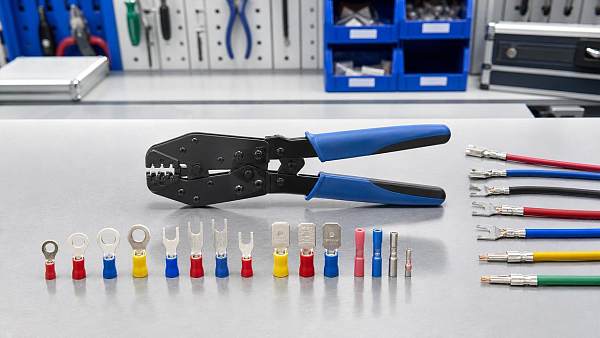
Building HardwareStainless Steel Handrail Brackets for Coastal Projects: What to CheckStainless steel handrail brackets for coastal projects: learn what to check on grade, finish, fixings, and corrosion risk to avoid failures, ensure compliance, and choose with confidence.Tooling & Hardware LeadMay 07, 2026 Hand & Power ToolsCrimping Tools Wholesale: How to Avoid Fit Issues Across TerminalsCrimping tools wholesale buyers: learn how to avoid terminal fit issues, compare key specs, and choose reliable suppliers to reduce rework, prevent failures, and improve repair consistency.Tooling & Hardware LeadMay 07, 2026
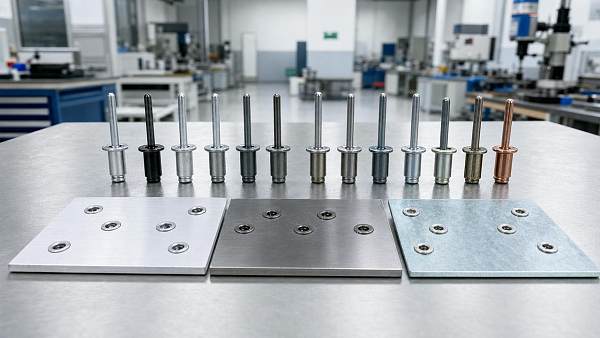
 Industrial FastenersBlind Rivets Wholesale: Material Matching Mistakes to AvoidBlind rivets wholesale buyers: avoid costly material matching mistakes. Learn how aluminum, steel, and stainless choices affect strength, corrosion, and long-term reliability.Tooling & Hardware LeadMay 07, 2026