Industry News
Curation by industry experts
Hot Articles
Popular Tags
Wholesale Padlocks: How to Compare Security Grades Without Overbuying
Buying wholesale padlocks for commercial use is not just about choosing the highest security rating. For business evaluators, the real challenge is matching lock grades to actual risk, compliance needs, and budget without paying for unnecessary performance. This guide explains how to compare security grades efficiently, helping procurement teams make smarter sourcing decisions with confidence.
Why wholesale padlocks are often overbought in B2B procurement
In many sourcing projects, buyers assume that a higher security grade always means a better purchasing decision. That is rarely true. For warehouses, retail chains, utility rooms, lockers, transport cages, and gated storage, the right wholesale padlocks depend on exposure level, access frequency, environmental conditions, and replacement economics.
Business evaluators also face internal pressure. Operations teams want fewer theft incidents. Finance wants lower unit cost. Compliance teams may ask for traceability, testing references, or documented material performance. The result is a familiar problem: organizations buy industrial padlocks with more resistance than the site actually needs, then absorb unnecessary capital cost across hundreds or thousands of units.
A structured review avoids this. Instead of asking which lock is strongest, ask which lock is sufficient for the asset, the environment, and the consequences of breach. That is where grade comparison becomes commercially useful.
- High-grade padlocks can increase procurement cost sharply when deployed across low-risk doors, carts, or employee lockers.
- Over-specification may also create operational friction if heavier shackles or tighter tolerances slow daily opening cycles.
- Under-specification creates a different risk: faster wear, easier attack, more replacement purchases, and weaker audit outcomes.
How to compare security grades without confusing strength with suitability
When comparing wholesale padlocks, security grade should be treated as one dimension of performance, not the only one. Buyers should look at attack resistance, shackle design, cylinder type, material durability, and the practical consequences of key management. A lock that survives aggressive bolt-cutter attacks may still be a poor fit if corrosion or key duplication controls are ignored.
Because grading systems vary by market and manufacturer, procurement teams should not compare labels alone. They should request the test basis behind the grade claim, including whether it references recognized standards, internal cycle testing, salt spray resistance, cut resistance, pull resistance, or impact resistance.
Core evaluation dimensions for wholesale padlocks
The table below helps business evaluators separate real decision factors from marketing language when reviewing wholesale padlocks for commercial or industrial sourcing.
This comparison shows why wholesale padlocks should be evaluated by site conditions and operational impact. Security grade is meaningful, but only when combined with product construction and use case evidence.
Which security grade fits which business scenario?
Commercial buyers usually get better results by grouping assets into risk tiers. This turns a broad padlock purchase into a controlled sourcing strategy. Instead of choosing one lock for every site, buyers define categories such as low-risk internal access, medium-risk shared storage, and high-risk perimeter or asset containment.
For example, a distribution center may need one type of wholesale padlocks for indoor cages, another for truck-side utility boxes, and a third for outdoor gates exposed to rain and tampering. The goal is rational allocation, not uniformity at any cost.
Scenario-based lock selection matrix
Use the following selection table to align security grade expectations with commercial risk and operating conditions.
A matrix like this helps procurement teams avoid buying premium security for low-consequence assets while still protecting critical exposure points. It also makes internal approval easier because each specification can be tied to a defined operational risk.
What technical details matter more than the label?
Body construction and shackle geometry
In wholesale padlocks, body design often tells more than front-facing branding. Laminated steel bodies can be strong and economical for many industrial uses. Solid brass may resist corrosion better but is not always the best answer for high attack risk. Hardened steel shackles improve cut resistance, while shrouded shackles reduce attack surface against bolt cutters.
Shackle diameter and clearance are equally important. A thicker shackle may offer better resistance, but if it does not fit the hasp, chain, or latch consistently, the deployment fails at the installation stage. Evaluators should confirm both security and compatibility before issuing bulk orders.
Corrosion resistance and service life
Outdoor and coastal applications regularly expose a sourcing mistake. A padlock that performs well in a dry warehouse may seize, stain, or lose smooth operation in humid, dusty, or chemical-adjacent environments. Stainless or specially coated options may justify higher unit pricing when service interruption is costly.
- Ask whether the lock is intended for indoor, sheltered outdoor, or full-weather exposure.
- Check if drainage, dust covers, or protective keyway features are available.
- Compare expected replacement intervals, not only the initial purchase price.
Keying options and access control
Many organizations underestimate the cost of key management. If hundreds of wholesale padlocks are deployed across multiple facilities, keying strategy can be as important as lock body strength. Keyed-different systems reduce accidental access overlap. Keyed-alike systems simplify operation in low-risk zones. Master-key structures help regional supervisors, but they require tighter control and documentation.
For evaluators, the question is practical: what level of access hierarchy supports the business without creating avoidable duplication or replacement expense?
How to balance cost, risk, and replacement economics
The cheapest wholesale padlocks are not always the lowest-cost option over the life of the program. But the highest grade is not automatically economical either. A sound procurement decision compares total cost of ownership across three layers: acquisition, maintenance, and incident exposure.
This is especially relevant in cross-border sourcing, where freight, packaging consistency, spare key handling, and reorder lead time influence the real landed cost. A product that saves a small amount per unit can become expensive if failure rates trigger emergency replenishment or site-level labor disruption.
Practical cost review checklist
- Map each lock location by consequence of unauthorized entry and by environmental severity.
- Estimate annual replacement volume for each padlock category rather than for the entire program.
- Add indirect costs such as rekeying, spare key storage, labor downtime, and failed audits.
- Test a sample batch before committing to full wholesale padlocks rollout across multiple sites.
This method gives business evaluators a more realistic basis for comparing standard commercial padlocks, weather-resistant models, and high-security variants. It also supports stronger discussions with finance teams because the decision can be linked to risk-adjusted operating cost.
What standards and compliance questions should buyers ask?
Not every purchase requires the same level of documentation, but wholesale padlocks for professional use should still be checked against recognized performance references where relevant. Buyers should ask suppliers what standard framework informs the grade claim, whether any corrosion or cycle tests are available, and how material consistency is controlled across batches.
For international procurement, consistency matters more than a single marketing term. A commercial buyer may accept different product families across regions, but each family should be documented clearly enough to support internal review, reorder accuracy, and supplier comparison.
- Request test references for attack resistance, corrosion resistance, and operating cycles where the application justifies it.
- Confirm packaging, labeling, and key coding practices for bulk distribution to multiple sites.
- Verify whether replacement keys, reorders, and custom keying can be managed consistently over time.
Common mistakes when sourcing wholesale padlocks
Mistake 1: Treating all assets as equal
A low-risk indoor cabinet and an exterior contractor gate should not automatically use the same lock specification. Uniformity may simplify ordering, but it can inflate spend significantly.
Mistake 2: Comparing only unit price
A lower upfront cost may mask higher failure, corrosion, or administrative expense. For business evaluators, the better comparison is landed cost plus expected replacement and control burden.
Mistake 3: Ignoring fit and field usability
Even strong wholesale padlocks fail the sourcing test if the shackle does not fit installed hardware, if the keyway clogs in dusty environments, or if staff cannot manage the opening frequency efficiently.
Mistake 4: Skipping sample validation
A pilot order helps confirm finish quality, key consistency, packaging logic, and environmental performance before larger commitment. That step is especially valuable for cross-border hardware sourcing.
FAQ: what business evaluators ask before placing a bulk order
How do I know if I am overbuying wholesale padlocks?
You are likely overbuying if the same high-security model is being specified for low-risk indoor uses where loss impact is limited and attack exposure is minimal. Review the application by asset value, site traffic, weather exposure, and frequency of access. If those factors are modest, a mid-range commercial lock may be sufficient.
Are higher security grades always better for industrial buyers?
No. A higher grade is better only when the threat profile justifies it. For many B2B environments, durability, corrosion resistance, and key management create more operational value than the highest attack-resistance category.
What should I request from a supplier before approving wholesale padlocks?
Ask for product specifications, material details, available keying options, test references if applicable, packaging information, and sample support. Also confirm lead time, reorder continuity, and whether key replacement or coding can be supported over the program life.
How important is keying strategy in a bulk purchase?
Very important. In larger deployments, keying strategy affects convenience, security exposure, and administrative workload. A poor key plan can lead to duplication problems, unauthorized access, and expensive rekeying later.
Why procurement teams use GSR for smarter padlock sourcing decisions
For business evaluators working across hardware and fasteners supply chains, the challenge is rarely just finding a factory. The harder task is filtering claims, comparing specifications across markets, and matching product choices to operational risk. That is where Global Supply Review adds value.
GSR supports sourcing teams with focused market intelligence, comparative product analysis, and procurement-oriented editorial coverage across foundational manufacturing sectors. For wholesale padlocks and related hardware categories, this helps buyers move from generic price shopping toward evidence-based selection that accounts for supply resilience, compliance expectations, and fit-for-purpose performance.
- Clarify which lock grades and constructions fit your actual application mix.
- Review sourcing options with attention to delivery timelines, batch consistency, and cross-site deployment needs.
- Understand what to ask about testing references, materials, and keying structure before issuing a purchase order.
Why choose us for wholesale padlocks sourcing support
If your team is evaluating wholesale padlocks for warehouses, retail networks, commercial buildings, facilities management, or industrial distribution, GSR can help you narrow the specification before you overbuy. Our coverage is designed for procurement directors, sourcing managers, and commercial evaluators who need useful decision support rather than generic product descriptions.
You can contact us to discuss practical sourcing questions such as parameter confirmation, product selection by risk tier, corrosion resistance expectations, keying options, sample coordination, delivery cycle planning, and certification or test-document requests. This makes it easier to build a padlock program that is commercially disciplined, operationally realistic, and ready for supplier comparison.
Recommended News
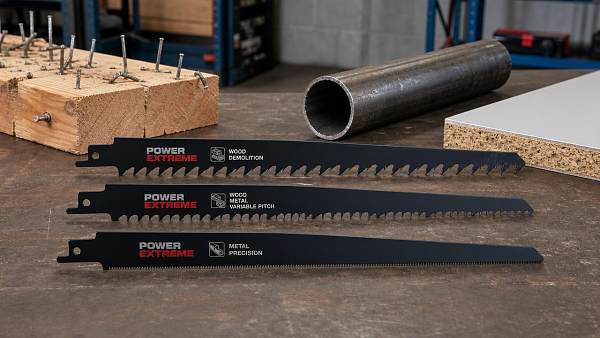
 Hand & Power ToolsReciprocating Saw Blades: Faster Demolition Starts With the Right Tooth DesignReciprocating saw blades work best when tooth design matches the job. Learn how to cut wood, metal, and mixed materials faster with better control, longer blade life, and fewer interruptions.Tooling & Hardware LeadMay 07, 2026
![]() Building HardwareStainless Steel Handrail Brackets for Coastal Projects: What to CheckStainless steel handrail brackets for coastal projects: learn what to check on grade, finish, fixings, and corrosion risk to avoid failures, ensure compliance, and choose with confidence.Tooling & Hardware LeadMay 07, 2026
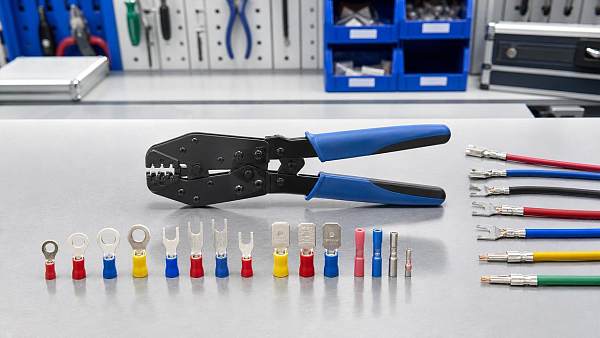
Building HardwareStainless Steel Handrail Brackets for Coastal Projects: What to CheckStainless steel handrail brackets for coastal projects: learn what to check on grade, finish, fixings, and corrosion risk to avoid failures, ensure compliance, and choose with confidence.Tooling & Hardware LeadMay 07, 2026 Hand & Power ToolsCrimping Tools Wholesale: How to Avoid Fit Issues Across TerminalsCrimping tools wholesale buyers: learn how to avoid terminal fit issues, compare key specs, and choose reliable suppliers to reduce rework, prevent failures, and improve repair consistency.Tooling & Hardware LeadMay 07, 2026
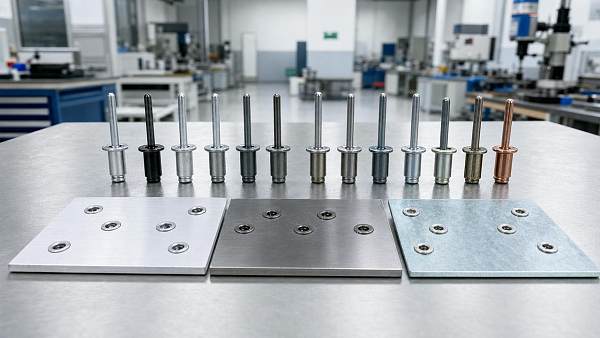
 Industrial FastenersBlind Rivets Wholesale: Material Matching Mistakes to AvoidBlind rivets wholesale buyers: avoid costly material matching mistakes. Learn how aluminum, steel, and stainless choices affect strength, corrosion, and long-term reliability.Tooling & Hardware LeadMay 07, 2026