Industry News
Curation by industry experts
Hot Articles
Popular Tags
Cordless Angle Grinder Runtime, Power, and Safety Trade-Offs
Choosing the right cordless angle grinder means balancing runtime, cutting power, and operator safety under real jobsite demands. For technical evaluators, the challenge is not simply comparing battery voltage or motor specs, but understanding how design trade-offs affect productivity, tool lifespan, and risk control. This article examines the key performance and safety factors that matter most in professional sourcing and equipment assessment.
Why cordless angle grinder evaluation is changing now
The market for the cordless angle grinder is no longer driven only by convenience. Across maintenance, fabrication, construction, utility work, and field installation, buyers are reassessing battery-powered grinders as primary production tools rather than backup tools. That shift changes the evaluation standard. Technical teams now need to judge whether a cordless angle grinder can sustain heavier duty cycles, control heat under continuous load, and maintain safe performance when used by a broad operator base.
Several industry signals explain this change. First, battery platforms have become more powerful, which has narrowed the performance gap between corded and cordless tools in many cutting and grinding tasks. Second, jobsite mobility and reduced trip hazards have become stronger safety and productivity priorities. Third, labor constraints are pushing contractors and industrial users toward tools that reduce setup time and simplify movement across work zones. As a result, the cordless angle grinder is now evaluated in terms of total operational efficiency, not just nominal motor output.
For sourcing professionals and technical evaluators, this trend creates a more complex decision matrix. Higher power can shorten runtime. Larger batteries can improve endurance but increase fatigue and handling risk. Aggressive electronic controls can raise protection levels but may interrupt work in demanding applications. The real task is to identify which compromises are acceptable for the target use case.
The main trend: performance expectations are rising faster than simple spec sheets can explain
A major shift in the cordless angle grinder category is that buyers are moving beyond headline specifications. Voltage, no-load speed, and amp-hour ratings still matter, but they no longer predict field performance well enough on their own. Technical evaluators increasingly focus on loaded speed retention, thermal behavior, electronic power management, accessory compatibility, and safety shutdown behavior.
This is especially important because modern brushless systems often deliver strong short-burst output, yet real productivity depends on how long that output can be maintained. A cordless angle grinder that feels powerful for brief cuts may slow noticeably during repeated metal stock removal, masonry scoring, or stainless finishing. In contrast, a model with better thermal balance and battery communication may deliver steadier output even if its marketing claims appear less dramatic.
Runtime is becoming a workflow question, not just a battery question
When assessing cordless angle grinder runtime, many procurement discussions still begin with battery capacity. That is too narrow. Runtime is shaped by wheel type, material hardness, pressure applied by the operator, ambient temperature, motor efficiency, battery age, and the aggressiveness of the tool’s protection logic. For technical evaluators, the key question is not “How many minutes does it run?” but “What work output does it deliver per charge under a repeatable task?”
This distinction matters because different duty cycles expose different weaknesses. Rebar cutting produces short bursts with repeated starts. Weld grinding generates sustained load and heat. Surface prep with flap discs can create long operating periods with moderate but continuous demand. A cordless angle grinder optimized for one pattern may underperform in another. Therefore, runtime benchmarking should be tied to use-case families rather than generalized claims.
Another notable change is the growing importance of battery swap logistics. In fleet environments, effective runtime includes charging speed, charger availability, battery cooling intervals, and cross-compatibility with other tools. A technically strong cordless angle grinder may still deliver poor field productivity if its battery platform creates bottlenecks during peak work hours.
Power assessments now depend on loaded behavior and control electronics
The old habit of comparing speed ratings alone can mislead evaluators. In real applications, the practical power of a cordless angle grinder is shown by how well it holds RPM under load, how quickly it recovers after resistance spikes, and how effectively it prevents overload without becoming unusably conservative. That puts greater weight on electronic architecture, including current management, motor tuning, and battery communication protocols.
Brushless motors have improved efficiency and reduced maintenance needs, but they also make software calibration more influential. Two grinders with similar hardware can behave very differently in steel cutting or concrete channeling. One may prioritize peak torque and then heat out rapidly. Another may throttle earlier to protect cells and electronics, leading to longer life but slower task completion. For technical assessment, this is not a flaw in itself. It is a design choice that must be matched to the intended operating profile.
The trend toward smart tool protection also affects accessory selection. Wheel diameter, thickness, bonding type, and intended material interact with speed control and power draw. As end users ask more from a cordless angle grinder, evaluators should verify whether the tool remains stable across the full accessory range likely to be used in the field.
Safety expectations are rising from basic compliance to active risk management
Safety is no longer treated as a static checklist item. For a cordless angle grinder, buyers increasingly expect active systems that reduce the severity of common incidents, especially kickback, accidental restart, overspeed exposure, and prolonged free-spin after trigger release. This is partly a response to stronger workplace safety culture and partly a recognition that tool misuse cannot be fully eliminated by training alone.
As a result, evaluators should examine how safety features function in practice, not just whether they exist. Electronic brake speed matters because a faster stop reduces secondary contact risk and speeds transitions between tasks. Anti-kickback systems matter because they can lower injury probability during wheel pinch events, but overly sensitive systems may frustrate operators in demanding cuts. Restart protection matters in battery tools because pack removal, temporary faults, or switch positions can create unexpected restart scenarios if poorly managed.
Mechanical design also remains central. Guard adjustment simplicity, side-handle stability, grip circumference, vibration behavior, and balance with larger battery packs all influence operator control. In other words, a cordless angle grinder can meet a strong electronic safety standard yet still create real-world handling risks if weight distribution or ergonomics are poorly resolved.
Who feels these trade-offs most strongly
The impact of runtime, power, and safety trade-offs is not uniform. Different stakeholders interpret the same cordless angle grinder through different priorities. Understanding those priorities helps technical evaluators frame sourcing decisions more effectively.
What technical evaluators should test before making a sourcing decision
Because the cordless angle grinder category is evolving quickly, practical validation is becoming more important than catalog comparison. A robust assessment process should combine lab-style checks with use-case simulation. This helps separate tools that benchmark well in ideal conditions from those that remain productive in mixed field environments.
- Measure task output per charge using representative materials and accessories rather than idle runtime.
- Track speed drop under sustained pressure to understand loaded cutting or grinding efficiency.
- Observe housing and battery heat buildup during repeated cycles, especially with high-demand discs.
- Test brake response, restart protection, and kickback-related shutdown behavior under controlled scenarios.
- Compare operator fatigue across battery sizes to identify whether longer runtime creates handling penalties.
- Review charger throughput and battery rotation planning if the cordless angle grinder will be deployed in fleets.
This evaluation approach reflects a wider sourcing trend: industrial buyers are moving away from isolated tool procurement toward system-level productivity analysis. In that context, the cordless angle grinder should be judged as part of an energy platform, a safety program, and a labor-efficiency model.
How future demand is likely to shift
Looking ahead, demand is likely to favor cordless angle grinder models that deliver balanced performance rather than extreme single-metric claims. Buyers are becoming more skeptical of tools that advertise maximum output but require frequent cooldown periods, oversized batteries, or repeated safety interruptions. The stronger direction is toward optimized control: enough power for real cutting and grinding, enough runtime for workflow continuity, and enough protection to lower incident exposure without making the tool frustrating to use.
Another likely trend is deeper integration between batteries, chargers, and onboard diagnostics. As fleet management becomes more data-aware, tool selection may increasingly include battery health transparency, fault reporting, and service planning signals. For technical evaluators, that means the cordless angle grinder will continue moving from a standalone product decision to a connected asset decision.
There is also a strong possibility that safety differentiation will become more visible in bid evaluations, especially for large contractors, infrastructure maintenance teams, and industrial plants with formal risk controls. In those settings, the value of a cordless angle grinder may be judged not only by output but by its contribution to standardized safe work practices.
A practical decision framework for balancing runtime, power, and safety
A useful final judgment is to match the cordless angle grinder to one of three sourcing priorities. If mobility and short-duration intervention work dominate, lighter weight and fast battery rotation may outrank maximum sustained output. If fabrication or heavy material removal is central, loaded speed retention and thermal stability should lead the decision. If workforce variability is high, safety electronics, ergonomics, and brake performance deserve heavier weighting even if nominal productivity is slightly lower.
For organizations reviewing their next cordless angle grinder purchase, the most important questions are straightforward: What duty cycle is actually expected? Which battery platform constraints already exist? What failure mode is more costly in your environment—lost runtime, weak cutting performance, or operator risk? The answers will clarify which trade-off is acceptable and which is not.
If your team wants to judge how these trends affect current sourcing plans, focus next on three checkpoints: validate real task output instead of relying on headline specs, compare safety systems in practical use rather than by feature lists alone, and assess the cordless angle grinder within the full battery ecosystem that supports field productivity. That is where the most durable purchasing decisions are now being made.
Recommended News
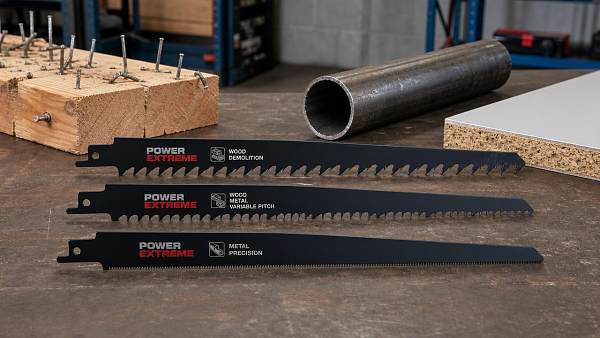
 Hand & Power ToolsReciprocating Saw Blades: Faster Demolition Starts With the Right Tooth DesignReciprocating saw blades work best when tooth design matches the job. Learn how to cut wood, metal, and mixed materials faster with better control, longer blade life, and fewer interruptions.Tooling & Hardware LeadMay 07, 2026
![]() Building HardwareStainless Steel Handrail Brackets for Coastal Projects: What to CheckStainless steel handrail brackets for coastal projects: learn what to check on grade, finish, fixings, and corrosion risk to avoid failures, ensure compliance, and choose with confidence.Tooling & Hardware LeadMay 07, 2026
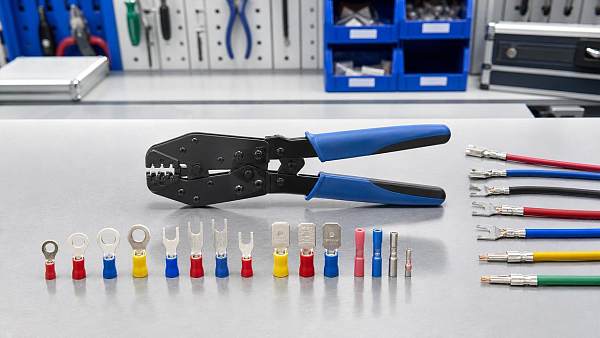
Building HardwareStainless Steel Handrail Brackets for Coastal Projects: What to CheckStainless steel handrail brackets for coastal projects: learn what to check on grade, finish, fixings, and corrosion risk to avoid failures, ensure compliance, and choose with confidence.Tooling & Hardware LeadMay 07, 2026 Hand & Power ToolsCrimping Tools Wholesale: How to Avoid Fit Issues Across TerminalsCrimping tools wholesale buyers: learn how to avoid terminal fit issues, compare key specs, and choose reliable suppliers to reduce rework, prevent failures, and improve repair consistency.Tooling & Hardware LeadMay 07, 2026
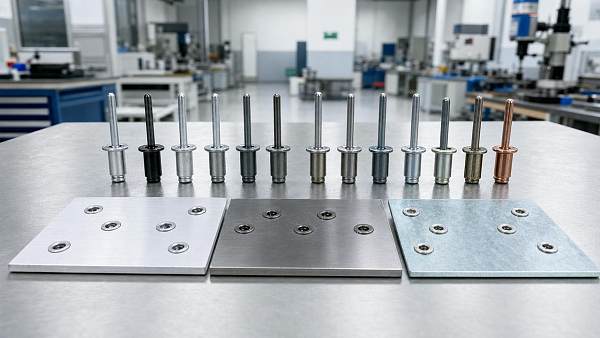
 Industrial FastenersBlind Rivets Wholesale: Material Matching Mistakes to AvoidBlind rivets wholesale buyers: avoid costly material matching mistakes. Learn how aluminum, steel, and stainless choices affect strength, corrosion, and long-term reliability.Tooling & Hardware LeadMay 07, 2026