Industry News
Curation by industry experts
Hot Articles
Popular Tags
Heavy Duty Tool Boxes vs Rolling Storage: Which Fits Daily Work Better
For after-sales maintenance teams, choosing between heavy duty tool boxes and rolling storage is more than a matter of convenience—it affects speed, organization, and daily efficiency on the job. If you handle frequent service calls, tight workspaces, or heavy tools, the right storage solution can reduce downtime and improve workflow. This guide compares both options to help you find the best fit for real-world maintenance demands.
Understanding the Storage Choice in Daily Maintenance Work
In after-sales service, tool storage is part of operational performance, not just workplace tidiness. Maintenance staff often move between customer sites, production floors, warehouses, utility rooms, and field service vehicles. In these environments, storage must support access speed, tool protection, mobility, and clear organization. That is why the discussion around heavy duty tool boxes versus rolling storage remains highly relevant across hardware, equipment servicing, facilities support, and industrial maintenance.
Heavy duty tool boxes are typically compact, rugged, and built to carry essential tools securely. Rolling storage, by contrast, emphasizes transport efficiency for larger tool sets, parts, and diagnostic equipment. Neither option is universally better. The right choice depends on task frequency, route complexity, tool weight, workspace layout, and how often technicians must carry storage up stairs, through narrow corridors, or across uneven ground.
For organizations that care about service consistency and technician productivity, understanding these differences helps standardize equipment selection. From a broader sourcing and operational perspective, the choice also reflects a larger industry trend: maintenance teams now need storage systems that support responsiveness, safety, and long-term durability while fitting modern service demands.
What Heavy Duty Tool Boxes Are Designed to Do
Heavy duty tool boxes are built for protection, structure, and reliable access to core tools. They often use reinforced steel, aluminum, or impact-resistant polymer construction, with secure latches, internal trays, compartment systems, and weather-resistant seals in some models. For after-sales maintenance personnel, their main value lies in keeping the most frequently used tools protected and ready without taking up too much space in a van, workshop, or customer facility.
Because heavy duty tool boxes are generally more compact than rolling cabinets or mobile carts, they work well when technicians need to bring a carefully selected set of hand tools into a job site. They are especially useful when service work involves climbing ladders, entering equipment rooms, or moving through restricted access points where large wheeled units become inconvenient.
Their strength is discipline. A well-packed heavy duty tool box encourages technicians to carry what they truly need, reducing clutter and limiting the risk of missing tools after a service call. This supports accountability and can simplify post-job inventory checks.
Why Rolling Storage Has Become Common in Service Operations
Rolling storage answers a different operational need. Instead of maximizing portability by hand, it reduces physical strain by moving larger loads on wheels. This is valuable for maintenance teams carrying power tools, meters, spare parts, fasteners, cable accessories, safety items, and job-specific kits. In large industrial sites, hospitals, commercial buildings, and distribution centers, rolling storage can save time and energy over the course of a long shift.
For technicians who perform multiple tasks at one location, rolling units provide a mobile workstation effect. Drawers, stacked compartments, and broader top surfaces help keep tools visible and accessible. Instead of returning to a vehicle repeatedly, the technician can move the storage unit closer to the work zone and complete more tasks in sequence.
This model aligns with current service expectations in many industries: faster turnaround, better first-visit resolution, and reduced operator fatigue. In that sense, rolling storage is not only about transport convenience but also about workflow efficiency.
Why the Industry Pays Attention to This Decision
Across maintenance-driven sectors, buyers and operations managers now evaluate storage solutions more strategically. Tool loss, poor organization, delayed access, and technician fatigue all affect service quality. Even small inefficiencies become significant when multiplied across many calls per day or many technicians per region.
From the perspective of B2B sourcing and operational intelligence, the rise of specialized maintenance workflows has changed how companies think about supporting field teams. A storage unit is expected to do more than hold tools. It must support route density, vehicle organization, safety compliance, and equipment protection. This is why product categories like heavy duty tool boxes continue to evolve, with features such as modular compartments, corrosion-resistant materials, lockable systems, and hybrid portable-rolling designs.
For exporters, manufacturers, and procurement teams, understanding real use conditions matters. The best storage solution is not the one with the longest feature list, but the one that matches technician movement patterns and service realities.
Operational Comparison at a Glance
The following overview helps maintenance teams compare heavy duty tool boxes and rolling storage in practical terms rather than marketing language.
Application Value for After-Sales Maintenance Teams
For after-sales personnel, the storage decision affects three key outcomes: response time, work accuracy, and physical efficiency. Heavy duty tool boxes support quick deployment. A technician can pick up a prepared kit and enter a site with minimal setup. This is valuable for urgent repairs, inspection visits, and short-duration service jobs where only a defined tool range is needed.
Rolling storage creates value in a different way. It helps technicians maintain continuity during longer jobs. When service work includes diagnostics, disassembly, replacement parts, and testing, the technician benefits from having a broader tool and component set nearby. This can reduce return trips and lower the chance of leaving out a required item.
There is also a safety and fatigue dimension. Repeated lifting of overloaded containers can contribute to strain injuries and slower performance by the end of the day. In organizations with high call volumes, rolling storage may improve overall labor sustainability. However, if the service environment includes frequent stair access or fragmented movement, a heavy duty tool box may remain the more efficient choice despite lower capacity.
Typical Use Scenarios by Work Pattern
Different service patterns naturally favor different storage formats. The goal is to match the storage method to the way work actually happens, not to assume one format covers every need.
How to Evaluate the Better Fit Beyond Product Specs
A practical evaluation should begin with work mapping. Managers should review how technicians move, what they carry most often, and where delays happen. If technicians repeatedly unpack large wheeled units just to retrieve a few common tools, heavy duty tool boxes may improve efficiency. If teams make frequent return trips because portable boxes cannot carry enough equipment, rolling storage may be the missing link.
Tool profile is also important. Dense metal tools, impact drivers, wrenches, sockets, test devices, and hardware assortments create a different load pattern from lighter inspection kits. Heavy duty tool boxes perform best when contents are curated. Rolling solutions perform best when capacity and organized separation are essential.
Another factor is surface condition. Wheels work well on smooth indoor floors, service corridors, and warehouse paths. They perform less effectively on gravel, stairs, and cluttered environments. Maintenance teams should assess not only destination sites but also parking-to-entry distance, doorway size, and lift access. These details often determine real usability more than material thickness or brand reputation.
Practical Selection Tips for Teams and Buyers
When selecting heavy duty tool boxes or rolling storage for after-sales work, prioritize structure over appearance. Look for latch reliability, handle strength, drawer stability, wheel durability, corrosion resistance, and compartment logic. A storage unit that looks robust but fails under repetitive service use will quickly create operational cost.
Standardization is equally valuable. If a team uses similar tool layouts across technicians, training becomes easier and lost-item checks become faster. For many organizations, the best system is not an either-or decision but a tiered setup: heavy duty tool boxes for fast-response essentials and rolling storage for larger scheduled jobs or on-site support tasks.
Procurement teams should also consider lifecycle value. Replacing weak handles, broken wheels, or damaged closures creates hidden cost. In sourcing decisions, field feedback from technicians is often more useful than catalog descriptions. Daily work conditions provide the clearest evidence of whether a storage solution truly fits.
Common Questions from Maintenance Professionals
Are heavy duty tool boxes better for all field service jobs?
No. Heavy duty tool boxes are excellent for compact, controlled, high-frequency service kits, but they are not ideal when the job requires many parts, multiple power tools, or long walking distances across flat facilities.
Does rolling storage always improve efficiency?
Not always. Rolling storage improves efficiency when the route and work area support wheeled movement. In stair-heavy, crowded, or uneven environments, it can become slower than a well-organized portable box.
Can teams use both formats together?
Yes, and many high-performing service teams do. A heavy duty tool box can hold the essential daily set, while rolling storage carries secondary tools, spare parts, and larger accessories for more complex jobs.
A Balanced Way to Decide
The choice between heavy duty tool boxes and rolling storage should reflect how maintenance work is performed in real conditions. If daily service depends on quick entry, confined movement, and essential tools, heavy duty tool boxes usually fit better. If the job involves heavier inventories, longer on-site activity, and repeated movement over smooth surfaces, rolling storage can offer stronger daily value.
For service leaders, buyers, and sourcing professionals, the best result comes from aligning storage design with workflow rather than choosing based on habit alone. Review technician routines, test storage in actual field conditions, and build a system that supports speed, safety, and organization. In modern after-sales maintenance, the right storage choice is a practical advantage that can be measured every day.
Recommended News
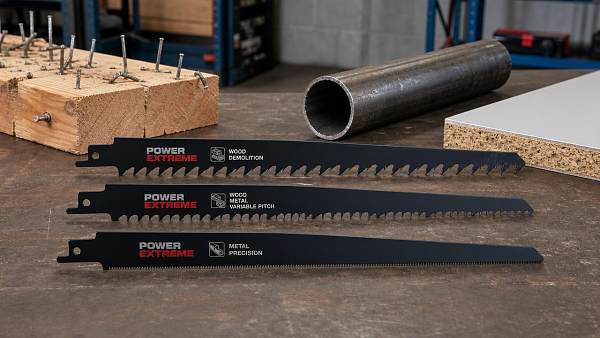
 Hand & Power ToolsReciprocating Saw Blades: Faster Demolition Starts With the Right Tooth DesignReciprocating saw blades work best when tooth design matches the job. Learn how to cut wood, metal, and mixed materials faster with better control, longer blade life, and fewer interruptions.Tooling & Hardware LeadMay 07, 2026
![]() Building HardwareStainless Steel Handrail Brackets for Coastal Projects: What to CheckStainless steel handrail brackets for coastal projects: learn what to check on grade, finish, fixings, and corrosion risk to avoid failures, ensure compliance, and choose with confidence.Tooling & Hardware LeadMay 07, 2026
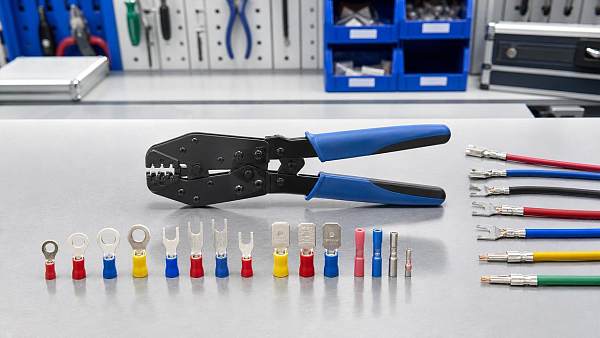
Building HardwareStainless Steel Handrail Brackets for Coastal Projects: What to CheckStainless steel handrail brackets for coastal projects: learn what to check on grade, finish, fixings, and corrosion risk to avoid failures, ensure compliance, and choose with confidence.Tooling & Hardware LeadMay 07, 2026 Hand & Power ToolsCrimping Tools Wholesale: How to Avoid Fit Issues Across TerminalsCrimping tools wholesale buyers: learn how to avoid terminal fit issues, compare key specs, and choose reliable suppliers to reduce rework, prevent failures, and improve repair consistency.Tooling & Hardware LeadMay 07, 2026
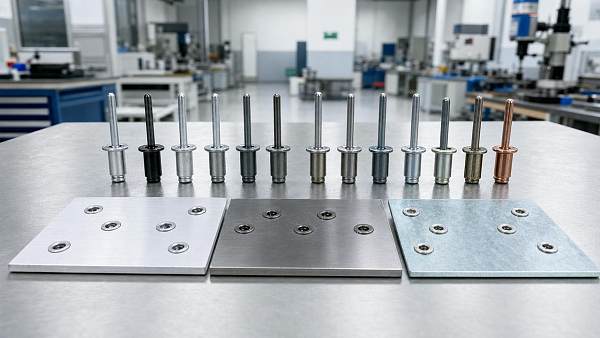
 Industrial FastenersBlind Rivets Wholesale: Material Matching Mistakes to AvoidBlind rivets wholesale buyers: avoid costly material matching mistakes. Learn how aluminum, steel, and stainless choices affect strength, corrosion, and long-term reliability.Tooling & Hardware LeadMay 07, 2026