Industry News
Curation by industry experts
Hot Articles
Popular Tags
Wholesale C Clamps: Common Quality Issues to Check Before Ordering
Before placing bulk orders for wholesale c clamps, quality and safety teams need to look beyond price and surface finish. Hidden issues such as poor jaw alignment, weak thread engagement, inconsistent hardness, and substandard coatings can lead to product failure, workplace risks, and costly returns. This guide highlights the most common quality problems to check before ordering, helping procurement and inspection professionals make safer, more reliable sourcing decisions.
Why Application Scenario Matters When Evaluating Wholesale C Clamps
Not all wholesale c clamps are purchased for the same job. A clamp used on a light woodworking bench, a fabrication line, a welding station, or a maintenance tool kit may look similar in a catalog, but the risk profile is very different. For quality control personnel and safety managers, this is the first sourcing reality to recognize: the same visible product shape can hide major differences in performance, durability, and safe working behavior.
In low-load and intermittent-use scenarios, minor coating flaws or rough threads may only create inconvenience. In high-force industrial clamping, hot-work applications, or repetitive assembly operations, those same flaws can accelerate wear, cause slipping, deform the frame, or create pinch hazards. That is why evaluating wholesale c clamps only by size, unit price, and packaging is not enough. The inspection standard must match the actual use case.
For B2B buyers, scenario-based inspection also helps reduce disputes with suppliers. Instead of using generic language such as “good quality” or “heavy duty,” teams can define acceptance criteria around real operating conditions: maximum clamping force, thread cycle life, corrosion exposure, welding heat proximity, jaw pad contact stability, and finish consistency across lots.
Typical Business Scenarios Where Quality Risks Differ
The most common mistake in sourcing wholesale c clamps is assuming one quality standard fits every buyer. The table below shows how risk priorities change across typical procurement scenarios.
Common Quality Issues to Check Before Ordering Wholesale C Clamps
1. Jaw alignment problems in real clamping position
Jaw alignment is one of the most overlooked defects in wholesale c clamps. On visual inspection, the frame may look symmetrical, but once the screw is tightened, the pressure point can shift off-center. In woodworking and surface-sensitive assembly, this leads to marking, tilted holding, and reduced contact area. In metal fabrication, poor alignment can create unstable force distribution and increase the chance of part movement during work.
Ask suppliers for dimensional tolerances and request photos or videos showing the clamp under partial and full closure. During incoming inspection, verify parallel contact, centered pressure, and freedom from visible frame twist.
2. Weak thread engagement and rough screw travel
Thread quality directly affects both safety and service life. Low-grade wholesale c clamps often show shallow thread depth, burrs, inconsistent pitch, or poor mating between screw and frame. In repetitive-use environments, this causes binding, backlash, uneven torque response, and loss of clamping confidence. In severe cases, threads strip under load.
For maintenance and production scenarios, cycle testing is more meaningful than a simple hand-turn check. Quality teams should define minimum thread smoothness, rotation consistency, and no-slip performance after repeated tightening cycles. If the supplier cannot provide process control details for threading, risk increases significantly.
3. Inconsistent frame material and hardness
Many wholesale c clamps are sold under broad descriptions such as forged, cast, drop-forged, or heavy duty, but those labels do not guarantee stable material quality. Hardness that is too low can lead to jaw opening, frame deformation, and screw seat wear. Hardness that is too high in brittle cast structures can increase cracking risk, especially in welding or fabrication shops where accidental impact is common.
This issue matters most in high-load or industrial scenarios. Buyers should request material specifications, hardness range, and batch consistency records. Spot checks on random samples from different cartons are essential because mixed production lots are common in lower-control supply chains.
4. Poor swivel pad or contact pad construction
The swivel pad is a small component, but it strongly affects real-world usability. In quality problems, the pad may be loose, poorly riveted, unevenly machined, or too small for the rated capacity. For light-duty users, this can damage the workpiece. For industrial users, it can reduce contact stability and create slipping during force application.
If wholesale c clamps are intended for finished surfaces, coated panels, or precision assemblies, pad quality deserves a separate acceptance item. The pad should rotate freely where designed to do so, sit squarely, and maintain solid contact without tilting under moderate load.
5. Coating defects and weak corrosion protection
A bright finish can hide weak corrosion resistance. Some wholesale c clamps look attractive on arrival but begin rusting quickly in humid workshops, marine-adjacent storage, or long warehouse dwell times. Plating that is too thin or poorly adhered may flake near the threads or frame edges, exposing the substrate and increasing friction.
For buyers serving maintenance teams or distributors, coating consistency affects both durability and complaint rates. Check for blistering, edge exposure, color variation, and early red rust under basic salt spray or humidity benchmarks when relevant. If the application includes welding heat, confirm whether the finish is suitable or whether an uncoated industrial option is safer.
6. Misleading load expectations and unclear ratings
One of the largest commercial risks in ordering wholesale c clamps is the absence of a clear, testable load statement. Some suppliers market products as heavy duty without defining clamping force, recommended use, or test basis. This creates confusion between occasional-use hand clamps and tools expected to hold under sustained industrial pressure.
For safety management, undefined ratings are a red flag. Procurement documents should specify intended use, maximum workpiece range, expected tightening frequency, and whether the clamp will be exposed to shock, vibration, or heat. Without this context, supplier claims cannot be audited effectively.
How Quality Priorities Change by Use Environment
Woodworking shops and furniture assembly
In these environments, wholesale c clamps are often used frequently but not always at maximum force. Surface protection, smooth operation, and operator comfort matter more than extreme frame strength alone. Common defects include burrs on handles, rough thread action, and contact pads that mar finished surfaces. Inspection should focus on touch-point finishing and repeatable screw motion.
Welding stations and metalworking lines
Here, frame reliability and thermal tolerance are critical. Buyers should be cautious with low-cost wholesale c clamps that rely on brittle cast structures or decorative coatings unsuited for heat exposure. Look for robust frame geometry, sound material selection, and minimal distortion during high-force clamping. Any sign of microcracking, casting porosity, or weak screw seating should trigger rejection.
Facility maintenance and general repair teams
Maintenance teams value versatility, but that often leads to misuse. A clamp bought for occasional holding may later be used in improvised lifting support or force-intensive repair tasks. Because of this unpredictable use pattern, wholesale c clamps for maintenance inventory should be screened for robust thread life, dependable frame integrity, and clear labeling. Better documentation reduces unsafe substitution.
Practical Inspection Checklist Before Confirming a Bulk Order
Quality and safety teams can reduce risk by converting broad concerns into a pre-order checklist. For wholesale c clamps, the following points are especially useful:
- Verify frame material claim and production method.
- Inspect jaw alignment at open, half-tight, and full-tight positions.
- Check thread fit, rotation smoothness, and backlash.
- Confirm swivel pad retention and contact stability.
- Review coating type against storage and operating environment.
- Request lot consistency evidence, not just a golden sample.
- Set sampling criteria for dimensional accuracy and cosmetic defects.
- Define rejection standards for cracks, porosity, bent screws, and plating failures.
Common Misjudgments Buyers Make When Sourcing Wholesale C Clamps
A frequent sourcing error is choosing wholesale c clamps based only on clamp opening size. Capacity alone does not describe frame stiffness, screw quality, or safe durability. Another mistake is approving samples that were selected manually by the supplier while skipping random production-batch testing. For importers and distributors, this often results in shipment-to-shipment inconsistency.
Some buyers also overvalue polished appearance. A smooth finish may improve retail appeal, but it does not prove proper metallurgy or thread precision. In safety-sensitive settings, cosmetic uniformity should be secondary to mechanical reliability. Finally, many teams fail to ask how the clamp will actually be used inside the customer’s operation. Without that scenario detail, even a technically acceptable product may still be the wrong fit.
FAQ for Quality Control and Safety Teams
How many samples should be checked before ordering wholesale c clamps?
More than one reference sample is recommended. For meaningful evaluation, inspect multiple pieces from different cartons or production times. This helps reveal lot variation in threads, finish, and alignment.
Are forged clamps always better than cast clamps?
Not automatically. Forged products often offer better toughness, but actual quality depends on material control, heat treatment, machining accuracy, and process consistency. The right choice depends on the application scenario and load pattern.
What is the biggest red flag in a supplier quote?
Vague claims such as “industrial grade” or “heavy duty” without test basis, material data, or inspection standards. Reliable wholesale c clamps should come with measurable specifications and a clear quality agreement.
Final Sourcing Advice Based on Your Operating Scenario
The best wholesale c clamps are not simply the cheapest or the most visually polished; they are the ones that match the real operating environment with acceptable safety margins and stable lot quality. For light assembly, prioritize smooth threads, pad quality, and finish consistency. For welding and fabrication, focus on frame integrity, material reliability, and resistance to cracking or heat-related failure. For maintenance inventory and resale channels, batch consistency, labeling clarity, and complaint prevention should be central.
Before issuing a purchase order, align procurement, quality control, and safety teams around one practical question: what will these wholesale c clamps actually be expected to do in the field? Once that scenario is clear, inspection criteria become more objective, supplier discussions become more precise, and sourcing decisions become far more defensible. For B2B buyers operating in global supply chains, that discipline is what turns a basic hand tool purchase into a reliable, lower-risk procurement decision.
Recommended News
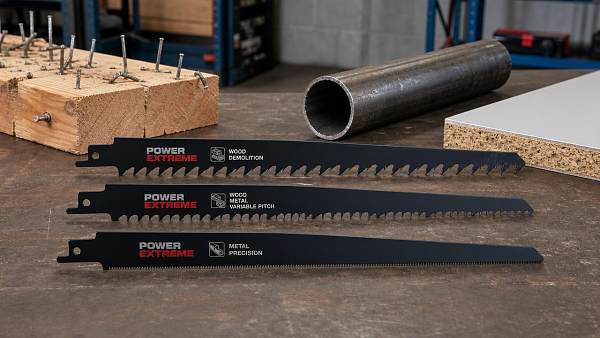
 Hand & Power ToolsReciprocating Saw Blades: Faster Demolition Starts With the Right Tooth DesignReciprocating saw blades work best when tooth design matches the job. Learn how to cut wood, metal, and mixed materials faster with better control, longer blade life, and fewer interruptions.Tooling & Hardware LeadMay 07, 2026
![]() Building HardwareStainless Steel Handrail Brackets for Coastal Projects: What to CheckStainless steel handrail brackets for coastal projects: learn what to check on grade, finish, fixings, and corrosion risk to avoid failures, ensure compliance, and choose with confidence.Tooling & Hardware LeadMay 07, 2026
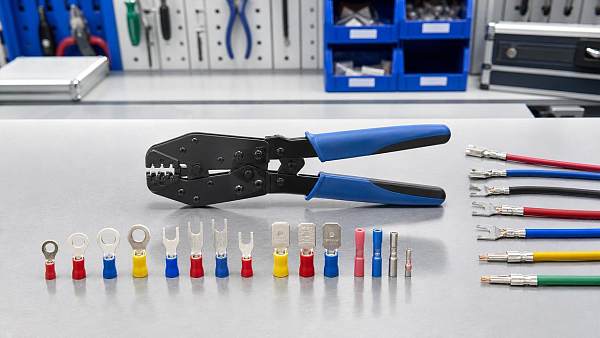
Building HardwareStainless Steel Handrail Brackets for Coastal Projects: What to CheckStainless steel handrail brackets for coastal projects: learn what to check on grade, finish, fixings, and corrosion risk to avoid failures, ensure compliance, and choose with confidence.Tooling & Hardware LeadMay 07, 2026 Hand & Power ToolsCrimping Tools Wholesale: How to Avoid Fit Issues Across TerminalsCrimping tools wholesale buyers: learn how to avoid terminal fit issues, compare key specs, and choose reliable suppliers to reduce rework, prevent failures, and improve repair consistency.Tooling & Hardware LeadMay 07, 2026
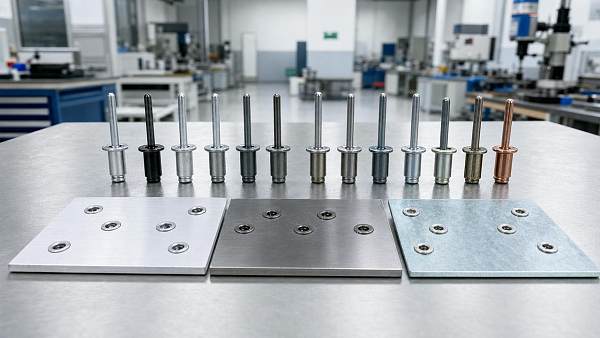
 Industrial FastenersBlind Rivets Wholesale: Material Matching Mistakes to AvoidBlind rivets wholesale buyers: avoid costly material matching mistakes. Learn how aluminum, steel, and stainless choices affect strength, corrosion, and long-term reliability.Tooling & Hardware LeadMay 07, 2026