Industry News
Curation by industry experts
Hot Articles
Popular Tags
What Affects Wholesale Tape Measures Cost Beyond Unit Price
When evaluating wholesale tape measures, unit price is only the starting point. For financial approvers, the real cost picture includes material grades, calibration consistency, packaging, compliance, freight, lead times, and supplier reliability. Understanding these hidden variables helps procurement teams control total spend, reduce risk, and make smarter sourcing decisions that support both margins and supply chain stability.
Why is the unit price of wholesale tape measures only part of the cost?
A low quoted price for wholesale tape measures can look attractive in a sourcing spreadsheet, but finance teams usually bear the consequences of what was not visible in the initial offer. The true landed and usable cost includes every expense required to bring the product into inventory, keep quality stable, and avoid downstream failures. In practice, the difference between a cheap tape measure and a cost-efficient tape measure can be significant.
For example, two suppliers may offer nearly identical-looking products, yet one uses thinner steel blades, lower-impact ABS housing, inconsistent spring assemblies, or weaker locking mechanisms. Those differences may not change the quotation line immediately, but they can increase customer complaints, replacement rates, warranty claims, and brand damage. If the buyer is sourcing promotional, retail, industrial, or contractor-grade measuring tools, these quality gaps directly affect cost recovery and profit margins.
Financial approvers should therefore review wholesale tape measures through a total cost lens: acquisition cost, freight cost, compliance cost, defect cost, delay cost, and replenishment risk. This broader view prevents a common procurement mistake—approving the lowest bid while ignoring hidden cost drivers that surface after payment has already been made.
What product specifications most influence wholesale tape measures cost?
The most important cost drivers often come from the product build itself. In wholesale tape measures, specification changes that seem minor on paper can materially affect production cost, yield rate, and long-term reliability.
Blade material is one of the first areas to assess. Higher-grade steel, better blade coating, and clearer printing improve durability, rust resistance, and readability. A stronger coating also reduces abrasion during transport and field use. If a product needs longer standout, tighter return action, or a smoother rewind, spring quality becomes another meaningful cost input. Low-cost springs may fatigue faster, increasing return failures and returns.
Housing construction matters as well. Rubber overmolding, reinforced plastic, shock resistance, and ergonomic design all add to production cost, but these features can reduce breakage during handling and improve end-user satisfaction. Hook type, rivet strength, locking button design, wrist strap, belt clip, and magnetized tips also create cost variation across wholesale tape measures intended for different applications.
Length and accuracy class are equally important. A 3-meter consumer unit and a 10-meter contractor-grade unit do not share the same cost structure. Longer blades require tighter manufacturing control, more durable spring systems, and better calibration consistency. When a buyer requires printed branding, custom color, private label packaging, or barcode integration, the unit price may rise, but these changes can still be financially justified if they support retail positioning or channel differentiation.
How do quality consistency and defect rates affect the real budget?
For finance decision-makers, quality inconsistency is often a bigger cost threat than a slightly higher purchase price. A supplier of wholesale tape measures that delivers uneven calibration, misprinted scales, weak lock mechanisms, or fragile housings can create hidden losses across multiple departments.
First, inconsistent quality raises inspection costs. Procurement teams may need more incoming checks, more sample testing, and more supplier follow-up. Second, defects increase operational friction. Warehouses spend time isolating bad batches, sales teams manage complaints, and customer service handles replacements. Third, poor quality can reduce reorder confidence, forcing emergency sourcing from alternate vendors at higher prices.
From an approval standpoint, it is useful to ask not only “What is the quoted price?” but also “What defect rate is assumed in the budget?” A supplier offering wholesale tape measures at 4% lower price but causing 6% more returns may be more expensive overall. This is especially relevant for importers, distributors, hardware chains, and promotional product buyers that rely on consistent pack-out and label accuracy.
Quality assurance evidence helps reduce uncertainty. Requesting inspection records, tolerance standards, sample retention practice, blade printing tests, and assembly control procedures can give finance teams a clearer view of expected cost stability. Reliable suppliers usually understand that consistency is not just a quality issue; it is a financial control issue.
What non-product charges commonly increase the landed cost of wholesale tape measures?
Many buyers underestimate the indirect charges attached to wholesale tape measures, especially when comparing offshore and domestic sourcing options. Landed cost often includes much more than manufacturing.
Packaging is a common example. Plain bulk-packed tape measures cost less than retail-ready units with blister cards, color boxes, instruction sheets, multilingual labeling, and shelf display cartons. If the product is for e-commerce, additional drop-test protection or barcode labeling may be needed. Those packaging upgrades improve channel readiness but also raise material, labor, and cubic volume costs.
Freight is another major factor. Wholesale tape measures are compact, but high-volume orders still generate meaningful shipping expense, especially when retail packaging reduces carton efficiency. Ocean freight, inland trucking, fuel surcharges, customs clearance, duties, insurance, and port congestion can alter total spend. Even when the unit price is low, expensive logistics can erase the savings.
Tooling and setup charges may also apply for custom mold colors, logo printing plates, packaging artwork, and sampling rounds. These are often one-time or amortized costs, but they matter for smaller order volumes. For finance approvers, the key is to separate fixed costs from variable costs so the break-even quantity is clear before approval.
How do compliance, certification, and market requirements change sourcing economics?
Compliance costs can significantly influence the sourcing of wholesale tape measures, particularly when products are sold into regulated retail environments or international markets. Requirements vary by destination, customer type, and product positioning, but they should never be treated as optional afterthoughts.
Depending on the market, buyers may need to confirm material safety, labeling conformity, packaging compliance, or testing for restricted substances. If the tape measure is intended for professional trade, measurement accuracy claims may require more controlled production and supporting documentation. Even if formal certification is not mandatory, large distributors and retailers often require supplier declarations, audit records, or social compliance documentation.
These requirements increase cost in several ways: laboratory testing fees, document preparation, factory audits, corrective actions, and longer pre-shipment lead times. Yet failing to address them can be more expensive. Non-compliant wholesale tape measures may be delayed, rejected, relabeled, or removed from shelves, which creates direct write-offs and reputational risk.
For financial control, it is wise to verify whether the supplier already serves comparable export markets. A factory experienced with compliance expectations usually prices more accurately and avoids last-minute surprises. In contrast, a lower-cost supplier with limited export experience may create hidden expenses that never appeared in the initial quotation.
How do lead times and supplier reliability affect cash flow and risk?
Lead time is not just a scheduling issue; it is a financial variable. When wholesale tape measures arrive late, the business may face stockouts, missed promotions, contract penalties, or emergency replenishment at higher spot prices. Longer lead times also tie up working capital earlier, especially when deposits must be paid before production begins.
Supplier reliability should therefore be evaluated alongside price. A slightly more expensive source that ships on time, maintains stable materials, and responds quickly to specification changes may deliver a lower total cost than a cheaper but unpredictable vendor. Reliability becomes especially valuable when procurement teams are managing seasonal demand, retail resets, or bundled tool promotions where timing affects revenue.
Financial approvers should ask practical questions: How often does the supplier miss ship dates? How are raw material fluctuations handled? What happens if a batch fails inspection? Is there buffer capacity during peak season? Can the supplier maintain quality across repeat orders? These questions help estimate risk-adjusted cost rather than relying on nominal price alone.
What should financial approvers compare before approving a wholesale tape measures supplier?
A structured comparison table can simplify approval and align sourcing with cost governance. Instead of reviewing quotations in isolation, compare suppliers across the factors that most affect total spend and risk.
What are the most common mistakes buyers make when sourcing wholesale tape measures?
One common mistake is comparing quotations without normalizing specifications. If one supplier quotes a thinner blade, lower-grade housing, or simpler packaging, the lower price is not a true savings comparison. Another mistake is ignoring minimum order quantity and setup charges. A favorable unit price may only apply at volumes that exceed realistic demand, increasing inventory exposure.
Buyers also sometimes underestimate freight impact. With wholesale tape measures, package size and retail presentation can materially affect carton density and shipping cost. Approving packaging before checking logistics efficiency often weakens the margin case. In addition, some teams fail to test repeat-order consistency. A good pre-production sample does not always guarantee the same standard in mass production.
Perhaps the biggest mistake is treating supplier reliability as a soft factor instead of a measurable cost variable. Delays, communication gaps, incomplete documentation, and post-sale disputes all carry financial consequences. For finance leaders, the right question is not “Which supplier is cheapest today?” but “Which supplier gives the best cost certainty over multiple purchase cycles?”
How can procurement and finance teams make a smarter approval decision?
The most effective approach is to build a total cost model for wholesale tape measures before approval. Start with ex-factory price, then add packaging, tooling, inspection, testing, freight, duties, warehousing, expected defect allowance, and the cost of delay risk. This turns a basic quote comparison into a financial scenario analysis.
It also helps to segment purchases by use case. For promotional giveaways, low-cost wholesale tape measures may be acceptable if branding and basic function are the priority. For retail hardware or professional use, stronger quality and compliance may justify a higher cost base because returns, reviews, and reputation matter more. Matching specification to channel prevents overbuying and underbuying at the same time.
At GSR, this is where disciplined sourcing intelligence becomes valuable. The goal is not simply to negotiate a lower figure, but to identify the offer with the best balance of price, reliability, specification fit, and supply chain resilience. For financial approvers, that balance is what protects margins over time.
If you need to further confirm a sourcing plan for wholesale tape measures, the first questions to discuss should be practical and quantifiable: Which specification level matches the target market? What defect rate is acceptable? What compliance documents are required? How do packaging choices affect freight and shelf readiness? What lead time buffer is needed? And how will supplier performance be measured across repeat orders? Answering those questions early leads to more defensible approvals, fewer cost surprises, and stronger procurement outcomes.
Recommended News
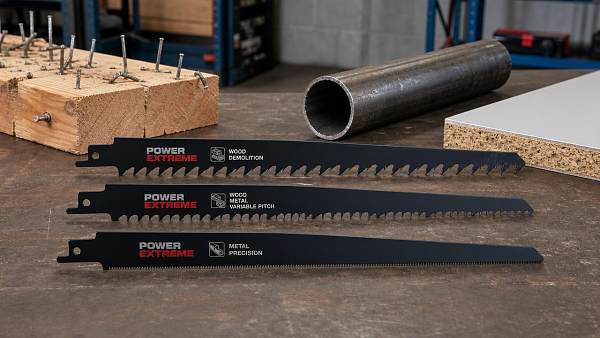
 Hand & Power ToolsReciprocating Saw Blades: Faster Demolition Starts With the Right Tooth DesignReciprocating saw blades work best when tooth design matches the job. Learn how to cut wood, metal, and mixed materials faster with better control, longer blade life, and fewer interruptions.Tooling & Hardware LeadMay 07, 2026
![]() Building HardwareStainless Steel Handrail Brackets for Coastal Projects: What to CheckStainless steel handrail brackets for coastal projects: learn what to check on grade, finish, fixings, and corrosion risk to avoid failures, ensure compliance, and choose with confidence.Tooling & Hardware LeadMay 07, 2026
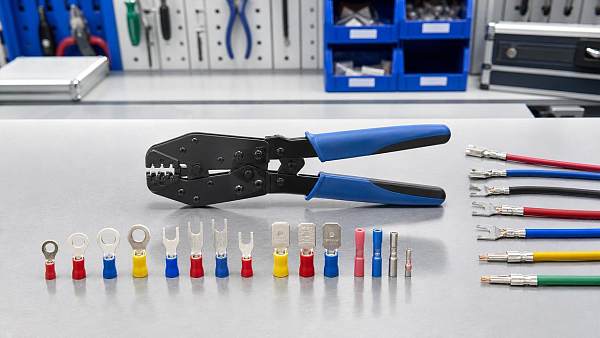
Building HardwareStainless Steel Handrail Brackets for Coastal Projects: What to CheckStainless steel handrail brackets for coastal projects: learn what to check on grade, finish, fixings, and corrosion risk to avoid failures, ensure compliance, and choose with confidence.Tooling & Hardware LeadMay 07, 2026 Hand & Power ToolsCrimping Tools Wholesale: How to Avoid Fit Issues Across TerminalsCrimping tools wholesale buyers: learn how to avoid terminal fit issues, compare key specs, and choose reliable suppliers to reduce rework, prevent failures, and improve repair consistency.Tooling & Hardware LeadMay 07, 2026
 Industrial FastenersBlind Rivets Wholesale: Material Matching Mistakes to AvoidBlind rivets wholesale buyers: avoid costly material matching mistakes. Learn how aluminum, steel, and stainless choices affect strength, corrosion, and long-term reliability.Tooling & Hardware LeadMay 07, 2026