Industry News
Curation by industry experts
Hot Articles
Popular Tags
Wholesale Wire Strippers: Manual vs Automatic for Daily Electrical Work
Choosing the right wholesale wire strippers can make daily electrical work faster, safer, and more consistent. For operators handling repetitive stripping tasks, the decision between manual and automatic models affects precision, fatigue, and jobsite efficiency. This guide compares both options to help users identify the best fit for routine electrical applications and practical purchasing needs.
In daily installation, panel wiring, harness assembly, and maintenance work, the wrong stripping tool often leads to two immediate problems: damaged conductors and slower output. For users and operators, this is not just a comfort issue. It directly affects connection quality, rework rates, and how many terminations can be completed in a shift of 6–10 hours.
For buyers evaluating wholesale wire strippers, the comparison between manual and automatic models should go beyond purchase price. The right choice depends on wire types, stripping frequency, acceptable tolerance, operator skill level, and the working environment. In B2B sourcing, a tool that saves 2–3 seconds per strip can make a measurable difference when teams process hundreds of wires per day.
Why the Manual vs Automatic Choice Matters in Daily Electrical Work
Wholesale wire strippers are used across several practical settings: field electrical service, workshop assembly, control cabinet production, appliance repair, and routine maintenance. In each setting, the stripping task may look simple, but consistency is critical. Even a 1–2 mm over-strip can expose too much conductor, while under-stripping can delay crimping and terminal insertion.
Manual tools are still common because they are portable, mechanically simple, and easy to control on mixed tasks. Automatic tools, however, are increasingly preferred when operators repeat the same motion 100–500 times per day. That difference becomes especially important where labor efficiency, hand fatigue, and conductor protection must be balanced.
Core operational differences
A manual wire stripper relies more on hand positioning, pressure control, and gauge matching. An automatic stripper uses a self-adjusting or assisted mechanism to grip and strip insulation with fewer operator adjustments. This changes both the learning curve and the output consistency, especially for teams with varying skill levels.
- Manual models usually suit low-volume or mixed-gauge work.
- Automatic models typically suit repetitive stripping in medium- to high-volume tasks.
- Manual tools often weigh less and fit tighter spaces.
- Automatic tools generally reduce hand strain during long cycles.
Impact on quality and rework
When operators use a mismatched tool, common issues include nicked copper strands, uneven strip lengths, insulation tearing, and incomplete sheath removal. In practical terms, these defects can increase rework during crimping, soldering, or terminal block assembly. In production-style electrical work, even a 3% rework rate is significant if the team handles 1,000 wire ends over several shifts.
The table below compares manual and automatic wholesale wire strippers across key working factors that matter to operators and purchasing teams.
For most operators, the key takeaway is straightforward: manual tools offer control and simplicity, while automatic tools offer speed and reduced strain. Wholesale wire strippers should therefore be selected by task pattern, not by trend alone.
When Manual Wire Strippers Are the Better Option
Manual wholesale wire strippers remain highly practical in environments where wire types change frequently and access is limited. This includes service calls, small electrical repairs, retrofit jobs, and low-batch workshop work. In these cases, flexibility can matter more than cycle speed.
Best-fit scenarios for manual tools
Operators often prefer manual strippers in 4 common situations: tight control panels, ladder work, mixed conductor sizes, and delicate insulation materials. If the user strips only 10–50 wires at a time but switches between gauges often, manual models usually provide enough efficiency without adding tool complexity.
- Service electricians handling repairs across different circuits
- Maintenance teams working in narrow cabinets or equipment bays
- Technicians stripping specialty or softer insulation types
- Small workshops managing variable job orders rather than line work
Advantages operators notice first
The immediate benefit is tactile feedback. Skilled users can feel blade contact and adjust pressure faster than they can reset an unsuitable mechanism. Manual tools are also less sensitive to dust, impact, and rough transport conditions, which matters on jobsites where tools may be used daily for 12 months or more before replacement.
Cost is another factor. For wholesale buyers outfitting 20 or 50 operators, manual units usually lower entry cost per person. They also simplify spare stocking because the product structure is less complicated and damage points are fewer.
Limits of manual stripping in repetitive work
Manual strippers become less ideal when repeat volume rises. If the same operator strips the same wire gauge for 2–3 hours continuously, repetitive hand force can reduce pace and increase inconsistency. In multi-shift environments, that may translate into slower throughput by the end of the day.
Another concern is training variation. A new operator may produce acceptable results after basic instruction, but achieving consistent strip length across 100 pieces often requires more practice than with self-adjusting automatic tools.
When Automatic Wire Strippers Deliver Better Daily Efficiency
Automatic wholesale wire strippers are designed for repetitive daily work where output consistency matters as much as speed. They are commonly used in panel assembly, wire harness preparation, fixture wiring, and bench-based electrical production. In these environments, a few seconds saved per cycle can become a meaningful labor advantage over 200–300 repetitions.
How automatic tools improve workflow
Most automatic models reduce the need for manual gauge matching and hand repositioning. That makes them effective for standard stranded or solid wires within a defined stripping range, often covering multiple common sizes in one tool. Operators can maintain a steadier rhythm, especially when strip length remains within a repeated target such as 6 mm, 8 mm, or 10 mm.
For team leaders, the benefit is not only speed. Automatic stripping can also improve process stability, making it easier to maintain similar results across 3 operators instead of depending heavily on the most experienced technician.
Where automatic models need caution
Automatic tools are not universally better. On very small, very tough, or unusual insulation types, some models may require testing before full deployment. If the wire range falls outside the tool’s workable window, the mechanism can slip or strip inconsistently. That is why wholesale wire strippers should always be matched to the actual conductor mix, not just the listed general range.
The following table outlines practical selection criteria for automatic models in everyday electrical work.
The main conclusion is that automatic tools offer their strongest value when the work is standardized. If the same wiring task repeats across multiple stations or batches, automatic wholesale wire strippers often produce better labor efficiency and more uniform results.
Key Buying Criteria for Wholesale Wire Strippers
Whether choosing manual or automatic versions, B2B buyers should evaluate wholesale wire strippers through a structured lens. Purchase decisions should not rely on one feature alone. A low-cost tool that wears quickly or causes conductor damage can become more expensive than a better-specified option within one quarter of regular use.
Five practical evaluation points
- Match the tool to the 2–4 wire types used most frequently.
- Check stripping volume per operator per day rather than only per job.
- Review handle comfort for use periods longer than 30 minutes.
- Assess wear-part serviceability and replacement practicality.
- Confirm packaging, quantity breaks, and reorder consistency for wholesale supply.
Questions operators should ask before approval
Users can often identify fit problems faster than procurement teams. Before bulk ordering, a short field test on 3–5 real wire samples is more useful than relying only on a catalog range description. The tool should strip cleanly, preserve strands, and maintain a repeatable strip length without excessive grip force.
It is also wise to compare performance under realistic work conditions: gloves on or off, bench or ladder, dry or dusty environment, and mixed wire jackets. Small differences in ergonomics may become major issues after 200 cycles.
Common buying mistakes to avoid
- Choosing automatic tools for highly irregular specialty cable without testing
- Buying only by unit price instead of life-cycle usability
- Ignoring strip length consistency requirements for terminals and connectors
- Skipping replacement-part availability for high-use workshops
- Assuming all operators have the same skill level and hand strength
In wholesale sourcing, the best result usually comes from balancing 4 factors: daily volume, conductor range, operator comfort, and maintenance simplicity. This approach supports both user satisfaction and better procurement control.
Maintenance, Service Life, and Safe Use Recommendations
Even the best wholesale wire strippers lose performance if maintenance is ignored. Dust, adhesive residue, insulation fragments, and blade wear can gradually reduce stripping quality. For tools used daily, a simple inspection routine every 1–2 weeks is usually enough to catch early issues before they affect work output.
Basic maintenance routine
Operators should clean jaw and blade areas, check pivot smoothness, and inspect for looseness in springs or moving joints. If the tool includes adjustable stops or self-adjusting components, these areas should be checked for debris buildup. In busy workshops, assigning one 5-minute maintenance check per week per tool can extend useful service life noticeably.
- Remove insulation debris after heavy use sessions
- Check blade sharpness if stripping becomes uneven
- Lubricate pivots lightly where appropriate
- Store tools dry to reduce corrosion risk
Safe-use reminders for operators
Wire strippers are hand tools, but incorrect use still creates hazards. Operators should never use stripping tools as cutters for materials outside their intended range or twist them sideways to force removal. Using the wrong slot or wrong pressure can damage both conductor and tool. For daily electrical work, safe handling starts with matching the tool to the wire and keeping the stripping motion controlled.
Where tools are shared across shifts, labeling them by task type can improve consistency. For example, one set can be assigned to fine control wiring and another to general building wire. This reduces misuse and helps maintain predictable performance over 6–12 months of operational use.
Which Option Is Right for Your Team?
If your team handles variable maintenance work, lower daily volume, and mixed access conditions, manual wholesale wire strippers are often the practical choice. They are simple, portable, and effective when the user values direct control. If your operation involves repeated bench work, standardized harness preparation, or frequent stripping cycles, automatic models usually deliver stronger productivity and lower fatigue.
For many B2B buyers, the best solution is not choosing one type only. A mixed toolkit often works better: manual tools for service and irregular tasks, automatic tools for repeat production or high-volume preparation. That approach aligns tool capability with real operator behavior instead of forcing one tool into every job.
Global Supply Review supports sourcing decisions with practical product analysis, application-focused insight, and procurement-oriented evaluation frameworks for industrial tools and components. If you are comparing wholesale wire strippers for daily electrical work, now is a good time to review your wire range, usage frequency, and operator needs in detail.
To identify the right configuration for your team, contact us for tailored sourcing guidance, discuss product details with our team, or explore more solutions for efficient electrical tool procurement.
Recommended News
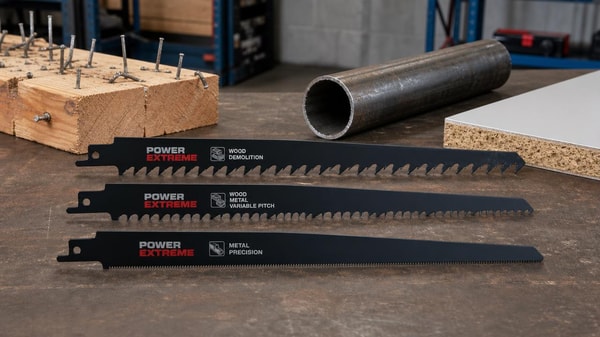
 Hand & Power ToolsReciprocating Saw Blades: Faster Demolition Starts With the Right Tooth DesignReciprocating saw blades work best when tooth design matches the job. Learn how to cut wood, metal, and mixed materials faster with better control, longer blade life, and fewer interruptions.Tooling & Hardware LeadMay 07, 2026
![]() Building HardwareStainless Steel Handrail Brackets for Coastal Projects: What to CheckStainless steel handrail brackets for coastal projects: learn what to check on grade, finish, fixings, and corrosion risk to avoid failures, ensure compliance, and choose with confidence.Tooling & Hardware LeadMay 07, 2026
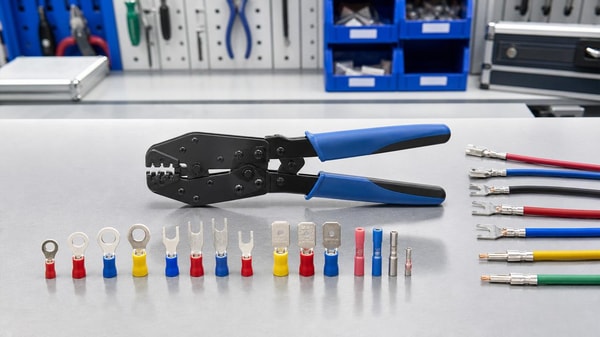
Building HardwareStainless Steel Handrail Brackets for Coastal Projects: What to CheckStainless steel handrail brackets for coastal projects: learn what to check on grade, finish, fixings, and corrosion risk to avoid failures, ensure compliance, and choose with confidence.Tooling & Hardware LeadMay 07, 2026 Hand & Power ToolsCrimping Tools Wholesale: How to Avoid Fit Issues Across TerminalsCrimping tools wholesale buyers: learn how to avoid terminal fit issues, compare key specs, and choose reliable suppliers to reduce rework, prevent failures, and improve repair consistency.Tooling & Hardware LeadMay 07, 2026
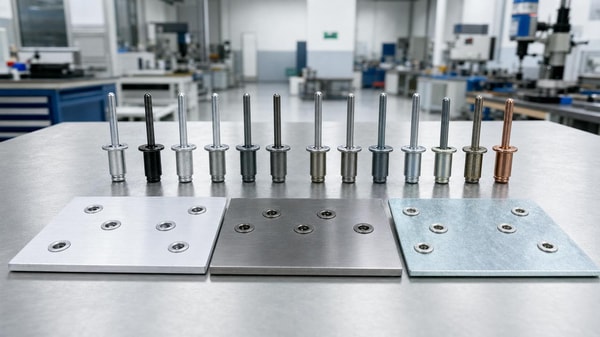
 Industrial FastenersBlind Rivets Wholesale: Material Matching Mistakes to AvoidBlind rivets wholesale buyers: avoid costly material matching mistakes. Learn how aluminum, steel, and stainless choices affect strength, corrosion, and long-term reliability.Tooling & Hardware LeadMay 07, 2026