Industry News
Curation by industry experts
Hot Articles
Popular Tags
Modular Furniture Factory Checklist: Capacity, Lead Time, and QC
Why does a modular furniture factory checklist matter before price talks?
A low quote means very little if the factory cannot hold schedule, repeat quality, or absorb volume changes without disruption.
That is why a modular furniture factory should be assessed as an operating system, not just a production site.
In practical sourcing, delays often come from hidden bottlenecks.
Common examples include panel cutting congestion, outsourced hardware, finishing line limits, or weak carton planning.
A useful checklist helps separate brochure claims from verifiable execution.
It also supports a more resilient supply chain, especially when furniture programs span multiple SKUs, markets, and shipping windows.
This matters across the wider light manufacturing landscape tracked by Global Supply Review, where sourcing decisions increasingly depend on data, process discipline, and trust signals.
For furniture and decor categories, the strongest factory choice usually balances cost, capacity, lead time visibility, and QC maturity.
How can you tell whether capacity is real or just sales language?
The first check is not total monthly output.
The better question is whether the modular furniture factory can produce your mix, materials, and finish complexity at the required pace.
A factory may report high overall capacity, yet still struggle with modular wardrobes, office systems, or flat-pack programs that need frequent changeovers.
Ask for line-level capacity instead of company-level volume.
- Number of CNC machines, edge banders, drilling centers, and assembly lines
- Daily panel processing output by board thickness and material type
- Shift structure, overtime policy, and weekend production availability
- Share of capacity reserved for repeat customers or seasonal projects
- In-house versus outsourced lamination, powder coating, upholstery, or packaging
It also helps to compare peak season performance with normal months.
A capable modular furniture factory should explain where overload appears first and how production is rebalanced.
When answers stay vague, the risk is usually hidden in scheduling rather than equipment count.
A quick capacity judgment table
The table below is useful when comparing several suppliers side by side.
What usually drives lead time in a modular furniture factory?
Lead time is rarely one number.
It is a chain that starts with material booking and ends with container loading accuracy.
For modular furniture, the biggest timing risks often sit upstream.
Boards, imported fittings, glass, and custom packaging can all stretch the schedule before machining begins.
A reliable modular furniture factory should break lead time into milestones.
- Sampling approval and engineering confirmation
- Raw material procurement and inbound inspection
- Panel processing, drilling, edging, and finishing
- Assembly test, packing validation, and drop test if required
- Final inspection, loading, and document release
In real projects, the more useful question is this:
Which step has the least buffer?
That answer often predicts whether a shipment date is stable.
If a factory cannot show milestone control, quoted lead time may only reflect an optimistic booking target.
Is shorter always better?
Not necessarily.
An unusually short lead time can signal low current workload, but it can also indicate rushed planning or unconfirmed supply coverage.
A realistic window with milestone tracking is usually safer than a fast promise without production detail.
Which QC checkpoints actually reduce claim risk after shipment?
QC for modular furniture should focus on repeatability, fit, finish, and pack-out accuracy.
Visual inspection alone is not enough.
The most common claims involve hole position deviation, color variation, edge damage, missing hardware, unstable structures, and carton labeling errors.
A dependable modular furniture factory builds controls into the process instead of trying to catch every defect at the end.
Useful checkpoints often include first-piece approval, in-line measurements, finish adhesion checks, trial assembly, and pre-shipment carton verification.
Pay close attention to how specifications are translated.
If drawings, BOM data, hardware codes, and packaging instructions are not synchronized, defects may be systematic rather than random.
What should be confirmed in the QC system?
- Incoming checks for boards, veneers, hardware, glass, and cartons
- Process control records for dimensions, drilling points, and edge banding
- Color and finish standards with approved master samples
- Assembly verification for critical load-bearing structures
- Packaging audits for labels, accessory kits, and instruction inserts
- Corrective action tracking when defects repeat across batches
The goal is not perfect paperwork.
The goal is knowing whether the factory can prevent the same problem from reappearing in the next shipment.
Where do cost surprises usually appear after factory selection?
Unit price is only the visible part of sourcing cost.
With a modular furniture factory, cost leakage often comes from engineering changes, low packing efficiency, rework, or slow replenishment cycles.
Flat-pack products may look freight-efficient, yet poor carton design can increase damage claims and replacement expenses.
Hardware choices also affect cost stability.
A quote based on substitute fittings may pass sampling but fail durability expectations later.
A more practical evaluation compares total landed risk, not just ex-works price.
This is where a data-led review model becomes useful.
GSR-style sourcing analysis is valuable because it places furniture decisions inside wider supply chain logic, not isolated price comparison.
What are the most common mistakes when comparing a modular furniture factory?
One frequent mistake is treating sample quality as proof of production quality.
Samples are often made with extra attention, slower pace, and manual correction.
Another mistake is ignoring the packaging workflow.
For modular products, packing discipline can be as important as machining accuracy.
A third issue is assuming certifications solve operational risk.
Certificates may support credibility, but they do not replace live process control, traceability, and response speed when issues emerge.
It is also risky to compare factories without normalizing specifications.
Different board grades, hardware brands, tolerances, or carton standards can distort price and lead time comparisons.
A cleaner comparison uses the same technical package, the same inspection points, and the same delivery assumptions.
So what should the final factory checklist include before placing an order?
At the final stage, the best checklist is short enough to use and detailed enough to prevent surprises.
- Confirmed process-specific capacity for your product family
- Milestone-based lead time with raw material visibility
- Documented QC controls from incoming inspection to final packing
- Aligned BOM, drawings, labels, and accessory lists
- Transparent subcontracting and contingency planning
- Clear rules for claims, spare parts, and repeat orders
A strong modular furniture factory should make these points easy to verify.
If basic facts remain difficult to confirm, scaling the relationship will likely be harder than the initial quotation suggests.
The next sensible step is to map your required volumes, finish combinations, packaging standards, and delivery windows into one comparison sheet.
That approach turns supplier screening into a disciplined sourcing decision, not a race to the lowest headline price.
Recommended News
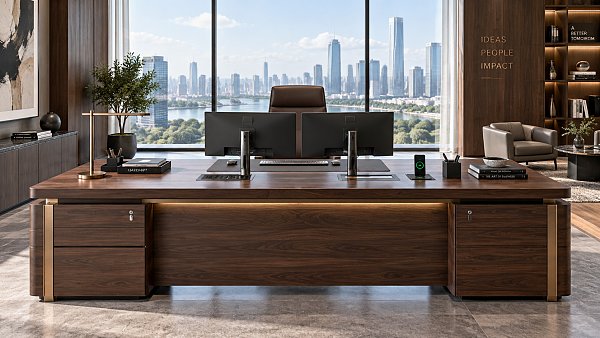
 Office FurnitureWhen does a custom executive office desk justify its higher cost?Discover when a custom executive office desk is worth the investment—from tailored layouts and integrated technology to durable materials and long-term value.Interior Sourcing LeadSep 22, 2026
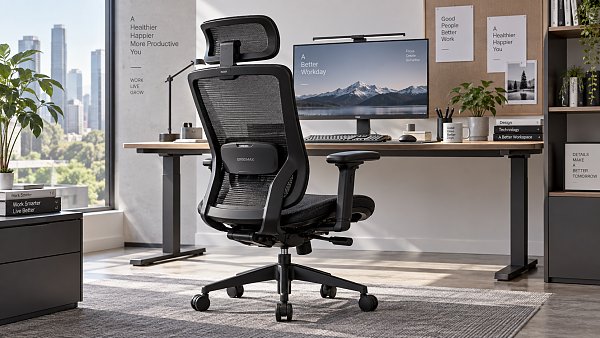
 Office FurnitureWhich high back ergonomic office chairs fit all-day desk work?High back ergonomic office chairs for all-day desk work: compare lumbar support, seat depth, armrests, recline, and materials to find a better fit.Interior Sourcing LeadSep 21, 2026
 Commercial LEDWhen does a 200W linear high bay provide enough light for a warehouse?Discover when a 200W linear high bay delivers sufficient warehouse lighting, with practical guidance on lumens, mounting height, aisle layout, and uniformity.Commercial Tech EditorSep 20, 2026
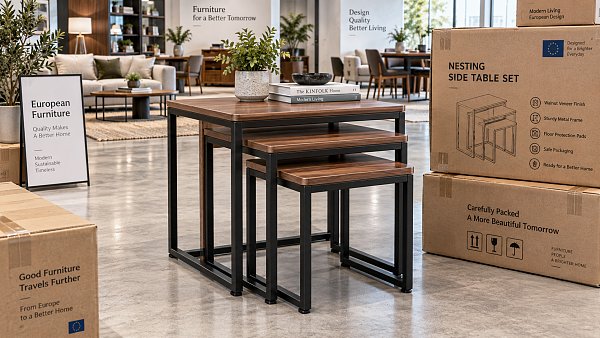
 Home DecorWhat to check before ordering wholesale nesting side tables in EuropeWholesale nesting side tables Europe: assess materials, stability, compliance, packaging, landed cost, and supplier reliability before ordering with confidence.Interior Sourcing LeadSep 19, 2026