Industry News
Curation by industry experts
Hot Articles
Popular Tags
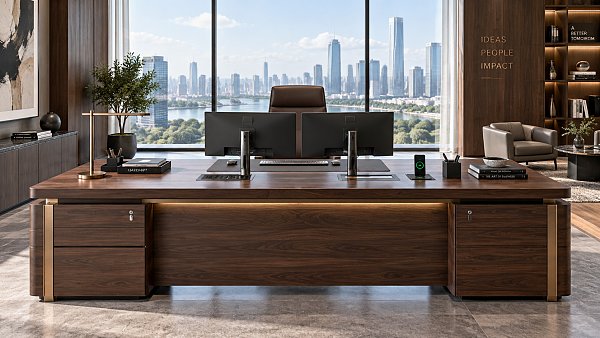
When does a custom executive office desk justify its higher cost?
A custom executive office desk carries a higher upfront price, but the decision is rarely about luxury alone. In the right setting, it is a working asset: a surface for confidential discussions, a fixed point in a leadership suite, a daily interface for technology, paperwork, and visitors. In the wrong setting, it is simply an expensive piece of millwork with long lead times and too many opportunities for specification errors.
The practical question is not whether a custom executive office desk looks better than a catalogue alternative. It is whether the desk solves a real operational, spatial, or brand problem that a standard product cannot solve at a lower total cost. That distinction matters when budgets are being reviewed line by line, particularly on multi-location office projects where a seemingly minor furniture upgrade can become a sizeable procurement commitment.
The premium is justified when the room itself has a job to do
An executive desk in a private back-office workspace does not need the same level of customization as one in a board-adjacent suite used for investor meetings, customer negotiations, media interviews, or high-level recruitment. Once the desk becomes part of how visitors experience the business, the calculation changes. The desk is no longer judged only by its worktop dimensions or drawer count; it needs to sit convincingly within the architecture, lighting, finishes, and level of formality of the room.
This does not mean every executive should receive an oversized statement desk. In fact, that is a common mistake. A large desk can make a compact room feel cramped, create an unnecessary barrier during one-to-one meetings, and leave little space for visitor chairs or circulation. Custom work becomes valuable when it allows the proportions to be designed around the room rather than forcing the room to accommodate a pre-set product footprint.
There are practical examples. A corner office with full-height glazing may need a shallow-depth desk to preserve sightlines and avoid obstructing blinds or access to windows. A room with a feature wall may require a freestanding desk that looks finished from all sides, rather than a desk designed to sit against a wall. In a heritage building, uneven floors, radiators, skirting details, or restricted lift access can make a standard solution awkward before anyone has considered aesthetics.
Functionality is often the strongest financial argument
Executive spaces increasingly carry more technology than their visual simplicity suggests. A polished desktop may need to accommodate laptops, large monitors, docking stations, charging points, video-conference equipment, secure document storage, and discreet cable routing. A stock desk can handle some of this, but it may do so with surface-mounted accessories, trailing cables, or retrofitted holes that undermine the finish.
A well-specified bespoke desk allows the technology plan to be resolved before production. Power modules can be positioned where they are actually needed. Cable channels can align with floor boxes. Modesty panels can conceal equipment without trapping heat. Drawers can be sized for files, devices, or personal storage instead of relying on generic dimensions. If the executive frequently hosts meetings at the desk, integrated guest charging and properly placed data access may be more useful than another decorative veneer option.
There is a caveat: built-in technology should not be specified too rigidly. Power standards, connectors, and device formats change faster than furniture. Procurement teams should ask whether access panels can be opened without dismantling the desk, whether modules can be replaced, and whether cable routes leave enough capacity for future additions. A clean installation is valuable; an installation that cannot be serviced is not.
Materials determine whether “custom” means durable or merely decorative
The most visible component of a desk is usually the top, but buyers should avoid evaluating materials only by appearance. Natural veneer, solid timber, laminate, lacquered panels, stone, leather inlays, metal bases, and engineered boards all have different maintenance demands and supply-chain implications. A real wood surface may gain character over time, yet it can be sensitive to sunlight, humidity changes, heat, and careless use. A high-quality laminate may be a more sensible choice for a heavily used office where coffee cups, mobile devices, and frequent document handling are part of daily life.
Edge treatment deserves more attention than it usually receives. It is one of the first areas to show wear from chairs, bags, belts, and regular contact. The quality of the substrate, edging, joinery, and finish application often says more about long-term performance than a striking veneer figure. Likewise, a substantial-looking desk can still have weak drawer runners, poorly supported spans, or thin decorative cladding beneath the surface.
For projects with environmental procurement requirements, the material discussion should happen early. Buyers may need information on timber origin, panel composition, adhesives, coatings, packaging, or supplier documentation. The exact evidence required depends on the organization’s policies and the project location. It is better to request supporting documents with the quotation than to discover late in the approval process that a preferred finish cannot meet internal requirements.
This is where furniture sourcing benefits from the same discipline used in packaging, hardware, and commercial lighting procurement: look beyond the visible product. Global Supply Review tracks these connected supply considerations across light-manufacturing categories because a furniture specification is rarely isolated. Finish consistency, hardware quality, packaging protection, transit risk, installation coordination, and replacement-part availability all influence the final cost of ownership.
A custom desk should fit the person, but not be over-personalized
Ergonomics is a valid reason to customize, particularly where an executive spends long periods at the desk or has specific equipment needs. However, personalization needs boundaries. A desk tailored so precisely to one person’s height, handedness, storage habits, and technology setup can become difficult to reuse when leadership changes. That may be acceptable for a founder’s office or a long-term owner-occupied headquarters. It is less sensible in a corporate environment where roles rotate.
The better approach is usually adaptable customization. Specify sufficient knee clearance, sensible monitor positioning, cable access on both sides where practical, adjustable task seating compatibility, and storage that works for more than one work style. If height adjustment is required, evaluate whether a sit-stand desk or a separate adjustable work surface meets the need more effectively than building complex movement into a large executive desk.
Privacy also changes the brief. Senior offices often handle confidential documents, devices, and conversations. Lockable drawers may be necessary, but buyers should clarify who manages keys or access credentials, how replacement hardware will be sourced, and whether the locking arrangement is appropriate for the organization’s information-security procedures. Furniture locks are not a substitute for a broader security policy, but poorly planned storage can still create avoidable risk.
The real cost comparison includes delivery, installation, and future changes
The quoted price is only one part of the decision. Custom furniture can involve design development, samples, mock-ups, engineering drawings, export packing, shipping, site access checks, installation, and final adjustments. If the desk includes stone, glass, large timber slabs, or integrated electrics, the logistics become more consequential. A piece that cannot fit into a lift, turn through a corridor, or enter before other fit-out elements are installed may need to be delivered in sections. That should be agreed at the design stage, not improvised on installation day.
Lead time is another trade-off. Custom manufacturing gives greater control, but it also introduces approval points. Delays often arise not from production itself but from late decisions on veneer selection, stain samples, handle choices, power modules, or revised room dimensions. A procurement schedule should identify the final sign-off date, the required site measurements, the responsibility for approving samples, and the consequences of changes after production begins.
Replacement strategy matters as well. If one matching credenza, return unit, or drawer front is damaged years later, can the supplier reproduce the finish? Natural materials inevitably vary, and even manufactured finishes can change between production batches. Ask suppliers how they record the approved material and finish, whether spare touch-up materials are available, and what after-sales support looks like in the intended market.
What to ask before approving the specification
A strong procurement brief does not need to be overloaded with design language. It needs to make the non-negotiables clear. Before committing to a custom executive office desk, confirm the final room dimensions and access route; define the equipment that must be supported; identify visible sides and required finish quality; and agree which materials are acceptable from a maintenance and documentation standpoint.
- Request detailed dimensions, including knee clearance, drawer opening zones, cable access points, and clearance for chairs and visitor seating.
- Ask for finish and material samples under the actual office lighting where possible; showroom lighting can be misleading.
- Confirm the construction method, hardware specification, and which components can be repaired or replaced.
- Separate furniture supply from electrical and data work unless responsibility for coordination is explicitly defined.
- Document packaging, delivery, installation, inspection, and damage-reporting procedures for cross-border projects.
The lowest custom quotation is not automatically the best value. It may exclude the details that prevent friction later: site measurement, protective packaging, cable management components, installation support, or realistic lead-time allowances. Conversely, a premium proposal should not be accepted just because it uses impressive material names. It should show why the construction, function, finish, and service plan are appropriate for the specific office.
When the answer is no
There are situations where a custom desk is hard to defend. A short-term lease, a rapidly changing workplace layout, a lightly used private office, or a standardized global furniture program may all point toward a well-made modular desk instead. Standardized products can offer quicker delivery, easier replacement, more predictable budgeting, and visual consistency across locations. Those are meaningful advantages, not compromises to be dismissed.
A custom executive office desk earns its higher cost when it resolves constraints that would otherwise require awkward workarounds, supports the way leadership actually works, and remains serviceable through years of use. If the brief is limited to “make it look expensive,” the premium is fragile. If the desk integrates space planning, technology, durability, maintainability, and the company’s intended level of presence, it becomes a deliberate capital choice rather than an ornamental expense.
Recommended News
 Office FurnitureWhen does a custom executive office desk justify its higher cost?Discover when a custom executive office desk is worth the investment—from tailored layouts and integrated technology to durable materials and long-term value.Interior Sourcing LeadSep 22, 2026
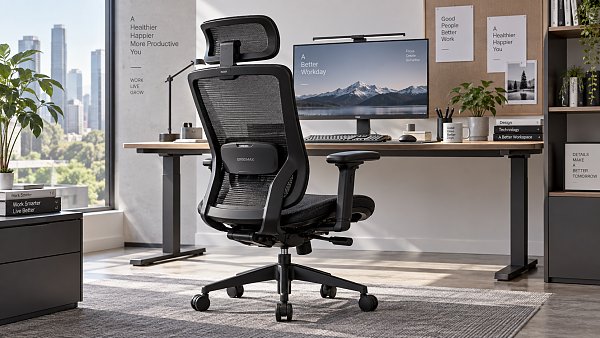
 Office FurnitureWhich high back ergonomic office chairs fit all-day desk work?High back ergonomic office chairs for all-day desk work: compare lumbar support, seat depth, armrests, recline, and materials to find a better fit.Interior Sourcing LeadSep 21, 2026
 Commercial LEDWhen does a 200W linear high bay provide enough light for a warehouse?Discover when a 200W linear high bay delivers sufficient warehouse lighting, with practical guidance on lumens, mounting height, aisle layout, and uniformity.Commercial Tech EditorSep 20, 2026
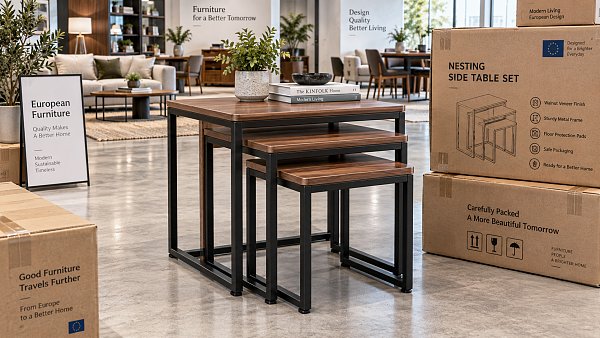
 Home DecorWhat to check before ordering wholesale nesting side tables in EuropeWholesale nesting side tables Europe: assess materials, stability, compliance, packaging, landed cost, and supplier reliability before ordering with confidence.Interior Sourcing LeadSep 19, 2026