Industry News
Curation by industry experts
Hot Articles
Popular Tags
How to compare floating wall shelves suppliers for consistent load capacity
A floating shelf can look acceptable in a catalog and still perform poorly once it is installed with books, display stock, tableware, or boxed retail goods. The most costly failures usually do not begin with an obvious broken shelf. They begin with inconsistent load capacity between production lots, unclear mounting instructions, hardware that does not suit the wall condition, or a stated rating that was never tied to a defined installation method.
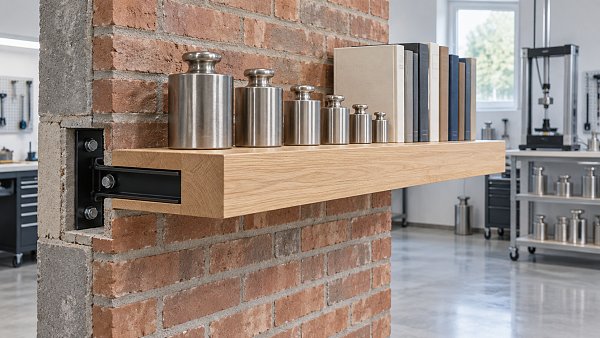
When comparing a floating wall shelves supplier, procurement teams should treat load capacity as a system claim rather than a product claim. The shelf board, concealed bracket, fasteners, wall substrate, installation geometry, and test method all affect the result. A supplier with a lower advertised load figure but clear specifications and repeatable controls may present less risk than one offering an impressive figure without supporting details. The practical goal is to compare suppliers using the same assumptions before price, finish, or catalog breadth influences the decision.
Start by defining what “load capacity” must mean for the purchase
A stated capacity is not comparable unless the underlying conditions are known. One supplier may quote a total static load applied evenly across the shelf surface. Another may mean a short-duration laboratory test, while a third may refer to the point at which permanent deformation begins. These are materially different claims.
Before requesting quotations, prepare a brief performance requirement that reflects the intended use. A residential decorative shelf may be used for lightweight objects with occasional loading. A retail display shelf can see frequent rearrangement, uneven item placement, and customers applying downward force near the front edge. A commercial hospitality installation may require repeatable performance across many rooms and wall types. The buying specification should identify the intended environment instead of relying on a generic “heavy-duty” description.
Ask each supplier to state the following in the same format:
- Rated load per shelf, including the unit of measurement.
- Whether the load is evenly distributed, concentrated, or applied at a specified distance from the wall.
- Shelf dimensions used during testing, especially depth and length.
- Wall substrate used for mounting, such as solid masonry, timber stud framing, metal stud framing, or another backing arrangement.
- Bracket quantity, bracket spacing, and anchoring points used in the test.
- Test duration and whether the result relates to temporary loading, sustained loading, or failure loading.
- Permitted deflection, if any, and whether the shelf returned to its original position after unloading.
This request often reveals whether a supplier understands the difference between a product rating and a usable installation rating. If answers remain broad, such as “supports strong weight” or “tested for heavy loads,” there is no basis for consistent comparison.
Separate the shelf structure from the mounting system
Floating shelves are visually minimal because their support is concealed. That appearance can obscure the actual load path. Weight placed near the front edge creates leverage on the hidden support. The bracket transfers that force into screws or anchors, which then transfer it into the wall. A thick shelf board alone does not guarantee capacity, and a robust steel bracket cannot compensate for unsuitable wall fixings.
Examine the shelf body
Request the board construction rather than only the finished dimensions. Solid wood, plywood, particleboard, MDF, hollow composite construction, and metal-framed shelves respond differently under load and humidity. For wood-based materials, the internal structure matters as much as the face finish. A veneer surface can conceal a lightweight core, while a painted surface can conceal joints, voids, or a shallow bracket channel.
Useful questions include whether the shelf has a continuous internal support member, how deep the concealed bracket penetrates the board, whether the mounting cavity is reinforced, and how the opening is machined. Poor dimensional control in this cavity can create a loose fit that allows the shelf to tilt or wobble even when the bracket itself is sound.
Length and depth need to be reviewed together. A longer shelf may need more support points; a deeper shelf creates greater leverage at the wall. A supplier should not apply one capacity statement to every size in a collection unless it can show how bracket configuration changes with the dimensions.
Review bracket design beyond the metal gauge
Bracket thickness is relevant, but it is not the only indicator of performance. Buyers should ask for bracket material, profile, weld or joint method where applicable, corrosion protection, rod length, wall plate dimensions, hole positions, and the number of support rods. A bracket can be made from substantial metal yet still allow rotation if the wall plate is too narrow, the screw holes are poorly positioned, or the rods do not engage sufficiently with the shelf body.
Compare the bracket-to-shelf fit in sampled assemblies. Excess clearance can allow movement immediately after installation. An overly tight fit may force installers to hammer the shelf onto the bracket, damaging edges or disrupting wall alignment. Neither issue is merely cosmetic; both can affect how loads are distributed.
Do not accept a rating without a test protocol
Testing does not need to be complex to be useful, but it must be transparent. The supplier should be able to explain how the shelf was mounted, what load was used, how it was placed, how long it remained in position, and what constituted a pass or failure. A photograph or video may help confirm the setup, but it should not replace written test conditions.
For procurement comparison, distinguish between three types of evidence. First, a proof-load test indicates that an installed unit held a specified load under stated conditions. Second, a deflection observation indicates how much the shelf moved while loaded and whether it recovered. Third, a failure test identifies the load or mechanism at which the assembly no longer performed safely. A failure figure should not automatically be treated as the recommended working load.
Ask whether samples were tested as finished products. Bracket-only testing can be informative, but it does not show how the shelf material, machining quality, and final assembly behave together. Likewise, a test conducted on a short shelf should not support a claim for a longer version without a justified configuration change.
For projects that require dependable field performance, request testing on the size and configuration being sourced. Where several shelf sizes share a design, establish a product matrix showing the appropriate bracket quantity and rated use for each size. This is more reliable than carrying over one rating across an entire range.
Compare wall assumptions before comparing included hardware
“Wall-mounted” is not a single installation condition. Solid concrete, brick, wood studs, plasterboard over studs, hollow block, and metal studs all have different fastening behavior. A shelf that performs well when fastened into solid backing may be unsuitable for a partition wall without added blocking or a different fixing method.
A supplier should clearly state which substrate the supplied hardware is intended for. Generic plastic anchors included in a hardware bag should not be interpreted as approval for every wall type. Where buyers serve multiple markets or projects with varying construction practices, it is useful to separate the supplied shelf assembly from the project-specific anchor selection.
Installation instructions should also state whether screws must engage structural framing, whether the wall plate must be level, and whether installers need to locate studs or provide timber blocking. If the shelf is intended for installation only on particular wall conditions, that limitation should be visible in product documentation and packaging instructions.
Be cautious when a supplier offers a high load rating while providing no wall-specific guidance. This can shift responsibility to the installer after a claim occurs. The practical rating for a project is only as strong as the weakest approved component in the installed load path.
Look for production controls that prevent lot-to-lot variation
A first sample can be well made while later production varies in bracket alignment, board density, cavity depth, or hardware content. Consistent capacity depends on controls that keep those variables within an acceptable range. During supplier assessment, ask how the factory verifies critical dimensions rather than simply asking whether it has quality inspection.
The most relevant controls are usually focused and measurable:
- Incoming checks for board material, bracket material, and fasteners.
- Dimensional inspection of shelf thickness, bracket channels, rod spacing, and wall plate holes.
- Checks that brackets sit square and that shelves mount without excessive play.
- Verification that the correct bracket and fixing kit are packed with each shelf size.
- Periodic assembled-product load checks from normal production, not only from development samples.
- Traceable identification for production batches where the project risk justifies it.
The response should indicate who performs the check, at what stage, and what happens when a unit does not meet the requirement. A supplier does not need to disclose every internal procedure, but it should be able to describe the controls that protect the declared specification. Vague assurances are less useful than a clear explanation of how channel position or bracket spacing is measured.
Use samples as an installation review, not only a finish approval
Procurement teams often approve color, texture, edge finishing, and packaging from samples, then leave load performance to a data sheet. That approach misses installation issues that only become visible when the product is mounted. Evaluate representative samples using the same shelf sizes, brackets, and hardware proposed for supply.
Check whether the shelf sits flush against the wall, whether it remains level under a reasonable intended load, whether the bracket is concealed as expected, and whether removal or adjustment is possible without damaging the shelf. Pay attention to the front edge: pronounced downward movement there may indicate bracket flex, insufficient rod engagement, weak internal material, or an installation condition outside the stated rating.
Where the product is intended for a larger rollout, retain an approved reference sample and document the exact configuration. A sample without records can be difficult to use later if a production batch arrives with a different bracket, screw set, or mounting cavity.
Build a comparison sheet that exposes hidden differences
Price comparison becomes more meaningful after suppliers respond to the same technical request. Put each response into a single worksheet, with separate fields for shelf dimensions, core construction, bracket specification, supplied anchors, approved wall substrates, rated load conditions, and test evidence. Do not reduce the comparison to one “maximum load” column.
It is also useful to record exclusions. For example, a stated capacity may exclude installation on hollow walls, require mounting into framing, apply only to evenly distributed objects, or require an additional bracket on longer shelves. These conditions are not necessarily weaknesses. They become a problem only when they are absent from the commercial specification and are discovered after purchase.
When two suppliers appear similar, the stronger option is often the one that gives a narrower but fully defined claim. A realistic rating tied to a specific configuration gives installers, project teams, and downstream buyers something they can apply. An unqualified rating creates uncertainty at exactly the point where safety and liability questions arise.
Questions that should be resolved before placing an order
Before final approval, obtain written answers to a short set of project-specific questions: Which shelf size and bracket configuration is being quoted? What wall substrate supports the stated rating? Are screws and anchors included, and are they appropriate for that substrate? Is the rating based on evenly distributed or edge-loaded weight? What sample or production test supports the claim? What dimensional features are controlled to ensure the bracket fits consistently?
For retail, hospitality, public-facing, or other higher-consequence applications, also determine who is responsible for confirming the wall condition before installation. The shelf supplier can define product requirements, but it cannot verify hidden framing, wall integrity, moisture damage, or prior alterations at the installation site. Those factors should be addressed in installation planning rather than assumed away.
A capable floating wall shelves supplier makes this review easier by providing specific product information, configuration limits, and installation conditions. The supplier is not being judged only on whether a sample holds weight once. It is being assessed on whether the same shelf system can be specified, produced, packed, installed, and supported with predictable load performance across the purchase.
Recommended News
 Home DecorHow to compare floating wall shelves suppliers for consistent load capacityFloating wall shelves supplier comparison guide: evaluate load capacity, brackets, wall fixings, testing, and production consistency before you buy.Interior Sourcing LeadSep 23, 2026
 Office FurnitureWhen does a custom executive office desk justify its higher cost?Discover when a custom executive office desk is worth the investment—from tailored layouts and integrated technology to durable materials and long-term value.Interior Sourcing LeadSep 22, 2026
 Office FurnitureWhich high back ergonomic office chairs fit all-day desk work?High back ergonomic office chairs for all-day desk work: compare lumbar support, seat depth, armrests, recline, and materials to find a better fit.Interior Sourcing LeadSep 21, 2026
 Commercial LEDWhen does a 200W linear high bay provide enough light for a warehouse?Discover when a 200W linear high bay delivers sufficient warehouse lighting, with practical guidance on lumens, mounting height, aisle layout, and uniformity.Commercial Tech EditorSep 20, 2026