Industry News
Curation by industry experts
Hot Articles
Popular Tags
Heavy Duty Hinges for Cabinets: Load Ratings and Failure Risks Explained
Heavy duty hinges for cabinets are often evaluated by one headline figure: load rating. That number matters, but it rarely tells the full safety story. In field use, hinge failure usually develops through a combination of material limits, door geometry, mounting quality, opening frequency, and environmental stress.
That is why cabinet hardware has become a broader risk-control issue across furniture, industrial storage, commercial interiors, and equipment enclosures. For organizations managing supplier consistency and site safety, a hinge is not a minor accessory. It is a load-bearing moving component with direct implications for injury prevention, asset protection, and service life.
Within the wider sourcing landscape tracked by Global Supply Review, hardware decisions increasingly sit beside compliance, durability, traceability, and lifecycle cost. Heavy duty hinges for cabinets fit squarely into that shift, because the wrong hinge may pass incoming inspection yet still fail under real operating conditions.
What load ratings really mean
A load rating is generally the manufacturer’s stated capacity under defined test conditions. It may refer to a pair of hinges, a single hinge, vertical loading, or a door of a specific size. Without that context, comparisons can be misleading.
Some test results are based on static loading. Others include cycle testing with repeated opening and closing. A hinge that holds a heavy door once may still deform early when used thousands of times in a high-traffic environment.
This is where many sourcing decisions go wrong. A cabinet door does not apply force in a simple downward direction. It creates torque at the mounting points, especially when the door is wide, tall, or opened beyond its intended angle.
In practical terms, heavy duty hinges for cabinets should be reviewed by door mass, center of gravity, hinge spacing, opening angle, and duty cycle. The nominal load rating is only one part of that calculation.
Static capacity versus service conditions
A hinge can perform well in a controlled test and still be vulnerable in service. Dynamic movement, door slam events, vibration, uneven loading, and minor misalignment all increase stress beyond the label value.
For this reason, safety-focused evaluation usually applies a margin rather than matching hinge rating exactly to door weight. The harsher the environment, the more important that margin becomes.
Why failure risks are rising
Across multiple sectors, cabinets are doing more than storing light contents in controlled indoor settings. They now appear in workshops, hospitals, retail fixtures, transit facilities, data rooms, foodservice areas, and mobile equipment.
These applications place more demand on heavy duty hinges for cabinets. Doors may be thicker for acoustic control, fire resistance, or impact durability. Internal shelving and mounted accessories can shift weight distribution. Maintenance access may require wider openings and more frequent cycles.
At the same time, global sourcing has expanded the number of available hinge designs and quality levels. Two products may look similar in a catalog while differing significantly in alloy composition, pin hardness, weld quality, and fatigue resistance.
That gap between appearance and actual performance is one reason verification matters more than specification sheets alone.
The main causes of cabinet hinge failure
Most failures do not come from a single dramatic overload event. They build over time through repeated stress, poor mounting support, or unsuitable material selection.
Material and component weakness
Base metal quality has a direct effect on crack resistance and long-term stiffness. Low-grade steel, inconsistent stainless composition, or poor heat treatment can lead to pin wear, knuckle deformation, and early fracture.
Plating quality also matters. Corrosion around joints increases friction and accelerates wear. In humid or chemically exposed settings, material compatibility becomes part of the safety assessment.
Mounting substrate failure
The hinge may be stronger than the cabinet body. Particleboard, thin sheet metal, or poorly reinforced frames can pull out at the fasteners long before the hinge reaches its theoretical limit.
This is a common blind spot. Teams may approve heavy duty hinges for cabinets based on hinge data but overlook screw retention, insert design, pilot hole quality, or backing plate thickness.
Installation error
Misalignment creates uneven loading across hinge leaves. Over-torqued screws can damage threads or distort the hinge leaf. Under-torqued screws allow movement, which quickly enlarges holes and worsens looseness.
Even small offset errors can multiply stress during repeated cycles. In real cabinets, installation quality often determines whether a hinge reaches its intended life.
Fatigue from cycle frequency
A door used ten times a day behaves differently from one used hundreds of times. Repetitive motion causes fatigue at the pin, knuckle, and fastening zone. Damage may remain invisible until sagging or cracking appears.
For high-cycle applications, heavy duty hinges for cabinets should be assessed for tested cycle life, not only maximum weight.
Door misuse and impact loading
Users lean on doors, force them past opening limits, or let them swing shut. These events create shock loads far above normal operating stress. Repeated impact often explains failures that seem premature on paper.
High-risk scenarios worth closer review
Not every cabinet application carries the same exposure. Some conditions deserve tighter inspection and stronger acceptance criteria.
In these cases, heavy duty hinges for cabinets should be treated as a system component rather than a commodity item. The hinge, fastener, door, and cabinet body work together, and weakness in one part affects the whole assembly.
How to assess hinge suitability more accurately
A more reliable review process starts by translating the application into measurable conditions. Basic door weight is necessary, but not sufficient.
- Check whether the stated rating applies per hinge or per pair.
- Confirm door dimensions, thickness, and center-of-gravity shift.
- Review the mounting substrate and fastener pull-out strength.
- Match hinge material to humidity, cleaning agents, and corrosion exposure.
- Ask for cycle test conditions, not just test results.
- Inspect tolerance consistency across lots, especially pin fit and leaf flatness.
This type of review supports better sourcing decisions and reduces the chance of relying on optimistic catalog claims. It also aligns with the wider market demand for documented, traceable hardware performance.
Inspection signals that deserve attention
During incoming or in-process checks, several signs suggest elevated failure risk even before installation.
- Uneven plating or rust spots near knuckles.
- Loose pin movement or excessive play.
- Sharp burrs, weld inconsistency, or warped leaves.
- Missing batch traceability or incomplete test documentation.
- Mismatch between sample performance and production finish.
Why documentation matters as much as hardware
For cabinet safety, paperwork is not administrative overhead. It is part of risk control. A credible hinge supplier should be able to explain how heavy duty hinges for cabinets were tested, what materials were used, and where the limits apply.
That includes dimensional consistency records, coating specifications, cycle testing, and any environmental or corrosion data relevant to the application. When failures occur, traceable documentation shortens root-cause analysis and supports corrective action.
This is also where B2B intelligence platforms add value. In global trade, supplier selection is increasingly tied to evidence quality, not only price or stated capacity. Hardware categories once treated as routine are now reviewed through the same trust-and-performance lens used across broader industrial sourcing.
A practical path for better decisions
The safest approach is to evaluate heavy duty hinges for cabinets in the context of real use, not catalog shorthand. That means looking at door dynamics, substrate strength, environmental exposure, installation variability, and expected service cycles together.
Where risk is higher, sample validation under realistic conditions is often more informative than a nominal rating alone. A short audit checklist can also help standardize acceptance across projects, suppliers, and production runs.
If the next step is supplier comparison, start by ranking hinge options against actual operating loads, mounting details, and test transparency. That process usually reveals whether a hinge is genuinely heavy duty, or only labeled that way.
Recommended News
 Home DecorCIFF Guangzhou Sets March 2027 Dates, Focusing on Quality, Innovation and Industry ValueCIFF Guangzhou 2027 runs March 18–21 and 28–31, spotlighting furniture quality and innovation. Explore key sourcing insights to plan visits, compare suppliers and prepare smarter purchasing decisions.Interior Sourcing LeadOct 27, 2026
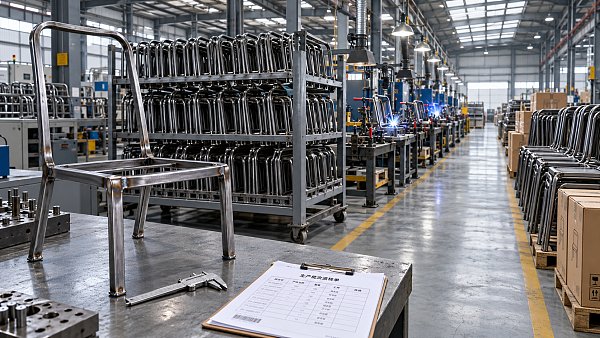
 Supply Chain InsightsHow to verify a metal furniture factory's production capacityVerify a metal furniture factory's production capacity with proven output records, bottleneck checks, and realistic schedules. Learn how to reduce sourcing risks and protect delivery deadlines.Oct 27, 2026
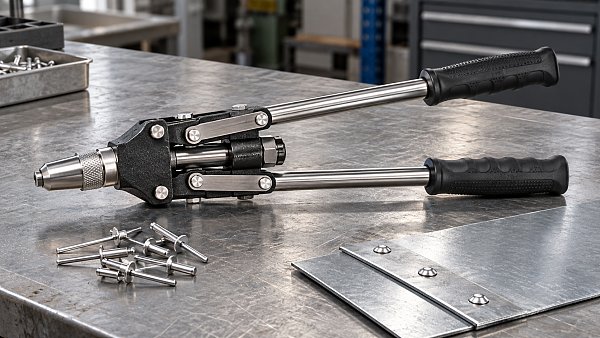
 Hand & Power ToolsDo you need a long handle rivet gun for stainless steel rivets?Need a long handle rivet gun for stainless steel rivets? Discover when extra leverage helps, which tool ratings matter, and how to choose the right riveter for your job.Tooling & Hardware LeadOct 26, 2026
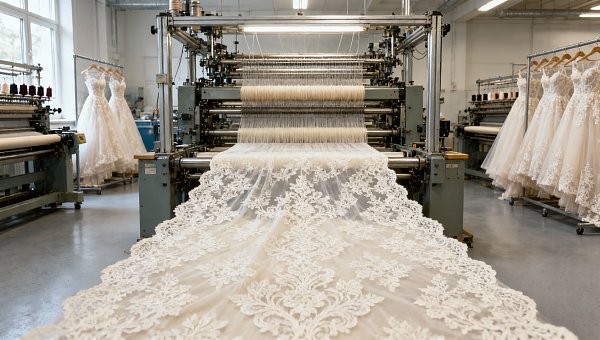
 Textile MachineryItalian Textile Machinery Orders Rise 7% in Q3 2026 as Overseas Demand LeadsItalian textile machinery orders rose 7% in Q3 2026 as overseas demand climbed 8% and domestic orders fell 4%. Explore ACIMIT's figures and what they mean for manufacturers.Textile Industry AnalystOct 25, 2026