Industry News
Curation by industry experts
Hot Articles
Popular Tags
Adjustable Rigging Hardware Selection Guide for Safer Overhead Installations
Why adjustable rigging hardware decisions change from one installation to another
Selecting adjustable rigging hardware is rarely a simple catalog exercise.
Overhead installations place hardware inside a chain of responsibility that includes safety, uptime, inspection, and compliance.
A theater truss, a warehouse display grid, and a mechanical plant support frame may all suspend loads overhead.
Yet their risk profiles differ sharply.
That is why adjustable rigging hardware should be judged by application context, not by load rating alone.
In practical sourcing work, the better question is not which component looks strongest.
It is which adjustment method, connection geometry, and certification path remain reliable after installation conditions start changing.
This matters across the broader industrial supply chain covered by Global Supply Review.
Hardware performance increasingly intersects with lighting systems, modular displays, packaging lines, and furniture-related commercial fit-outs.
As a result, adjustable rigging hardware selection now sits closer to operational risk management than routine component buying.
The core objective is straightforward.
Reduce installation risk, maintain load control, and match the hardware to real service conditions before failure points appear in the field.
Actual use cases reveal where the selection criteria start to diverge
Different overhead environments push adjustable rigging hardware in different ways.
Some applications need frequent repositioning.
Others need stable, long-term holding with minimal intervention.
The most reliable decisions begin with that distinction.
Commercial lighting grids and suspended displays
Retail ceilings, exhibition halls, and branded display zones often require fine alignment after the first installation.
Here, adjustable rigging hardware must support repeatable leveling without damaging cables, fixtures, or decorative surfaces.
Compact dimensions matter because visual clutter becomes a design issue, not only a mechanical one.
Corrosion resistance also matters when lighting is installed near entrances, atriums, or semi-open façades.
A common mistake is selecting hardware designed for static industrial loads but awkward to adjust onsite.
That usually slows commissioning and increases the chance of uneven load distribution across the mounting points.
Industrial process areas and equipment support frames
Plant environments bring a different set of demands.
Heat, vibration, dust, chemicals, and maintenance access often matter more than appearance.
In these settings, adjustable rigging hardware should be evaluated for locking security, thread protection, and long-term dimensional stability.
Hardware that performs well in a clean display setting may degrade quickly near washdown zones or vibration-heavy machinery.
The adjustment feature is useful during installation, but post-install integrity becomes the larger concern.
Stage, event, and temporary overhead structures
Temporary structures are often assumed to be simpler.
In reality, they can demand the most disciplined adjustable rigging hardware selection.
Frequent assembly cycles increase thread wear, handling damage, and connection mix-ups.
Fast adjustment is valuable, but clear identification, inspection access, and compatibility across modular systems matter just as much.
A short deployment schedule can hide these issues until the hardware is already in service.
Different environments shift the real decision points
The table below shows why similar overhead loads may still require different adjustable rigging hardware choices.
This is where broad sourcing intelligence becomes useful.
Across hardware, lighting, and commercial fit-out categories, the same installation rarely stays within one technical silo.
A good adjustable rigging hardware decision often depends on adjacent system constraints.
What to check before comparing adjustable rigging hardware options
Many comparison sheets begin with working load limit and dimensions.
Those values are essential, but they should not be the first filters.
In actual project reviews, the more useful screening questions are usually these:
- Will the hardware stay static after setup, or will it be adjusted repeatedly?
- Does the load act purely vertical, or does side loading appear during operation?
- Is there enough space to inspect the hardware after surrounding systems are installed?
- Do the connected parts share compatible materials, threads, and tolerances?
- Can the installation team verify markings, ratings, and orientation without disassembly?
These questions prevent a common sourcing error.
Two adjustable rigging hardware products may appear equivalent on paper while performing very differently once access, vibration, or maintenance realities are added.
It is also worth checking how adjustment affects the remaining safety margin.
Some assemblies lose practical robustness when extended near their limit, even though the catalog presentation looks acceptable.
Where misjudgment happens most often
The most frequent failure in adjustable rigging hardware selection is treating similar installations as identical.
A suspended light frame in a dry showroom is not the same as a suspended service assembly above a packaging line.
The connection method may look similar, but the environmental stress is not.
Another weak point is focusing only on purchase price.
Lower-cost hardware can create higher expense through rework, difficult inspection, early replacement, or compliance delays.
There is also a tendency to overlook interaction with surrounding components.
If anchors, wire rope fittings, clamps, or support channels are selected separately, the adjustable rigging hardware may become the mismatch point.
That mismatch usually shows up as uneven alignment, field modification, or unclear inspection criteria.
In regulated environments, undocumented substitution creates another problem.
Even when the substitute seems technically close, missing traceability can block acceptance.
A more practical way to match hardware to the installation
A useful selection process does not need to be complicated.
It needs to be disciplined.
Before finalizing adjustable rigging hardware, document the service environment, adjustment frequency, load path, inspection method, and expected replacement interval.
Then compare options against those conditions, not just against one another.
For mixed-use projects, split the review by zone.
Front-of-house display areas, utility corridors, and production-adjacent spaces may need different adjustable rigging hardware even within one site.
That approach often avoids overengineering one area and underprotecting another.
- Map each overhead point to its actual environmental exposure.
- Confirm whether the adjustment feature is a commissioning tool or a lifetime requirement.
- Check compatibility across anchors, connectors, cables, and support structures.
- Verify markings, certificates, and inspection access before approval.
- Review maintenance burden alongside the initial unit cost.
This method is especially relevant in global sourcing.
Specification quality, finish consistency, and documentation discipline can vary between supply sources even within the same nominal category.
Final checks that support safer overhead results
The best adjustable rigging hardware choice usually emerges from careful narrowing, not quick substitution.
Look at the overhead application as a working system.
Focus on load behavior, environment, access, compliance, and service life together.
That is where safer installations and cleaner sourcing decisions start to align.
As a next step, organize current projects by installation type, compare adjustment needs across those scenarios, and define a short approval checklist for adjustable rigging hardware.
Once the key conditions are visible, it becomes easier to evaluate cost, risk, implementation effort, and long-term reliability with much greater confidence.
Recommended News
 Home DecorCIFF Guangzhou Sets March 2027 Dates, Focusing on Quality, Innovation and Industry ValueCIFF Guangzhou 2027 runs March 18–21 and 28–31, spotlighting furniture quality and innovation. Explore key sourcing insights to plan visits, compare suppliers and prepare smarter purchasing decisions.Interior Sourcing LeadOct 27, 2026
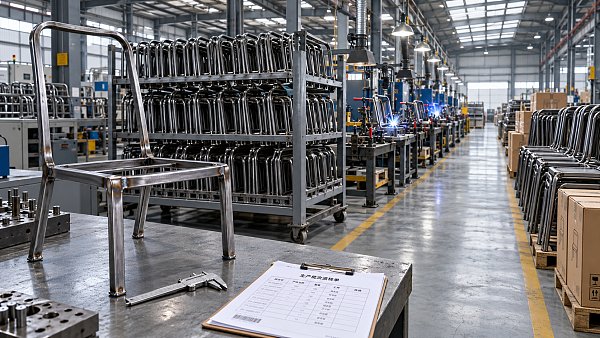
 Supply Chain InsightsHow to verify a metal furniture factory's production capacityVerify a metal furniture factory's production capacity with proven output records, bottleneck checks, and realistic schedules. Learn how to reduce sourcing risks and protect delivery deadlines.Oct 27, 2026
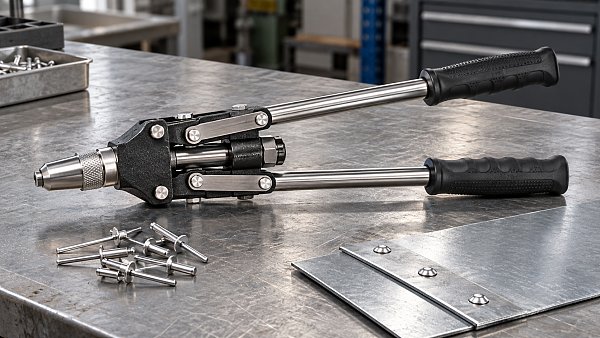
 Hand & Power ToolsDo you need a long handle rivet gun for stainless steel rivets?Need a long handle rivet gun for stainless steel rivets? Discover when extra leverage helps, which tool ratings matter, and how to choose the right riveter for your job.Tooling & Hardware LeadOct 26, 2026
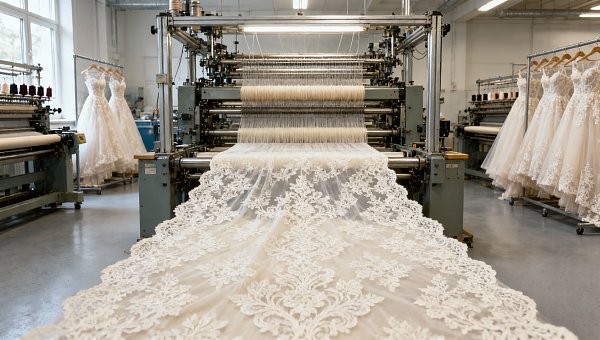
 Textile MachineryItalian Textile Machinery Orders Rise 7% in Q3 2026 as Overseas Demand LeadsItalian textile machinery orders rose 7% in Q3 2026 as overseas demand climbed 8% and domestic orders fell 4%. Explore ACIMIT's figures and what they mean for manufacturers.Textile Industry AnalystOct 25, 2026