Industry News
Curation by industry experts
Hot Articles
Popular Tags
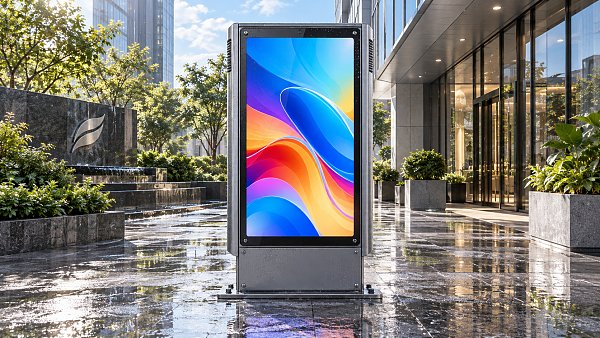
What makes an outdoor digital signage display manufacturer reliable?
A reliable supplier does more than assemble a bright screen in a weatherproof-looking cabinet. For procurement teams, a dependable outdoor digital signage display manufacturer is one that can translate a specific installation environment into a documented, serviceable product and support it after shipment. The difference becomes clear when the display faces heat, rain, glare, dust, unstable power, public access, and long operating hours at the same time.
Price and headline brightness matter, but they are weak indicators when assessed alone. A lower-cost unit that needs repeated field repairs, suffers visible degradation after a season, or cannot obtain replacement parts quickly can cost far more than a higher-priced display with sound engineering and an established support process. The supplier evaluation should therefore focus on how the manufacturer controls risk across the display's full operating life.
Start with the actual outdoor condition, not a generic specification sheet
“Outdoor” covers very different applications. A display under a covered transit shelter does not face the same conditions as a freestanding wayfinding kiosk at a coastal site, a menu board beside a drive-through lane, or a large commercial screen exposed to direct afternoon sun. A reliable manufacturer will ask practical questions before recommending a model: installation orientation, local climate, direct sunlight duration, expected operating schedule, mounting method, content type, network access, and maintenance access.
This consultation matters because product suitability is conditional. A display built for a shaded retail frontage may be unsuitable for a hot, sun-facing plaza. Likewise, a sealed enclosure can be useful in wet or dusty locations but may create thermal-management challenges if the internal design is weak. Buyers should be cautious when a supplier offers the same configuration for every project without discussing the site.
Provide prospective suppliers with site photographs, installation drawings, approximate exposure conditions, and the intended operating workflow. The quality of their questions is often an early sign of engineering maturity.
Environmental protection must be designed as a system
An enclosure rating is relevant, but it is not the entire durability story. Reliable outdoor signage depends on the interaction of cabinet construction, door seals, cable entries, drainage, ventilation, corrosion resistance, cooling components, and display protection. A single weak point can undermine an otherwise strong specification.
Ask the manufacturer to explain how moisture, airborne dust, condensation, insects, and temperature changes are managed. For example, sealing every opening does not automatically make a cabinet more reliable if heat cannot be removed effectively. Conversely, an actively cooled design should make clear how filtered airflow, service intervals, and fan failure are addressed. The right approach depends on the environment and operating duty, not on which feature sounds more robust in a quotation.
What to look for in the construction review
- Cabinet materials and finish: The supplier should identify materials used for the enclosure, fasteners, brackets, and exposed hardware, along with the corrosion-protection approach for the installation environment.
- Water-management details: Check door interfaces, gasket design, cable glands, drainage paths, and any areas where water could pool.
- Thermal design: Request an explanation of how the display manages solar load, internal electronics heat, and the temperature range expected at the installation site.
- Service access: Confirm whether technicians can safely reach filters, electronics, display modules, and power components once the unit is installed.
- Physical security: Public-facing displays need an appropriate approach to locks, hinges, impact exposure, tamper resistance, and protected cable routing.
Do not treat these items as a paperwork exercise. A supplier that can supply drawings, component-level descriptions, and clear maintenance instructions is generally easier to work with than one that responds only with broad claims such as “all-weather” or “industrial grade.”
Brightness is only useful when it remains readable and controlled
Outdoor visibility is not simply a matter of choosing the highest available brightness. The display must remain readable under changing daylight while preserving image quality and avoiding unnecessary power consumption, heat generation, and premature component stress. Anti-reflection treatment, optical bonding or similar glare-control methods where appropriate, display orientation, protective glass, and ambient-light control can all affect perceived readability.
Ask how brightness is adjusted through the day and whether the control method is integrated with the display hardware and content system. A screen that runs at maximum output continuously may appear impressive during a demo but can add heat load and operating cost. On the other hand, automatic dimming must not make essential text unreadable during sudden changes in weather or light direction.
Content design also changes the requirement. Timetables, prices, safety messages, and wayfinding require legibility at viewing distance; branded video can tolerate different visual trade-offs. A good manufacturer will discuss pixel density, screen size, mounting height, and expected viewing distance in relation to the content, rather than selling resolution as an isolated number.
Assess the factory's quality process, not only the sample unit
A showroom sample demonstrates potential, not production consistency. Procurement risk increases when a manufacturer cannot show how it controls incoming components, assembly quality, burn-in or functional testing, inspection records, packaging, and final release. The goal is not to demand an elaborate audit for every order. It is to establish whether the factory has repeatable controls that can be reviewed and applied to the required configuration.
Useful evidence includes a documented product specification, electrical and mechanical drawings, component lists for critical items, inspection checkpoints, test records, serial-number traceability, and packaging details. For customized units, clarify which elements are standard and which are project-specific. This prevents a common problem: the approved sample contains one set of components while volume production uses alternatives that affect performance or serviceability.
Power, connectivity, and software ownership deserve equal attention
Outdoor displays are systems, not standalone panels. A reliable solution needs a clear answer for power input, surge and electrical protection strategy, network connectivity, remote monitoring, content management, and recovery after an interruption. Failures in these areas are often blamed on the screen even when the cause lies in site infrastructure or an unclear division of responsibility.
Clarify where responsibility begins and ends. Will the manufacturer supply the display only, or also the media player, content-management software, mounting structure, network hardware, and commissioning support? If software is included, understand who owns administrator access, how user permissions are managed, what happens if connectivity is lost, and how updates are handled. Procurement should avoid a situation where a display is technically functional but cannot be controlled because credentials, licenses, or support ownership are unclear.
Integration also needs to be tested against the intended workflow. A municipal information screen, quick-service menu board, industrial site noticeboard, and retail campaign display have different content-update frequency, approval, scheduling, and remote-management needs. The best hardware choice can still be a poor procurement decision if the operating team cannot manage it efficiently.
After-sales support is where reliability becomes measurable
No electronic display is immune to faults. The practical question is how quickly the issue can be diagnosed, which parts can be replaced, and whether the supplier remains responsive after final payment. Dependable manufacturers define their warranty scope, support channels, response process, spare-parts availability, and escalation path before the order is placed.
Focus on serviceability rather than a long warranty statement alone. Ask which components are replaceable in the field, whether replacement parts are compatible across production batches, what information a technician needs to diagnose a fault, and whether the supplier can provide remote technical assistance. For multi-site deployments, it may be sensible to include recommended spare parts and clear fault-reporting procedures in the procurement package.
Support capacity should match the project geography. A supplier may have capable engineers but limited ability to assist across time zones, languages, customs processes, or local electrical practices. This does not automatically disqualify an overseas manufacturer, but it changes the support model. The buyer may need a local installation partner, stocked critical spares, and agreed remote-commissioning steps.
Supply-chain stability protects rollout schedules and future maintenance
Outdoor digital signage projects frequently involve phased deployment, repeat orders, and replacements years after the first installation. A manufacturer that can build one prototype but cannot maintain stable sourcing for key components creates a hidden lifecycle risk. Buyers should discuss lead-time assumptions, component substitution control, notification procedures, and the availability of service parts for the planned support period.
This is especially important when displays are customized by size, color, mounting structure, glass treatment, connectivity, or software configuration. Customization can solve a genuine site problem, but it can also make future replacement slower and more expensive. Use bespoke features where they improve installation fit, operating safety, or user visibility; avoid them when a standard, documented configuration serves the same purpose.
For global sourcing decisions, independent market and supplier intelligence can help procurement teams compare factory capabilities, category specialization, and supply-chain exposure before committing to a supplier shortlist. In the Lighting & Displays category, resources such as Global Supply Review are most useful when they support direct technical evaluation, not when they replace it.
Run a disciplined comparison before placing the order
A reliable manufacturer should be able to participate in a structured evaluation without resisting reasonable technical questions. The final comparison should not reduce every factor to a unit price. Instead, weigh the elements that will affect site performance and ownership workload.
- Define the installation conditions and operating requirements for each location type.
- Issue the same technical brief to shortlisted suppliers, including drawings, content needs, power and network assumptions, and service expectations.
- Compare responses for completeness. Gaps, vague exclusions, and unsupported claims are as important as attractive features.
- Review production controls, test evidence, manuals, and the proposed configuration before approving a sample or pilot.
- Agree acceptance criteria, documentation, warranty handling, spare-parts arrangements, and change-control rules in the purchase terms.
The strongest choice is rarely the supplier with the most features on a brochure. It is the one whose technical recommendation fits the site, whose construction and quality process can be examined, and whose support model remains workable after installation. That combination is what makes outdoor digital signage dependable in real operating conditions.
Recommended News
 Commercial DisplaysWhat makes an outdoor digital signage display manufacturer reliable?Discover how to choose a reliable outdoor digital signage display manufacturer with proven weather protection, quality control, smart visibility, and responsive after-sales support.Commercial Tech EditorOct 12, 2026
 Garment MfgWhen do bulk embroidered hoodies offer better value than printed ones?Bulk embroidered hoodies deliver lasting value for uniforms and premium branding. Compare durability, design, comfort, and cost to choose the right decoration.Textile Industry AnalystOct 11, 2026
 Carton & PlasticsHow to compare packaging automation suppliers for line integrationPackaging automation supplier comparison guide: evaluate line integration, controls, safety, testing, lifecycle costs, and support to select a proven partner.Packaging Supply ExpertOct 10, 2026
 Home DecorWhich decor exhibition in the USA best fits a home decor sourcing trip?Decor exhibition USA guide: compare High Point Market, Las Vegas Market, NY NOW, and HD Expo to choose the best event for your home decor sourcing trip.Interior Sourcing LeadOct 08, 2026