Industry News
Curation by industry experts
Hot Articles
Popular Tags
Facial Tissue OEM Market Trends: Why Private Label Hygiene Products Are Becoming a Global Growth Opportunity
Facial tissue has become one of the most common household and personal care products in the global consumer market. It is used at home, in offices, hotels, hospitals, schools, restaurants, vehicles, travel bags, and commercial public spaces. Because it is consumed frequently and replaced quickly, it has stable repeat demand. In recent years, however, the market has moved beyond simple low-cost tissue products. Buyers now care more about softness, wet strength, skin comfort, packaging style, hygiene standards, raw material safety, and brand differentiation.
This shift is creating strong growth opportunities for facial tissue OEM; suppliers. Retailers, distributors, supermarket chains, hotel groups, e-commerce brands, maternal and child care brands, and regional hygiene product companies are increasingly looking for manufacturing partners that can provide customized products from material selection to packaging design. Instead of building their own factories, many brands prefer to work with OEM or ODM manufacturers that already have production capacity, quality systems, and flexible customization experience.
Facial tissue is no longer only a commodity. It is becoming a category where consumer experience, packaging appearance, sustainability claims, and supply-chain reliability all influence purchasing decisions.
Why Private Label Facial Tissue Demand Is Growing
One of the most important trends in the facial tissue market is the rise of private label products. Retail chains and distributors want to control more of their own product categories. Private label facial tissue allows them to build brand recognition, improve margins, and offer products that match local consumer preferences.
In many markets, consumers are willing to buy private label tissue products if they offer reliable quality and competitive pricing. This gives retailers room to develop their own tissue brands for household use, office supply, travel packs, hotel amenities, and family care. For OEM manufacturers, this creates growing demand for customized size, ply count, embossing, softness level, packaging format, logo printing, and carton design.
The private label trend is especially strong in regions where modern retail, e-commerce, and chain stores are expanding. Buyers want faster product development cycles and flexible order quantities. They may start with trial orders, test several packaging styles, and then scale up if sales perform well. This makes manufacturing flexibility a major advantage.
Hygiene Awareness Is Supporting Long-Term Market Growth
Global hygiene awareness has increased significantly in recent years. Consumers are more conscious of cleanliness, personal care, and safe daily-use products. Facial tissue benefits from this trend because it is closely connected to personal hygiene. It is used for wiping the face, hands, nose, and skin, so comfort and safety matter.
Unlike toilet paper, facial tissue needs higher wet strength and better skin touch. It should not easily tear, leave paper scraps, or feel rough on the face. Some premium products may include moisturizing ingredients or special softness treatments to reduce friction. This means product quality directly affects consumer satisfaction.
For brands and distributors, stable quality is crucial. If tissue feels too rough, breaks easily, or has poor packaging, repeat purchases may decline. Therefore, many buyers prefer OEM partners with mature production lines, controlled raw material sourcing, and consistent inspection systems.
Packaging Differentiation Is Becoming a Key Market Driver
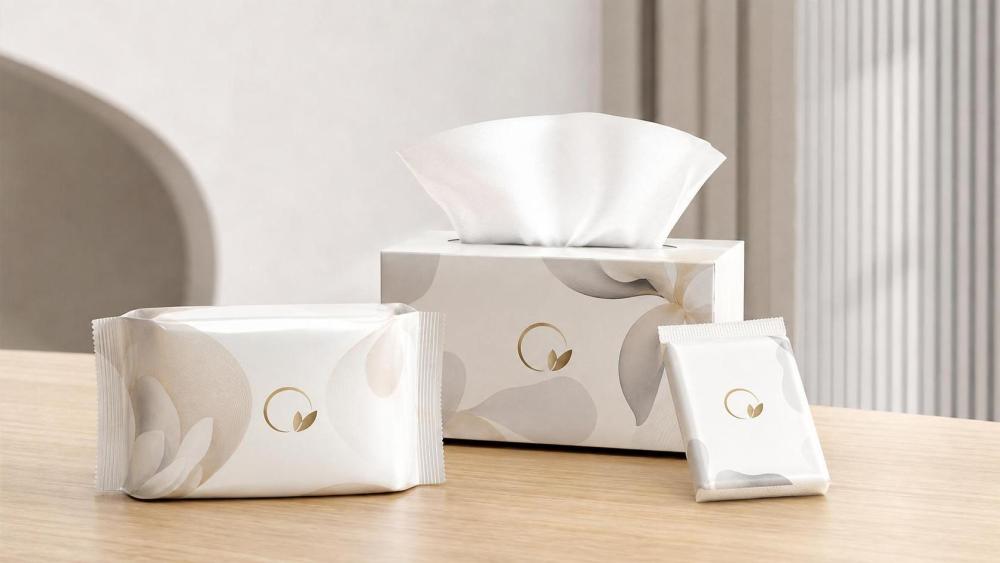
Facial tissue packaging has become a powerful tool for product positioning. Boxed tissue, soft pack tissue, pocket tissue, handkerchief packs, plastic-wrapped packs, family packs, hotel packs, and promotional packs all serve different sales channels. Packaging design affects shelf visibility, logistics efficiency, product protection, and brand identity.
In supermarkets, attractive packaging helps products stand out. In e-commerce, compact and durable packaging can reduce shipping damage and improve customer experience. In hotels and restaurants, customized packaging can reinforce brand image. In household use, consumers often prefer packaging that is clean, convenient, and easy to place in different rooms.
This is why facial tissue OEM demand is closely connected with packaging and printing capability. Buyers want customized colors, logos, patterns, language versions, barcode placement, product claims, and material descriptions. Some markets require clear labeling for raw material, ply count, sheet size, quantity, and safety information. A reliable OEM supplier should support these details.
Raw Material Selection Shapes Product Positioning
Raw materials are central to facial tissue quality. Products may use virgin wood pulp, bamboo pulp, mixed pulp, recycled pulp, or other fiber combinations depending on target market and price positioning. Premium facial tissue often focuses on softness, purity, absorbency, and skin-friendly texture. Economy products may emphasize affordability and practical daily use.
Virgin wood pulp products are often associated with cleaner appearance and stronger consumer trust. Bamboo pulp is gaining attention because it can support sustainability-focused branding. Recycled pulp may appeal to cost-sensitive or eco-conscious markets, though quality requirements must still be managed carefully.
For OEM buyers, raw material choice should match the target consumer group. A hotel tissue product may need better appearance and softness. A supermarket value line may prioritize cost control. A baby care or sensitive-skin product may require higher softness and stricter material standards. This makes supplier communication important during product development.
Retail and E-Commerce Channels Are Changing Product Strategy
The growth of e-commerce has changed how facial tissue products are designed and sold. Online buyers compare product photos, specifications, reviews, package quantity, price per sheet, and delivery convenience. This increases the need for clear product positioning and attractive packaging.
E-commerce also supports niche brands. A small hygiene product brand can launch customized facial tissue without owning a factory. By working with an OEM manufacturer, the brand can test a product line, adjust packaging, and scale gradually. This model supports faster market entry and reduces investment risk.
At the same time, offline retail remains important. Supermarkets, convenience stores, pharmacies, and household goods chains still drive large facial tissue volumes. These channels often require stable supply, consistent carton packaging, barcode compliance, and reliable delivery schedules. OEM suppliers that can serve both online and offline channels have stronger market potential.
OEM Manufacturing Helps Buyers Reduce Operational Complexity
Building a tissue factory requires major investment in production lines, raw materials, packaging equipment, quality control, warehouse space, and labor management. For many brands and distributors, this is not practical. OEM manufacturing allows them to focus on market development, brand building, and sales while relying on professional factories for production.
A strong OEM partner can support product formulation, sample development, packaging design, production scheduling, quality inspection, and export coordination. This one-stop model is especially valuable for international buyers who need multiple product types, such as facial tissue, toilet paper, kitchen paper, wet wipes, sanitary napkins, and diapers.
The ability to provide multi-category hygiene products also helps buyers simplify procurement. A distributor may want facial tissue and toilet paper together. A maternal and child care brand may need diapers, wipes, and soft tissue. A hotel supplier may need boxed tissue, toilet paper, and kitchen paper. OEM manufacturers with broad product lines can serve these mixed purchasing needs more efficiently.
Global Markets Are Creating Regional Product Requirements
Facial tissue demand varies by region. In some markets, consumers prefer soft and thick tissue with premium packaging. In others, affordability and bulk quantity are more important. Tropical regions may require moisture-resistant packaging. Hotel and travel markets may need compact products. Family household markets may prefer large packs or boxed tissue.
This regional variation creates opportunities for customized OEM production. Buyers can adjust sheet size, ply count, fragrance, embossing, packaging material, pack quantity, and carton configuration. They can also develop products for specific uses, such as family care, office use, travel, hospitality, baby care, or promotional distribution.
Export-focused OEM suppliers need to understand these differences. A product that sells well in one country may not be suitable for another market without changes in packaging, specifications, or price positioning.
Quality Control Is Becoming a Competitive Advantage
As facial tissue becomes more brand-driven, quality control becomes increasingly important. Buyers want products that are consistent across batches. Key quality factors include softness, absorbency, tensile strength, wet strength, dust level, sheet size accuracy, folding quality, packaging sealing, carton strength, and hygienic production conditions.
For hygiene products, clean production environments matter. Buyers may ask about quality systems, production licenses, dust-free workshops, disinfection qualifications, or inspection procedures. These signals help build confidence, especially for maternal and child care brands, medical-related channels, and export markets.
Quality consistency also protects brand reputation. If a private label product has inconsistent softness or packaging defects, consumers may blame the brand, not the manufacturer. Therefore, choosing the right OEM supplier is a strategic decision.
Sustainability and Material Transparency Are Influencing Buyers
Sustainability is becoming a stronger topic in the tissue market. Consumers and retailers are paying more attention to responsible materials, packaging reduction, recyclable packaging, bamboo pulp options, and cleaner production. While price remains important, many brands want at least one eco-friendly product line to meet changing consumer expectations.
This does not mean every market will choose premium sustainable products immediately. However, material transparency is becoming more important. Buyers want to know what pulp is used, whether packaging can be adjusted, and whether product claims are clear and supportable. OEM suppliers that can offer multiple material options will have more flexibility.
Bamboo pulp facial tissue, plastic-reduced packaging, and simple recyclable outer packaging may become more common in markets where sustainability influences purchasing decisions. For suppliers, the key is to provide practical options rather than only broad environmental claims.
Market Outlook for Facial Tissue OEM
The facial tissue OEM market is expected to remain strong because demand is supported by daily consumption, hygiene awareness, private label growth, e-commerce expansion, and retail brand development. The category has repeat purchase behavior, which makes it attractive for retailers and distributors.
Future growth will likely come from several directions. First, more brands will launch private label tissue products. Second, retailers will seek packaging differentiation to stand out on shelves. Third, consumers will demand softer, cleaner, and more skin-friendly products. Fourth, international buyers will look for flexible OEM partners that can provide fast sampling and stable production. Fifth, sustainability-focused tissue lines will gradually expand.
For OEM manufacturers, success will depend on flexible customization, reliable quality, production capacity, packaging support, and export service. Buyers will increasingly prefer partners that can handle both product development and supply-chain execution.
Conclusion: Facial Tissue OEM Is Becoming a Strategic Growth Channel
Facial tissue is a daily-use product, but the market behind it is becoming more sophisticated. Consumers want comfort and hygiene. Retailers want differentiated private label products. E-commerce brands want fast product launches. Distributors want reliable supply. These demands are making facial tissue OEM manufacturing more valuable in the global hygiene product supply chain.
For buyers, working with a capable OEM supplier can reduce investment risk, shorten product development time, and create more flexible brand opportunities. For suppliers, the opportunity lies in offering stable quality, diverse materials, attractive packaging, and one-stop customization.
As global hygiene awareness continues to rise and private label products gain more market share, facial tissue OEM will remain an important growth path for brands seeking to compete in the household and personal care market.
Recommended News
 Office FurnitureHow supplier scorecards reduce risk in furniture procurementFurniture procurement supplier management becomes more resilient with supplier scorecards that track quality, delivery, compliance, and corrective actions. Learn how to reduce sourcing risk.Interior Sourcing LeadSep 26, 2026
 Office Paper & Printing PaperHow roll diameter affects downtime when using jumbo paper rollsJumbo paper rolls can cut changeovers and downtime—if your unwinder, handling, and tension control can support them. Find the optimal roll diameter for smoother output.Packaging Supply ExpertSep 25, 2026
 Office Paper & Printing PaperWhen does carbonless paper for invoices reduce billing errors?Carbonless paper for invoices reduces billing errors by creating clear, consistent copies for deliveries, service calls, and approvals. Learn when it strengthens billing control.Packaging Supply ExpertSep 24, 2026
 Home DecorHow to compare floating wall shelves suppliers for consistent load capacityFloating wall shelves supplier comparison guide: evaluate load capacity, brackets, wall fixings, testing, and production consistency before you buy.Interior Sourcing LeadSep 23, 2026