Industry News
Curation by industry experts
Hot Articles
Popular Tags
What to Check Before Choosing a Packaging Materials Manufacturer
What to Check Before Choosing a Packaging Materials Manufacturer
Choosing a packaging materials manufacturer affects much more than unit price.
It shapes product safety, brand consistency, freight efficiency, and supply continuity.
A weak supplier can create hidden costs through delays, defects, compliance failures, or unstable lead times.
A capable packaging materials manufacturer can improve fill rates, reduce waste, and support faster market response.
That is why supplier evaluation should be practical, structured, and evidence-based.
Before making a decision, check the areas below with the same discipline used for any critical sourcing category.
Start With Product and Market Fit
Not every packaging materials manufacturer is right for every application.
Some are strong in food-grade flexible packaging.
Others focus on corrugated cartons, molded pulp, labels, films, or industrial protective packaging.
The first check is category fit, not commercial negotiation.
Review whether the supplier already serves your end-use market.
Experience in cosmetics, electronics, e-commerce, or food packaging usually changes technical requirements.
This also means different needs for barrier properties, print quality, drop resistance, and regulatory control.
A packaging materials manufacturer with proven application knowledge will ask better questions early.
Questions to ask at this stage
- Which packaging formats are core to their business?
- Do they have references in your product category?
- Can they handle your required volumes and pack sizes?
- Do they understand destination market regulations?
- Can they support custom development, not only standard items?
Check Manufacturing Capability in Detail
Capability claims are easy to make and harder to verify.
A serious packaging materials manufacturer should provide a clear view of equipment, processes, and capacity planning.
Look beyond broad statements like “advanced production lines.”
Ask for machine types, output ranges, material compatibility, and finishing options.
In practical sourcing work, bottlenecks often appear in printing, lamination, die-cutting, or final conversion.
Those bottlenecks can delay launches even when raw material supply is stable.
A reliable packaging materials manufacturer should also explain backup plans for maintenance, breakdowns, and peak season demand.
What to verify
- In-house processes versus outsourced steps
- Production line age and maintenance discipline
- Capacity utilization during normal and peak periods
- Tooling capability for new product introduction
- Flexibility for short runs, pilot runs, and urgent orders
Assess Quality Systems, Not Just Sample Quality
A good sample does not guarantee stable mass production.
The real question is whether the packaging materials manufacturer can repeat the same result consistently.
Review the full quality management system.
This includes incoming material inspection, in-process controls, final testing, traceability, and corrective action routines.
For packaging applications, testing standards matter a lot.
Depending on the format, review burst strength, seal integrity, compression resistance, migration limits, or transit performance.
More importantly, ask how failed lots are handled.
A mature packaging materials manufacturer has documented escalation paths, root cause analysis, and measurable closure timelines.
Useful indicators
- ISO 9001 or relevant sector certifications
- AQL standards and inspection records
- Lot traceability from raw material to shipment
- Documented CAPA process
- Third-party lab reports where applicable
Review Compliance and Regulatory Readiness
Compliance risk in packaging can be expensive and public.
This is especially true in food, personal care, pharmaceuticals, and children’s products.
A qualified packaging materials manufacturer should understand the compliance framework for your target region.
That may include FDA-related requirements, EU packaging rules, REACH, RoHS, heavy metal limits, or recyclability labeling standards.
Do not rely on verbal confirmation.
Request declarations, test reports, material specifications, and change notification procedures.
In cross-border sourcing, document discipline is often a stronger signal than presentation quality.
Watch for these gaps
- Outdated certificates
- No formal material disclosure process
- Weak version control for artwork and specifications
- No notification rule for material or process changes
Understand Raw Material Sourcing and Cost Stability
A packaging materials manufacturer is only as stable as its upstream supply base.
Paper, resin, adhesive, ink, foil, and recycled content markets can shift quickly.
From recent market changes, raw material volatility has become a core supplier risk signal.
Ask where key materials come from and how many approved sources exist.
A resilient packaging materials manufacturer usually has dual-source strategies for major inputs.
It should also explain how price changes are managed.
Transparent cost logic helps separate genuine market movement from poor sourcing discipline.
Evaluate Sustainability Claims Carefully
Sustainability now influences both procurement policy and customer expectations.
But not every green claim is meaningful.
A credible packaging materials manufacturer should present specific data, not broad eco language.
Check recycled content, recyclability, material reduction options, and certification status.
If ESG reporting matters, ask for carbon-related data and waste management practices.
More importantly, confirm that sustainable alternatives still meet performance requirements.
A lower-impact package that fails in transit is not a successful sourcing decision.
Measure Lead Time, Logistics, and Communication Discipline
Lead time should be measured end to end.
That includes sampling, artwork approval, tooling, production, packing, and shipping preparation.
A packaging materials manufacturer may quote fast production but lose time in pre-production coordination.
This is a common issue in customized packaging projects.
Communication discipline matters just as much.
Slow replies, vague updates, and missing ownership often predict execution problems later.
A strong packaging materials manufacturer gives realistic timelines, milestone visibility, and escalation contacts.
Practical checks
- Track actual sample turnaround time.
- Review on-time delivery data for recent orders.
- Check who owns artwork approval and revision control.
- Confirm export documentation accuracy.
- Test responsiveness during normal and urgent requests.
Compare Total Value, Not Only the Quoted Price
The cheapest packaging materials manufacturer is often the most expensive over time.
True cost includes damage rates, packing efficiency, inventory exposure, complaint handling, and replacement risk.
It also includes internal coordination burden.
A supplier that needs constant follow-up consumes time across sourcing, quality, and operations teams.
A better packaging materials manufacturer may offer higher initial pricing but stronger commercial control.
That usually leads to fewer disruptions and better long-term margin protection.
Make the Final Decision With a Weighted Scorecard
A structured decision process reduces bias.
Use a scorecard to compare each packaging materials manufacturer across the same criteria.
Weight the factors according to business risk.
For example, food packaging may prioritize compliance and traceability.
Fast-moving retail packaging may prioritize speed, print consistency, and cost flexibility.
In actual business reviews, the clearest signal is balance.
The right packaging materials manufacturer performs well across multiple categories, not just one.
That is usually the supplier best positioned to support growth.
Before approval, complete a final review using samples, documents, plant validation, and commercial terms together.
This approach makes the selection process more defensible and more useful after onboarding.
When the evaluation is thorough, supplier choice becomes a strategic decision instead of a rushed purchase.
Use these checks to narrow risk, improve sourcing confidence, and choose a packaging materials manufacturer that can deliver consistently over time.
Recommended News
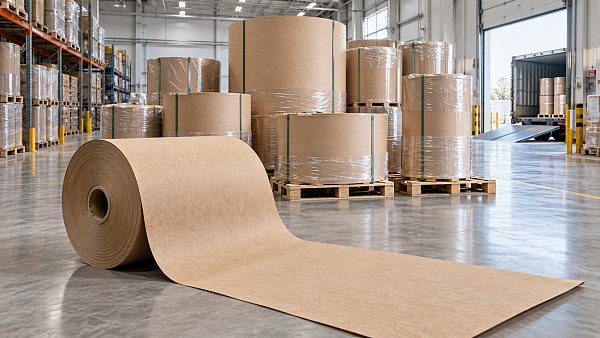
 Eco PackagingWhat affects the price of kraft paper rolls bought wholesale?Kraft paper rolls wholesale pricing depends on grade, basis weight, roll size, order volume, freight, and certifications. Learn how to compare landed costs and choose reliable value.Packaging Supply ExpertOct 03, 2026
 Commercial LEDHow to evaluate a canopy lights factory before placing a bulk orderCanopy lights factory evaluation guide: verify specifications, compliance, quality control, capacity, and after-sales support before placing a bulk order.Commercial Tech EditorOct 02, 2026
 Commercial LEDHow to choose lighting systems that meet workplace safety needsLighting systems for workplace safety: learn how to control glare, improve visibility, meet environmental demands, and protect workers with reliable, compliant lighting choices.Commercial Tech EditorOct 01, 2026
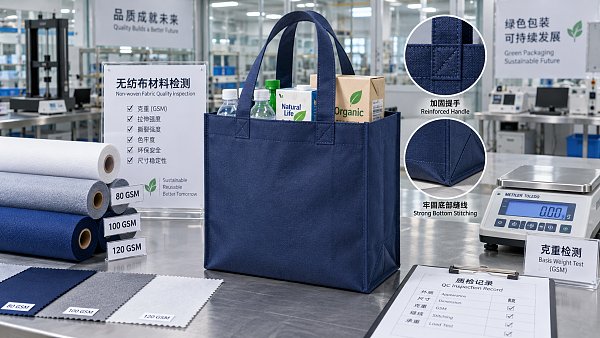
 Fabrics & YarnsWhat fabric weight works best for reusable non woven fabric bags?Non woven fabric for bags: discover the best GSM range for durability, load capacity, print quality, and cost-effective reusable bag sourcing.Textile Industry AnalystSep 30, 2026