Industry News
Curation by industry experts
Hot Articles
Popular Tags
What affects the price of kraft paper rolls bought wholesale?
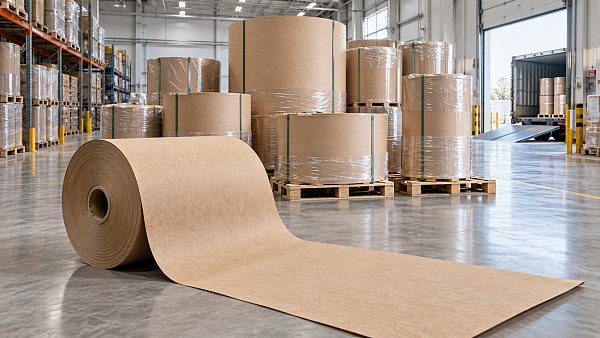
Wholesale kraft paper roll prices are shaped by a chain of technical and commercial choices that can make two apparently similar quotations materially different. The quoted price per tonne or per roll is only a starting point. A buyer also needs to understand fiber source, paper specification, converting requirements, order configuration, freight exposure, and the supplier’s ability to deliver consistent quality over time.
For most procurement teams, the practical question is not simply which offer is cheapest. It is whether a lower-priced roll will run reliably on the intended packaging line, protect the product adequately, meet customer or sustainability requirements, and arrive at a predictable landed cost. A small saving on paper can disappear quickly through excess waste, roll-change downtime, damaged goods, or an unexpected freight adjustment.
Paper grade and fiber composition set the base cost
Kraft paper is not a single uniform material. A roll intended for void fill, wrapping, bag conversion, laminating, interleaving, or industrial protection may require a different grade even when the visual appearance seems similar. The base paper grade is therefore one of the first reasons wholesale prices differ.
Virgin-fiber kraft generally carries different cost and performance characteristics from recycled-content kraft. Virgin fibers can provide higher strength, more predictable elongation, and a cleaner appearance, which can matter for demanding packaging applications or customer-facing wraps. Recycled kraft may support circularity targets and can be appropriate for many secondary packaging uses, but its performance can vary with fiber quality, blend, and processing conditions.
Buyers should avoid treating “recycled” and “virgin” as automatic indicators of either lower cost or better suitability. The commercial result depends on the required strength, surface quality, color consistency, printability, and compliance documentation. A recycled sheet that needs a higher basis weight to achieve the required protection may not produce a lower packaging cost per shipped unit. Conversely, specifying virgin paper where a recycled grade performs adequately can add unnecessary expense.
The color and finish also affect pricing. Natural brown kraft is commonly selected for its functional appearance and fiber-efficient positioning. White-top, bleached, coated, machine-glazed, ribbed, or specially treated papers involve additional processing or raw-material requirements. Where branding or printing is involved, surface properties become more important than they are for purely protective use.
Basis weight affects more than the price per tonne
Basis weight, often expressed in grams per square metre, is one of the most visible purchasing specifications. Heavier paper uses more material per unit area, so it will normally cost more per square metre or per converted pack. But comparing rolls by price per tonne alone can lead to the wrong decision.
A roll of heavier paper may have a lower quoted price per kilogram than a lighter grade from another supplier, while still costing more in the final application because each carton, bundle, or wrapped product consumes more paper. The relevant measurement is often cost per packed item, cost per metre used, or cost per square metre converted, depending on the operation.
At the same time, reducing basis weight is not a straightforward saving. A lighter grade can be viable only if it maintains the required tensile strength, tear resistance, burst performance, stiffness, and handling characteristics. In high-speed wrapping or automated dispensing systems, lower-caliper paper may crease, break, or feed inconsistently. Those failures raise waste rates and can interrupt production.
A useful procurement comparison starts with the amount of paper actually used per finished unit. That requires converting the supplier’s roll specification into usable area and then considering trim loss, splice loss, rejected material, and the number of wraps or sheets required. This calculation often reveals that the lowest price per tonne is not the lowest-cost option for the operation.
Strength requirements should be defined by the application
Strength is frequently discussed as though there is one universal “strong kraft” grade. In practice, the relevant property depends on how the paper is used. A roll for pallet-layer sheets may need stiffness and puncture resistance. A paper used for wrapping sharp-edged components may need tear resistance. A bag or sack converter may place more emphasis on tensile strength, stretch, and converting behavior.
Specifications should describe the job the paper must perform, rather than relying only on a familiar grade name. If the buyer has a validated incumbent material, the best reference point is a controlled comparison of measurable properties and operating results. If the application is new, an initial trial should examine finished-pack performance as well as roll handling on the line.
Roll dimensions change manufacturing efficiency and logistics
Roll width, diameter, core size, winding direction, and roll length all influence price. Some dimensions are standard for a mill or converter, while others require trimming, rewinding, or a dedicated production setup. A custom width may appear only slightly different from a standard width, but it can create edge-trim waste or reduce the supplier’s production efficiency.
For buyers using automated equipment, roll dimensions are operational specifications, not administrative details. A roll that does not fit the unwinder, has an incompatible core, exceeds the permitted diameter, or has inconsistent winding tension can cause stoppages that outweigh its purchase-price advantage. Procurement should obtain the equipment’s allowable width, diameter, core, roll weight, and winding requirements before finalizing a request for quotation.
Longer rolls reduce changeovers, but they also increase individual roll weight and may require different lifting practices or equipment. Wider rolls can improve throughput where the converting layout supports them, yet they may increase offcut waste if the finished format does not use the full web width. The preferred roll format is usually the one that minimizes the combined cost of paper consumption, machine time, handling, and waste.
- Ask whether the quoted dimensions are standard production sizes or converted sizes.
- Confirm the roll tolerance for width, diameter, and core dimensions.
- Specify acceptable winding quality, splice policy, edge condition, and moisture protection.
- Calculate how many rolls fit per pallet, container, and warehouse location.
- Check whether roll weight is practical for the receiving and production teams.
Order volume matters, but the usable order profile matters more
Wholesale orders can reduce unit pricing because they improve production planning, spread setup costs across more tonnes, and support more efficient transport. However, volume discounts are not automatically valuable when they create excess inventory or force buyers to accept a specification that does not suit the application.
Mills and large converters often price more favorably when an order aligns with standard grades, regular production runs, and full transport loads. Small orders, mixed widths, special finishes, urgent dispatches, or short repeat cycles can carry additional cost because the supplier must schedule more changes or hold inventory specifically for the buyer.
The procurement decision should therefore separate annual demand from individual release quantities. An annual forecast may help secure a commercial framework, while deliveries can be scheduled in smaller lots if storage capacity, cash flow, or demand volatility makes bulk stocking unattractive. The arrangement must be realistic for both parties: a nominal annual volume is not useful if it has no credible release schedule.
Buyers should also distinguish between a low price tied to a large one-time purchase and a dependable price structure for recurring supply. Kraft paper is sensitive to raw-material availability, energy costs, transport conditions, and production capacity. A supplier that can explain how pricing will be reviewed, how long it remains valid, and what conditions can trigger a change offers a clearer basis for budget control than a headline discount without commercial detail.
Freight can alter the ranking of supplier quotations
Kraft paper rolls are bulky and heavy. Freight is therefore a meaningful part of landed cost, particularly for cross-border purchases, low-density loading patterns, or deliveries involving multiple handling points. A mill-gate quotation cannot be compared directly with a delivered quotation unless the buyer normalizes the commercial terms.
The delivered cost should include the paper price, packaging, inland transport, port or terminal charges where applicable, ocean or air freight if relevant, insurance, customs duties, brokerage, local delivery, and any expected currency exposure. Incoterms clarify responsibility, but they do not by themselves make offers comparable. Two quotations under different delivery terms can shift cost and risk from the supplier to the buyer in ways that are easy to overlook.
Container utilization deserves attention. A roll configuration that leaves significant unused space can raise freight cost per tonne. Pallet height, roll diameter, protective wrapping, and loading restrictions all affect the number of usable tonnes per shipment. For regular imported supply, buyers should compare not only cost per tonne at origin but also cost per tonne delivered to the plant at the planned shipment frequency.
Distance is not the only freight variable. A local supplier with higher paper pricing may offer shorter lead times, lower safety-stock requirements, simpler claims handling, and fewer disruption points. An overseas supplier may remain competitive for stable high-volume demand, especially if the required grade is not readily available locally. The decision depends on the total supply model rather than the freight rate in isolation.
Certification and documentation can be a real cost driver
For some applications, certification is optional; for others, it is a purchasing requirement. Chain-of-custody documentation related to responsibly sourced fiber, recycled-content declarations, food-contact suitability, or other application-specific statements may affect sourcing options and price. The added cost is not simply the certificate itself. It can reflect segregated supply chains, traceability controls, testing, documentation management, and limits on which mills can supply the required grade.
The practical mistake is asking for broad sustainability or compliance claims without defining what the buyer or end customer actually needs. A specification should identify the required claim, supporting document, scope, and whether it must apply to every shipment. Vague requests can result in unsuitable offers, inconsistent paperwork, or a premium paid for credentials that do not address the intended requirement.
Documentation should also be checked before commercial commitment, especially when the material will enter regulated packaging, export programs, or customer audit processes. The buyer needs to know whether the document is issued for the precise grade and production source, whether it accompanies each delivery, and whether changes in mill or fiber mix require notification.
Quality consistency has a direct financial value
When comparing kraft paper rolls wholesale, purchasing teams sometimes focus heavily on nominal specification and overlook consistency. Two suppliers may both quote the same basis weight and width, yet differ in moisture variation, roll hardness, web tension, edge quality, caliper consistency, splice frequency, or dust levels. These differences may be minor for manual wrapping and significant for automated conversion.
A lower quotation deserves closer examination when it lacks clear tolerances or quality-control expectations. The issue is not that a lower-priced source is necessarily inferior. It is that the buyer cannot make a valid comparison without knowing what variation the quoted price permits.
Before awarding recurring business, define the acceptance criteria that affect the production process. For a converting operation, that may include roll dimensions, basis-weight tolerance, moisture range, splice marking, core integrity, edge damage limits, and packaging condition on arrival. For protective packaging, it may focus more on strength, puncture resistance, appearance, and usable yield. The supplier’s response to nonconforming material matters as much as the stated specification: buyers should establish the evidence required for a claim, replacement terms, and the treatment of production losses where appropriate.
Build a comparison around landed cost and performance risk
A disciplined comparison does not require an overly complex sourcing model. It requires each supplier to quote against the same technical and commercial brief. The request should state the intended application, grade or performance requirements, basis weight, roll dimensions, annual and release volumes, delivery location, packaging requirements, documentation needs, and requested delivery term. Where a parameter is flexible, identify it as flexible rather than allowing suppliers to make different assumptions silently.
The internal evaluation should then look beyond the purchase price. A practical decision sheet can compare cost per usable square metre, expected consumption per finished unit, freight per tonne, inventory carrying implications, lead time, minimum order quantity, quality tolerances, certification status, payment terms, and contingency options. This gives procurement, operations, finance, and sustainability teams a common view of the trade-offs.
For a first order, a trial quantity may be more valuable than pushing immediately for the lowest annual price. The purpose is to verify whether the roll performs under real operating conditions and whether the delivered material matches the approved sample and documentation. Once performance is established, the buyer is in a better position to negotiate volume, delivery cadence, and price-review mechanisms with fewer assumptions.
The price of kraft paper rolls is ultimately a measure of specification, supply conditions, and risk allocation. Buyers who define the application clearly, normalize landed-cost comparisons, and test the variables that affect production will make stronger decisions than those who select solely on a quoted price per tonne.
Recommended News
 Eco PackagingWhat affects the price of kraft paper rolls bought wholesale?Kraft paper rolls wholesale pricing depends on grade, basis weight, roll size, order volume, freight, and certifications. Learn how to compare landed costs and choose reliable value.Packaging Supply ExpertOct 03, 2026
 Commercial LEDHow to evaluate a canopy lights factory before placing a bulk orderCanopy lights factory evaluation guide: verify specifications, compliance, quality control, capacity, and after-sales support before placing a bulk order.Commercial Tech EditorOct 02, 2026
 Commercial LEDHow to choose lighting systems that meet workplace safety needsLighting systems for workplace safety: learn how to control glare, improve visibility, meet environmental demands, and protect workers with reliable, compliant lighting choices.Commercial Tech EditorOct 01, 2026
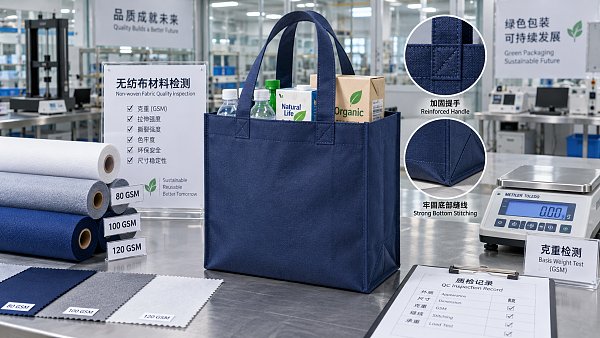
 Fabrics & YarnsWhat fabric weight works best for reusable non woven fabric bags?Non woven fabric for bags: discover the best GSM range for durability, load capacity, print quality, and cost-effective reusable bag sourcing.Textile Industry AnalystSep 30, 2026