Industry News
Curation by industry experts
Hot Articles
Popular Tags
How to audit a textile manufacturer’s quality control process
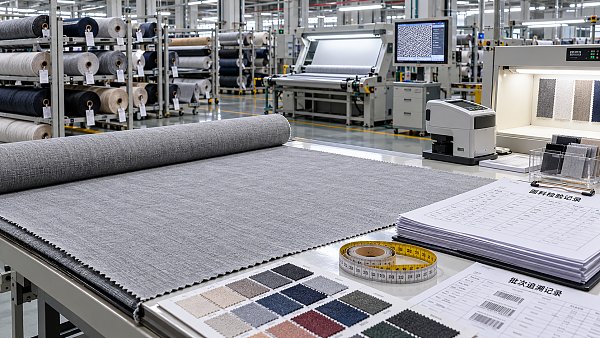
A textile manufacturers audit should establish whether a factory can consistently make the specified product, detect problems before shipment, and prevent rejected material from returning to production unnoticed. A certificate or a tidy inspection room is not enough. Follow actual material and production records through the factory, observe the controls in use, and test whether the people responsible know what to do when a result falls outside the agreed limits.
Start with the product and its risks. A mill supplying dyed fabric needs different controls from a factory cutting and sewing finished garments. For performance textiles, a failed functional test may matter more than a minor visual defect. For a garment, seam strength, measurements, appearance and labeling may all affect acceptance. The audit should cover the processes that can change those outcomes, including work performed by subcontractors.
Set the audit scope before visiting the factory
Obtain the current product specification, approved sample, purchase requirements and applicable test methods before preparing the checklist. Identify which stages the factory performs itself and which are outsourced, such as dyeing, printing, embroidery, washing or laboratory testing. A factory’s inspection records cannot fully demonstrate control over an outsourced process unless there is evidence of how that work is specified, checked and traced.
Agree on the scope of the visit: production lines, shifts, warehouses, laboratories and subcontracted activities. Ask for access to recent production orders, inspection reports, test results, equipment records and corrective actions. Where possible, select the records yourself during the visit rather than relying only on a prepared presentation.
Build the agenda around risk. A new supplier making a complex fabric may warrant a detailed review from incoming yarn through finishing. An established garment supplier with recurring measurement problems may need closer attention to cutting, sewing, pressing and final inspection. In either case, make clear which requirements are mandatory for the order and who has authority to approve deviations.
Trace one order from specification to shipment
Choose a recent or active order and follow it through the factory. This provides a practical way to see whether procedures connect across departments. Start with the buyer’s approved requirements, then compare them with the factory’s working documents: material specifications, production instructions, inspection criteria, test requests and packing instructions.
Look for mismatched revisions. An operator may be working to an outdated measurement sheet even though the quality office holds the latest version. Check how changes are communicated, how obsolete instructions are removed and whether affected teams acknowledge the revision. For a style with several colors or sizes, confirm that the correct requirements are available at the relevant workstation.
Then follow the order’s material and production identifiers. Can the factory link incoming fabric or yarn lots to production batches and finished goods? Can it identify where a suspect lot was used? Complete traceability does not require elaborate software, but identifiers and records must be consistent enough to locate affected stock and shipments without guesswork.
Inspect incoming material controls
Incoming inspection is the first opportunity to stop a material defect from becoming a production defect. Review how the factory receives, identifies and stores yarn, fabric, dyes, trims and packaging materials relevant to the product. Check whether accepted, pending and rejected stock are clearly distinguished and whether access to unreleased material is controlled.
For fabric, compare incoming inspection records with the agreed inspection method and acceptance criteria. Depending on the order, checks may include appearance, width, weight, shade, dimensional stability or other specified properties. Observe how rolls are selected, inspected and identified. A report stating “passed” is less useful if it does not show what was checked, which rolls were assessed and what happened to defects found.
Shade control deserves particular attention when panels must match within a garment or across an order. Ask how the factory groups rolls or dye lots, communicates shade differences to cutting teams and prevents incompatible materials from being mixed. Also inspect storage conditions: moisture, contamination, direct exposure or poor handling can damage otherwise acceptable material.
For trims and components, compare delivered items with approved references and any relevant test requirements. A visually correct zipper, button or label may still be wrong in size, color, composition or performance. Check how replacement materials are approved when the original component is unavailable.
Watch the controls at production checkpoints
Do not judge process control solely by the number of inspectors. Observe whether checks occur early enough to prevent a recurring problem from spreading through a batch, whether results reach the people who can act, and whether production can be stopped or contained when necessary.
At a fabric mill, relevant checkpoints may include yarn preparation, weaving or knitting, dyeing, finishing and fabric inspection. Look at how machine settings and recipes are approved, recorded and changed. Where color is critical, compare the method used for evaluating shade with the buyer’s agreed requirements, including the conditions under which samples are viewed or measured.
At a cut-and-sew factory, follow fabric from roll allocation through spreading, cutting, sewing, pressing and packing. Check whether cutting teams control fabric alignment and panel identification, and whether sewing teams have access to approved construction details and measurement tolerances. An in-line inspector should be able to identify defects, record where they occur and communicate them to the responsible supervisor.
Ask an operator or inspector to explain what happens when a measurement falls outside tolerance. Then compare the answer with the written procedure and a recent record. A credible control specifies what is isolated, who decides the disposition, whether earlier output is checked and what evidence permits production to resume.
Pay attention to rework. Correcting a visible defect may introduce another problem, particularly where repeated stitching, heat, washing or chemical treatment affects the material. Reworked goods should be identified and reinspected against the relevant requirements, not simply returned to the line after a repair.
Evaluate testing and inspection decisions
Ask how the factory decides what to test, when to test it and which method and acceptance limits apply. The answer should connect back to the product specification. A test report is useful only when the sample, method and result are relevant to the material or finished product being supplied.
Depending on the application, testing may address colorfastness, dimensional change, strength, fiber composition or restricted substances. Not every product needs the same test plan. A material intended for frequent laundering, for example, needs requirements that reflect its expected care conditions; a decorative fabric may have a different risk profile.
Review a sample of passing and failing reports. Check that reports identify the tested material or lot, the method used, the result and the applicable acceptance limit. If a test is performed externally, examine how the factory selects samples and ensures that the report corresponds to the order. A supplier’s generic report for a similar fabric does not automatically establish conformity for the production lot.
Inspect measuring and testing equipment as well. Calibration or verification records should be current under the factory’s control system, and equipment should be suitable for the measurement being made. Ask what happens to previous results when an instrument is found to be inaccurate. Competence matters too: observe whether staff follow the stated method and record results without altering or omitting unfavorable readings.
For final inspection, review the agreed sampling plan, defect classification and acceptance criteria. Sampling can support a shipment decision, but it cannot prove that every individual item is defect-free. If defects are found, check whether the factory documents the affected quantity, investigates the cause and agrees on sorting, rework or another disposition before release.
Check nonconforming goods and corrective actions
Walk to the physical hold area, not just the quality office. Rejected or questionable material should be identifiable and separated from accepted stock, with a record explaining the issue, its status and the person authorized to decide what happens next. If the factory uses electronic holds, observe how the system prevents release and what happens when items are moved physically.
Select a recent defect and follow its corrective action. A useful record distinguishes immediate containment from the action intended to prevent recurrence. For example, sorting finished garments may protect a shipment, but it does not explain why incorrect measurements continued through sewing or why an earlier inspection failed to stop them.
Look for evidence that the factory tested the proposed cause and checked the result after the action was implemented. Updating an instruction or retraining staff may be appropriate, but the record should show what changed and whether subsequent production met the requirement. Repeated findings with identical closeout language are a reason to examine the process more closely.
Include safety where it affects the work
A quality audit is not a substitute for a full occupational safety or chemical compliance assessment, but unsafe conditions can undermine both worker protection and process reliability. Coordinate the scope with the relevant safety team and review hazards associated with the processes being audited.
In dyeing, printing and finishing areas, observe chemical labeling, storage, handling, ventilation and access to appropriate protective equipment. Check whether employees can explain the response to a spill or exposure and whether emergency equipment is accessible. In production areas, look at machine guarding, electrical condition, material handling and clear access to exits.
Assess the control in use, not just the presence of a policy. Protective equipment stored in an office does not protect someone handling chemicals on the floor. If the visit reveals an immediate serious hazard, stop the affected activity through the appropriate site and buyer escalation process; do not wait for the final audit report.
Turn findings into a sourcing decision
Record each finding with the requirement, objective evidence, location or affected order, and the risk it creates. Distinguish a missing document from evidence that an essential control is not working. A single incomplete record may require correction; repeated use of unapproved materials or an inability to identify affected lots can call the factory’s wider control system into question.
Agree on an action owner, a completion date and the evidence needed to close each finding. A document may be sufficient to close a paperwork issue, while a failed process control may require new production records, a remote review or a follow-up visit. Do not treat a promise to improve as proof that the problem is resolved.
Base the final decision on the severity of the gaps and the buyer’s ability to contain the risk. A factory with a limited documentation issue may be suitable for conditional approval if product controls are demonstrably effective. Where traceability, release controls or critical safety measures are unreliable, placing an order before effective correction can leave the buyer unable to identify or contain a failure.
Recommended News
 Fabrics & Yarns2026 China Textile Fair to Spotlight Sustainability and Functional InnovationExplore the 2026 China Textile Fair and discover sustainable fibers, innovative fabrics and practical sourcing insights for bridalwear buyers.Textile Industry AnalystOct 31, 2026
 Fabrics & YarnsHow to audit a textile manufacturer’s quality control processA textile manufacturers audit helps you assess quality controls, traceability, testing and corrective actions. Learn how to reduce sourcing risks.Textile Industry AnalystOct 31, 2026
 Carton & PlasticsGeopolitical Tensions and Supply Disruptions Heighten Polymer Price VolatilityPolymer price volatility is challenging packaging manufacturers as geopolitical tensions disrupt supply chains. Explore the impact on costs and production planning.Packaging Supply ExpertOct 30, 2026
 Home DecorHow to choose a washable kitchen floor mat that stays in placeChoose a washable kitchen floor mat that stays put. Discover how to compare backing, floor compatibility, comfort, and cleaning care before you buy.Interior Sourcing LeadOct 30, 2026