Industry News
Curation by industry experts
Hot Articles
Popular Tags
How order size affects wholesale heavy-duty swivel caster prices
How order size affects wholesale heavy-duty swivel caster prices
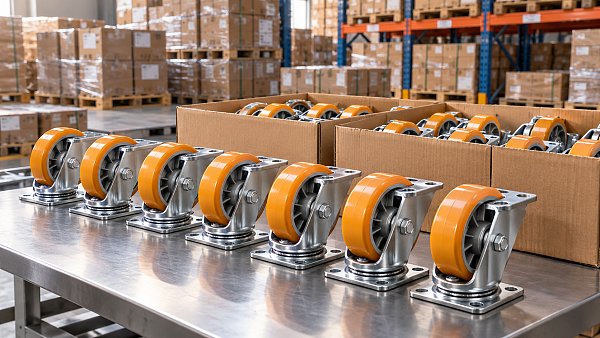
A lower unit price does not always mean a better wholesale deal. For procurement teams sourcing swivel heavy duty casters wholesale, order size can influence volume discounts, minimum order quantities, freight efficiency, and inventory costs. Yet the savings depend on more than quantity: load capacity, wheel material, swivel bearing design, and brake configuration all affect whether supplier quotes are truly comparable.
The useful question is not simply, “How much cheaper is the next price tier?” It is, “Will that tier reduce our cost of meeting actual demand?” A larger purchase may improve factory economics while leaving the buyer with excess stock, earlier payment obligations, or a specification that becomes obsolete before the casters are used.
Why larger caster orders can cost less per unit
Volume discounts usually reflect costs that do not rise in direct proportion to quantity. Order processing, production scheduling, machine setup, and export documentation all require work whether the shipment is small or large. Spreading those costs across more units can give a supplier room to lower its selling price.
Manufacturing consistency matters as much as total volume. A longer run of identical mounting plates, fork assemblies, wheels, and swivel heads can require fewer changeovers than a mixed order containing many variations. Suppliers may also obtain better purchasing terms for steel, bearings, or wheel components when demand is consolidated into predictable batches.
That does not mean prices fall indefinitely. Once setup costs are diluted, further savings may be limited by material content, purchased components, labor, and capacity. An unusually large order that requires overtime or subcontracting may offer less attractive pricing than expected. Ask suppliers where their meaningful price breaks occur rather than assuming every quantity increase deserves the same discount.
Total order volume is not always qualifying volume
A purchase combining several wheel diameters, tread materials, and brake types may look substantial on the purchase order but remain fragmented on the factory floor. Discounts may apply per SKU, per caster series, or across the entire order. These are different commercial arrangements.
Confirm whether the supplier can aggregate models that share components. Braked and unbraked versions may have enough common parts to support a combined price tier, but this depends on the design and production process. Never assume that a mixed assortment qualifies for the headline bulk price.
Separate minimum quantities from genuine price breaks
The minimum order quantity, or MOQ, is the supplier’s threshold for accepting an order under specified conditions. It is not necessarily the quantity that delivers the lowest practical cost. Stocked standard casters may have relatively flexible ordering conditions, while custom mounting dimensions, finishes, wheel compounds, or packaging can require dedicated production.
Ask what drives the minimum. A carton multiple is a packing constraint; a wheel-molding batch is a production constraint; an export-order minimum may be a commercial policy. Each calls for a different response. Accepting standard packaging might resolve one issue, while selecting an existing wheel specification might resolve another.
Request a quantity ladder covering a trial or validation order, a normal replenishment order, and a consolidated purchase. Have the supplier identify one-time tooling or setup charges separately. Otherwise, a first-order quote containing development costs may be compared unfairly with a repeat-order price that excludes them.
Lock the specification before comparing wholesale quotes
“Heavy-duty swivel caster” is not a sufficiently precise purchasing specification. Two products with the same stated load capacity can differ in rolling resistance, impact tolerance, swivel performance, and service life. A volume discount becomes meaningless if the lower-priced option achieves its price through an unapproved design change.
Establish a common technical baseline before asking suppliers to sharpen their prices:
- Load rating and conditions: distinguish dynamic from static capacity and confirm the test conditions behind the rating. Equipment weight, payload, uneven floors, impacts, and towing conditions affect selection.
- Wheel construction: specify diameter, tread width, tread material, core material, and wheel bearing type. A general description such as “polyurethane wheel” leaves substantial room for variation.
- Swivel assembly: identify the bearing arrangement, raceway construction, and maintenance requirements. The wheel bearing and swivel bearing are separate cost and performance considerations.
- Mounting and brakes: confirm plate dimensions, bolt-hole pattern, overall height, swivel clearance, and whether the brake locks the wheel, swivel action, or both.
- Operating environment: document temperature, moisture, chemicals, floor condition, noise limits, and any application-specific requirements.
For wheeled equipment, do not automatically divide the total load equally among all casters. Uneven surfaces and frame behavior can change load distribution. Have the supplier explain its selection method for the intended application, including any allowance for shock or reduced load sharing.
Where test documentation is needed, verify that it covers the quoted configuration and relevant operating conditions. A report for a related product is not automatically evidence for a different wheel, mounting assembly, or brake option.
Compare landed cost, then add the cost of holding stock
Heavy-duty casters can make inefficient small shipments expensive because of their weight and packing requirements. Consolidation may spread freight minimums and handling charges across more units. However, moving into another pallet, vehicle, or container can create a cost step rather than a smooth reduction.
Ask for packed weight, carton dimensions, units per carton, and pallet configuration at each proposed quantity. Freight comparisons based only on product weight can miss pallet weight, unused space, or non-stackable packaging restrictions.
Landed cost per usable caster = total applicable purchase, transport, import, and receiving costs ÷ usable units received.
Use the same delivery basis, named location, currency, and quotation date when comparing offers. Incoterms allocate specified responsibilities, costs, and risks; they do not replace a detailed cost breakdown. Duties and import taxes depend on classification, origin, destination, and local treatment. Distinguish recoverable taxes from permanent costs while allowing for their cash-flow effect.
Next, evaluate inventory separately. Warehousing, handling, financing, insurance, and obsolescence can erode the saving from a larger order. Wheel materials, seals, and lubricated assemblies may also have storage requirements that should be confirmed with the manufacturer.
The practical decision rule is straightforward: compare the purchase-price and logistics savings against the additional holding cost and risk over the expected consumption period. Use your own demand history and capital cost rather than a generic carrying-cost percentage.
Watch the cash required to unlock a discount
A lower price applied to the entire order can make the next quantity tier look especially attractive. But the extra units still require cash, storage, and a credible use date. Compare both total expenditure and the timing of consumption—not just the percentage discount.
This matters particularly for project-based equipment manufacturing. If a customer changes a mounting interface or cancels a production run, excess casters may have limited use elsewhere. Standardizing components across equipment lines can make consolidated purchasing safer, provided engineering confirms compatibility.
Use delivery structure as a negotiation tool
A single large shipment is not the only way to offer a supplier meaningful volume. A blanket purchase order with scheduled releases may combine predictable demand with manageable inventory. The supplier gains visibility; the buyer receives casters closer to their consumption dates.
The arrangement needs clear terms. Confirm whether pricing depends on a firm total commitment or only a forecast, when ownership transfers, when invoices become payable, and who pays for storage. Cancellation liability matters if the supplier buys dedicated materials or completes production ahead of release dates.
Also ask what volume actually reserves capacity. An annual forecast without a production commitment may not secure the same lead time as a firm order. Conversely, taking all inventory immediately may be unnecessary if the supplier can support an agreed replenishment schedule.
Negotiate beyond unit price: packaging suitable for receiving operations, spare-component availability, documented change control, and realistic defect-resolution terms can reduce downstream costs. A cheaper caster that requires frequent emergency replacements can be a poor purchasing outcome.
Make the next RFQ reveal the real cost curve
Global Supply Review’s focus on industrial hardware and strategic sourcing supports a useful distinction: supplier discovery and purchase validation are different tasks. Finding a competitive manufacturer is only the beginning; comparable specifications and transparent commercial terms determine whether its offer fits the operation.
For the next request for quotation, send one controlled specification and ask each supplier to quote the same quantity options. Require separate entries for unit price, tooling, packaging, freight basis, payment terms, production lead time, and quote validity. Request an alternative for scheduled releases where demand is sufficiently predictable.
Before making a large commitment, validate the proposed caster under representative conditions and document the approved configuration. Then choose the quantity whose savings survive the landed-cost and inventory calculation. If the next discount tier requires stock you cannot confidently consume, negotiate the delivery schedule or stay with the smaller order.
Recommended News
 Textile MachineryItalian Textile Machinery Orders Rise 7% in Q3 2026 as Overseas Demand LeadsItalian textile machinery orders rose 7% in Q3 2026 as overseas demand climbed 8% and domestic orders fell 4%. Explore ACIMIT's figures and what they mean for manufacturers.Textile Industry AnalystOct 25, 2026
 Supply Chain InsightsHow order size affects wholesale heavy-duty swivel caster pricesSourcing swivel heavy duty casters wholesale? Discover how order size, volume discounts, freight, and inventory costs shape pricing so you can negotiate a better deal.Oct 25, 2026
 Commercial LEDSignify Q3 2026 Earnings: €28 Million Tariff Refund Lifts ProfitExplore Signify Q3 2026 earnings: a reported €28 million tariff refund lifts profit as comparable sales fall 3.4%. Discover the implications for lighting costs and demand.Commercial Tech EditorOct 24, 2026
 Fabrics & YarnsHow to check BS 5852 test reports for fire retardant upholstery fabricChoosing fire retardant fabric for upholstery? Learn how to check BS 5852 reports, verify ignition sources and match tested constructions for confident purchasing decisions.Textile Industry AnalystOct 24, 2026