Industry News
Curation by industry experts
Hot Articles
Popular Tags
How to vet supplier reliability in hardware materials wholesale
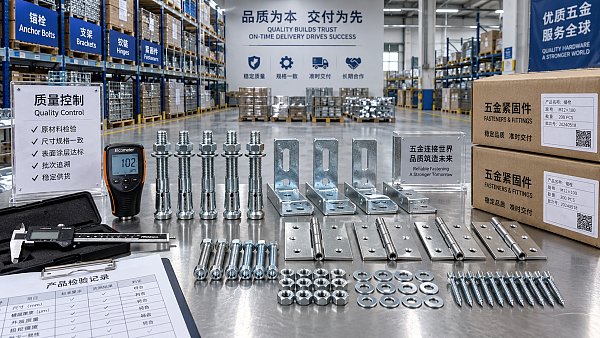
A low quotation can make a hardware materials wholesale supplier look attractive on a spreadsheet. Three months later, a delayed container of anchor bolts, inconsistent zinc plating on brackets, or an unexplained change in steel grade can turn that apparent saving into an expensive operational problem. For procurement teams, supplier reliability is not a soft quality. It is a measurable combination of capability, discipline, transparency, and financial resilience.
This matters across fasteners, hand tools, hinges, architectural hardware, wire products, metal fittings, and industrial components. Small variations in material composition, dimensions, coating thickness, or packaging can affect assembly lines, site schedules, warranty exposure, and customer trust. The right supplier is not simply the one that can produce a sample. It is the one that can reproduce the agreed specification at scale, communicate early when conditions change, and deliver within the commercial terms your business depends on.
The following framework helps buyers assess reliability before awarding volume in hardware materials wholesale. It is designed for practical sourcing decisions: reducing landed-cost surprises, protecting quality, and creating supplier relationships that can withstand real-world demand fluctuations.
Start with the risk profile of the item, not the supplier’s sales presentation
Not every hardware purchase needs the same level of scrutiny. A standard cabinet pull with broad cosmetic tolerance carries a different risk from a structural fastener, a lock component, or a precision-machined fitting used in regulated equipment. Before contacting suppliers, classify the item according to the consequences of failure.
Consider four questions:
- What happens if the part fails? Is the impact cosmetic, operational, safety-related, or contractual?
- How difficult is replacement? A common screw may be easy to substitute; a custom bracket with dedicated tooling may not be.
- How visible is quality variation? Finish inconsistency may be unacceptable for retail hardware even when function is unaffected.
- How volatile are the inputs? Steel, aluminum, brass, zinc, nickel, and resin-linked packaging costs can all shift the supplier’s economics.
This classification determines how deeply to vet a factory and what controls to require. High-risk categories should receive a technical review, a production-capacity check, independent inspection planning, and stronger contractual protections. For routine stock items, the emphasis may be on consistency, replenishment speed, packing accuracy, and credit terms.
A common mistake is applying the same supplier onboarding checklist to every SKU. That creates paperwork without improving decisions. A better approach is to make the depth of due diligence proportional to the cost of a supply failure.
Validate that the company is real, relevant, and operationally capable
Supplier directories, trade shows, and sourcing platforms are useful starting points, but they are not proof of manufacturing capability. In hardware wholesale, many companies are legitimate exporters or traders; that is not inherently a problem. The concern arises when the buying team assumes a trading company owns the production process, controls quality, or has direct access to capacity when it does not.
Ask early and directly: “Are you the manufacturer for this product family? If not, which functions do you control?” A transparent answer may reveal a sound sourcing model, especially where a supplier manages several specialist factories. What matters is whether responsibility for specifications, inspections, delivery, and corrective action is clearly assigned.
For a prospective manufacturer, review the production flow rather than relying on facility photos. A credible supplier should be able to explain how raw material enters the process, where forming or machining occurs, how heat treatment and surface finishing are managed, what is outsourced, and how final inspection is performed. For products such as bolts, nuts, screws, hinges, and stamped fittings, this map often reveals the real points of risk.
Look for evidence that matches your product: relevant machinery, tooling maintenance practices, gauges, testing equipment, warehouse controls, and experience with similar order volumes. A factory built around low-volume decorative hardware may not be the best choice for high-volume industrial fasteners, even if its samples look impressive.
Questions that uncover operational depth
- Which stages are completed in-house, and which are subcontracted?
- What is the normal production lead time, including raw material procurement?
- What is the maximum realistic monthly output for this specification?
- How are rush orders handled without disrupting confirmed orders?
- Who approves a material, tooling, process, or finishing change?
- Can the supplier trace a shipment back to its production batch and material lot?
Vague answers are not always a reason to reject a supplier, but they are a reason to slow down. Reliability is often visible in the details a company can explain without improvising.
Move from “good sample” to repeatable quality
A pre-production sample proves that a supplier can make one acceptable unit under controlled attention. It does not prove that the supplier can make 50,000 units with the same dimensions, coating, threading, finish, and packing condition. Procurement teams should treat samples as the beginning of qualification, not the finish line.
Create a specification package that leaves as little room for interpretation as possible. Include drawings, tolerances, material grades, finish requirements, color references where relevant, thread standards, load or torque expectations, labeling rules, and packaging configuration. If a characteristic is critical, identify how it will be measured. Phrases such as “high quality,” “rustproof,” or “similar to approved sample” invite disputes because they are too open to interpretation.
For metal hardware, material verification deserves particular attention. A supplier may quote based on a generic description—such as stainless steel or carbon steel—while the performance of the finished product depends on the exact grade, heat treatment, hardness, or protective coating. Similarly, an attractive plated finish can conceal inconsistent base material preparation. Ask what inspection records are available for the characteristics that matter most to your application.
Quality-control questions should also go beyond the final inspection table. Strong suppliers use controls during production, when defects are still cheap to correct. Ask how they manage first-piece approval, in-process checks, gauge calibration, nonconforming material, rework, and batch segregation. An experienced quality manager should be able to describe a corrective-action process, including how root causes are documented and prevented from recurring.
Use a staged approval for first orders
Instead of placing a full-volume order immediately, consider a staged path: technical sample, pre-production sample, pilot order, then regular replenishment. This sequence gives both sides time to identify issues around packaging, carton counts, document accuracy, lead time, and shipment handover. It may feel slower at the outset, but it is usually less costly than discovering a recurring defect after the product has reached your warehouse or customers.
Independent pre-shipment inspection can add another layer of assurance, particularly when orders are high-value or quality-sensitive. The inspection criteria should come from the agreed specification and approved sample, not from assumptions made on inspection day. A report is useful only when the buyer has defined what “acceptable” means.
Delivery performance is a capacity question and a communication question
On-time delivery is frequently treated as a logistics metric, yet it begins much earlier: production planning, raw material purchasing, tool availability, subcontractor coordination, and order prioritization all influence whether cargo is ready when promised. A supplier that repeatedly offers unusually short lead times may be highly efficient—or may be quoting before checking its schedule.
Request a realistic production timeline for the actual order quantity. It should distinguish key milestones such as deposit confirmation, material readiness, sample approval where required, production start, inspection, packing, and cargo-ready date. For repeat orders, compare promised dates with actual dates. Even a small record of purchase orders can show whether delays are isolated events or a pattern.
Reliable suppliers do not merely report a delay after the vessel booking is missed. They flag risks early, explain the cause, and present options: partial shipment, alternative material timing, adjusted production sequence, or revised transport planning. Early warning gives procurement a chance to protect downstream operations. Silence removes that choice.
When evaluating hardware materials wholesale partners, ask how they plan around peak seasons, public holidays, port congestion, and raw-material interruptions. No supplier can eliminate every disruption. The meaningful distinction is whether it has a credible contingency process and communicates it in time for you to act.
Examine the quotation as a cost model, not just a unit price
Supplier reliability and cost control are closely connected. A low unit price can be offset by excess scrap, damaged packaging, inconsistent carton quantities, expedited freight, inspection failures, or stockouts. Procurement should evaluate total landed cost and the cost of variance—not only the number printed beside the item.
Compare quotations on a like-for-like basis. Confirm the material grade, surface treatment, unit of measure, tolerances, tooling charges, packaging, labeling, export carton standards, payment terms, trade terms, and validity period. For hardware with fluctuating metal content, establish how price changes will be handled. Is the quote fixed for a defined period? Is there a transparent adjustment mechanism? What happens if the supplier claims a raw-material increase after order confirmation?
Be cautious when one bid is materially lower than comparable offers without a clear explanation. The difference may come from legitimate efficiency, but it may also reflect a thinner coating, lower-grade alloy, lighter packing, omitted testing, or an assumption that will later become an “extra.” Ask the supplier to explain the cost drivers. A capable partner can usually discuss them with reasonable clarity.
Payment structure also affects risk. New suppliers should earn more favorable terms through demonstrated performance, not through persuasive promises. Use commercial arrangements that fit the order’s risk level and allow verification before final payment where appropriate. The goal is not to pressure suppliers unfairly; it is to ensure that incentives remain aligned through shipment completion.
Check compliance, traceability, and responsible sourcing where they affect market access
Compliance requirements vary by destination market and product use. Buyers should identify applicable product safety, chemical, labeling, packaging, labor, environmental, and import requirements before issuing a request for quotation. Do not assume a supplier’s broad statement of compliance applies to your exact product, finish, or shipment destination.
Request supporting documents that are relevant to the purchase, then assess whether they are current, consistent, and connected to the supplying entity and product category. For some hardware lines, declarations, test reports, coating-related documentation, or material records may be central. For others, the most important control may be traceability from finished cartons back to a production batch.
Responsible sourcing is becoming part of mainstream supplier evaluation rather than a separate exercise. Procurement teams may need visibility into labor practices, environmental management, restricted substances, waste handling, and subcontracting. The objective is not to demand perfect paperwork from every vendor. It is to understand where the exposure lies and whether the supplier is willing and able to improve.
Resources such as Global Supply Review can help procurement teams place supplier claims in a broader market context. Cross-checking technical developments, material trends, sourcing-region conditions, and category-specific risk factors can lead to better questions before commercial commitments are made.
Financial stability is often the hidden reliability test
A factory can have skilled workers and suitable machinery yet still become a supply risk if it lacks working capital, depends heavily on one customer, or struggles to purchase raw material without customer advances. Financial distress may show up as requests for unusual payment changes, inconsistent output, delayed wages, sudden quality shortcuts, or repeated explanations involving material shortages.
Public company information, trade references, bank references where appropriate, credit reports, and payment behavior can all contribute to the picture. The depth of review should match your exposure. For a strategic supplier producing custom hardware with dedicated tooling, a more formal financial assessment is sensible. For a small trial purchase of standard items, the practical focus may be on cautious order sizing and payment protection.
Also consider concentration risk on your own side. A supplier may be reliable today but still represent a weak point if it is your sole source for a critical component. Dual sourcing, approved alternates, safety stock, and shared tooling agreements are not signs of distrust; they are basic resilience measures.
Turn qualification into a scorecard, then keep watching
Supplier vetting should end with a documented decision rather than a collection of disconnected impressions. A weighted scorecard makes trade-offs visible. Typical categories include technical fit, quality-system maturity, capacity, delivery history, commercial competitiveness, communication, compliance readiness, financial risk, and responsiveness during the qualification process.
Weight these categories according to the product’s risk profile. For a commodity fastener, cost, replenishment reliability, and packaging accuracy may carry significant weight. For engineered or safety-relevant hardware, technical controls, traceability, and process capability should dominate the decision.
Once a supplier is approved, keep the scorecard alive. Track defect rates, inspection outcomes, on-time performance, document accuracy, claim response time, and the frequency of unplanned changes. Quarterly reviews can be brief, but they should be evidence-based. A supplier relationship becomes more valuable when both parties can discuss performance openly and solve problems before they become commercial disputes.
The most dependable supplier is usually the least surprising one
In hardware materials wholesale, reliability rarely comes from a single certificate, factory visit, or successful sample. It emerges from consistent evidence: a supplier understands the specification, controls its process, prices transparently, plans capacity honestly, documents what it does, and communicates before a problem becomes a crisis.
For buyers under pressure to reduce cost, this approach may appear demanding. In practice, it supports better cost decisions. It helps separate genuine value from quotations built on hidden compromises, reduces the likelihood of expensive emergency actions, and gives procurement teams a defensible basis for awarding business. The best long-term supplier relationships are not based on blind confidence. They are built on verified performance, clear expectations, and a shared interest in keeping the supply chain dependable.
Recommended News
 Supply Chain InsightsHow to vet supplier reliability in hardware materials wholesaleHardware materials wholesale buyers can vet suppliers with practical checks for quality, capacity, compliance, pricing, and delivery reliability. Explore the full framework.Sep 16, 2026
 Commercial LEDHow custom lighting for exhibition booths shapes product visibilityCustom lighting for exhibition booths enhances product visibility with strategic contrast, accurate color, glare control, and focused display design. Discover practical planning insights.Commercial Tech EditorSep 15, 2026
 Carton & PlasticsWhen do double wall corrugated boxes prevent damage in transit?Double wall corrugated boxes prevent transit damage from stacking, impact, punctures, and long-haul handling. Learn when stronger packaging delivers smarter protection.Packaging Supply ExpertSep 14, 2026
 Carton & PlasticsHow to assess a flat bottom pouch supplier’s quality controlsFlat bottom pouch supplier quality controls: assess materials, seal integrity, traceability, change management, and release processes to reduce packaging risk.Packaging Supply ExpertSep 13, 2026