Industry News
Curation by industry experts
Hot Articles
Popular Tags
How to assess an LED street light exporter’s warranty coverage
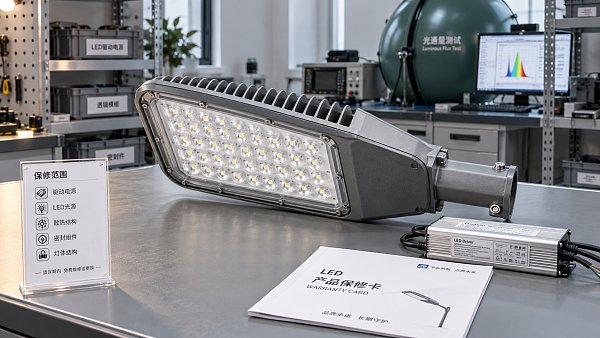
A five-year warranty offers limited protection if failed street lights still leave your team paying for access equipment, replacement labor, and international freight. When assessing an LED street lights exporter, look beyond the warranty period: confirm the covered failures, operating conditions, claim evidence, available remedies, and responsibility for every recovery cost.
The strongest offer is not necessarily the longest warranty. It is a written commitment tied to the exact luminaire configuration, supported by a workable claims process and a supplier capable of delivering compatible replacements. Resolve those points before ordering, while unclear terms can still be negotiated rather than disputed after installation.
Start with the warranty document, not the quotation
A quotation that states “five-year warranty” does not establish what the exporter must do when a light fails. Request the full warranty terms and any referenced installation instructions before comparing suppliers. Check whether the warranty issuer is the exporter, the manufacturer, or another entity. A component manufacturer’s warranty may protect the luminaire assembler without giving your organization a direct right to claim.
The purchase contract should identify the responsible legal entity and incorporate the agreed warranty version. Match its scope to the purchase order, model numbers, and approved bill of materials. Different drivers, surge protection devices, connectors, or control modules can materially change reliability and replacement compatibility even when the product name stays unchanged.
Also establish which document prevails if the quotation, warranty sheet, and contract conflict. Verbal assurances from a sales representative should become written obligations, particularly where they expand coverage or remove exclusions.
Separate component defects from performance failures
A street light can remain illuminated while no longer meeting the project’s lighting requirements. Coverage for complete electrical failure therefore answers only part of the procurement question. Review each failure category separately.
For performance coverage, ask for the guaranteed threshold, reference condition, measurement method, and assessment point. A phrase such as “low light decay” is not an enforceable acceptance criterion by itself. Lumen-maintenance claims should distinguish LED package projections from the performance of the complete luminaire, including its driver, optics, and thermal design.
Agree how disputed measurements will be resolved. Field readings can change with dirt, supply conditions, dimming settings, and measurement geometry. Specify whether assessment requires cleaning, controlled laboratory testing, or comparison with retained reference data, and who pays when the result confirms a covered defect.
Check whether the installation falls inside the coverage
Warranty exclusions deserve as much attention as covered components. An outdoor rating does not automatically establish coverage for every outdoor environment. Coastal salt exposure, persistent heat, unstable supply voltage, and incompatible controls can create exclusions unless the intended conditions were disclosed and accepted.
Send the exporter the actual application requirements and request written confirmation that the proposed configuration and warranty are suitable. The review should address:
- Temperature: the permitted ambient range and any operating restrictions that affect coverage.
- Electrical supply: voltage range, grounding requirements, switching arrangements, and required external protection.
- Exposure: coastal conditions, industrial contaminants, moisture, and any specified cleaning practices.
- Installation: mounting orientation, cable entry, connector sealing, and tightening requirements.
- Controls: approved dimming methods and responsibility for integration with third-party equipment.
Scrutinize broad exclusions such as “improper installation” or “external causes.” Ask what evidence establishes those conditions and whether an unrelated installation issue can invalidate the entire warranty. Where possible, negotiate that an exclusion applies only when the excluded condition caused or contributed to the failure.
Installation and electrical investigations should be handled by qualified personnel. Procurement teams should not ask maintenance staff to open energized equipment or bypass protective devices merely to collect claim evidence.
Define when coverage starts and what survives replacement
Warranty time can begin at manufacture, shipment, delivery, installation, or commissioning. That difference matters when products spend months in transit or storage before a road opens. Record the agreed start event and the evidence needed to establish it.
A commissioning-based start may be subject to an outside deadline after shipment. Make both dates explicit. Also distinguish a calendar warranty from any operating-hour limit: continuous operation and scheduled nighttime use can consume an hour-based allowance differently.
Replacement products need their own rule. Confirm whether they receive the remaining original term or a specified new period, and whether repaired units follow the same approach. Ask how late-stage failures are handled when the original driver or LED module is discontinued. A substitute should preserve agreed electrical, mechanical, photometric, and control compatibility—not merely have similar wattage.
Calculate the cost of using the warranty
A free replacement driver can still leave a substantial maintenance bill. Street-light repairs may require traffic management, elevated access, fault diagnosis, and more than one site visit. Compare offers using the same cost categories rather than assuming “replacement included” means the installation will be restored without expense.
Retained claim cost = diagnosis + access and traffic control + removal and reinstallation + freight and import charges + uncovered materials − agreed reimbursements.
This is a comparison framework, not a prediction. Populate it with your own maintenance rates, logistics arrangements, and contractual allowances. Do not assign unsupported failure rates simply to produce a precise-looking lifecycle figure.
Ask whether the remedy is repair, a component, a complete luminaire, or a credit, and who chooses. A credit calculated from the original purchase price may not fund a compatible replacement later. Likewise, a component-only remedy is less useful when opening the luminaire requires workshop work or resealing that local technicians cannot perform.
Shipping responsibility must cover both directions. Establish who arranges collection, who pays return freight, and how replacement import charges are handled under the applicable customs rules. Clarify whether replacements can ship before failed units are returned. That distinction can determine whether a road section remains inadequately lit while a claim is investigated.
Walk through a claim before placing the order
Ask the exporter to explain how a claim would proceed if several installed lights began flickering. This is a process test, not a request for a promise that failures will never occur. The answer should identify contacts, evidence requirements, decision points, and deadlines.
- Notification: establish the reporting channel and deadline after discovering a suspected defect.
- Evidence: agree on serial numbers, installation records, photographs, operating conditions, and fault descriptions.
- Initial review: define the acknowledgment deadline and the target for technical assessment.
- Inspection or return: specify when physical samples are necessary and who authorizes shipment.
- Remedy: set dispatch or repair deadlines after claim acceptance, with escalation for delays.
Keep evidence requirements proportionate. An exporter may reasonably need traceability and operating information, but requiring every failed unit to undergo expensive independent testing before any assistance creates a practical barrier to coverage. For multiple similar failures, negotiate whether representative samples can support assessment of the affected batch.
Recurring defects need separate treatment. Define how the parties will investigate a suspected common cause, identify affected serial ranges, and decide whether corrective action extends beyond units already reported as failed. Avoid vague commitments to “provide support”; specify the investigation deliverables and responsibility for approved corrective work.
Verify that the exporter can deliver the remedy
A detailed warranty is only useful if the issuing company can administer it. Verify the legal identity on the contract and confirm that payment details and warranty obligations point to the intended counterparty. Where the exporter relies on a separate factory, establish who controls technical decisions, spare parts, and claim approval.
Request evidence relevant to execution: a written after-sales procedure, an anonymized example of claim documentation, spare-parts arrangements, and technical contact details. References from comparable installations can help assess responsiveness, provided they can be checked. Supplier statements alone do not prove future performance.
Review traceability as part of sample approval. Serial or batch identification should connect installed luminaires to production records and the approved configuration. Without it, identifying affected stock or obtaining the correct replacement driver becomes harder. Require notice and approval for material component substitutions rather than discovering them during a warranty claim.
Ask about spare-part availability over the warranty period and the procedure for obsolete components. For installations where rapid restoration matters, evaluate a local spare holding or an agreed advance-replacement arrangement. Record who owns that stock, replenishes it after accepted claims, and bears storage costs.
Turn unresolved gaps into purchasing conditions
Before award, place each exporter’s answers into a common comparison sheet. Mark whether each point is contractually committed, merely stated in correspondence, or unresolved. This prevents a longer headline warranty from masking weaker remedies or difficult exclusions.
Treat missing component scope, an unidentified warranty issuer, undefined claim handling, and exclusions incompatible with the installation as issues to resolve before ordering. Commercial trade-offs such as buyer-paid labor may be acceptable, but only when priced into the decision and supported by a realistic maintenance plan.
The contract should also address governing law, dispute resolution, and any liability limits that could restrict recovery. Cross-border enforceability depends on the parties and jurisdiction, so material exposure warrants legal review rather than reliance on a supplier’s standard wording.
Release the order once the approved product configuration, application conditions, coverage schedule, cost allocation, and claims procedure are attached to the agreement. Retain commissioning records and serial-number data with those documents. That gives the maintenance team a usable route to recovery—not simply a warranty period printed on a quotation.
Recommended News
 Commercial LEDHow to assess an LED street light exporter’s warranty coverageAssess an led street lights exporter beyond warranty length. Learn how to verify coverage, uncover hidden costs, and negotiate stronger terms before you buy.Commercial Tech EditorOct 17, 2026
 Carton & PlasticsWhen should you heat seal aluminum foil zipper bags for food storage?When should you heat seal aluminum foil zipper bags? Learn when stronger closures matter, how to protect dry foods, and which sealing checks help ensure reliable storage.Packaging Supply ExpertOct 16, 2026
 Supply Chain InsightsHow to find a custom-printed ring-pull can supplier for small ordersFind a custom printed ring pull cans supplier for small orders. Compare MOQs, printing options, samples, and delivered costs to launch confidently without excess inventory.Oct 15, 2026
 Household Tissue & Hygiene PackagingCan Household Tissue Packaging Be Fully Compostable?Can household tissue packaging be made fully compostable? Explore certified materials, home vs. industrial composting, and practical sourcing tips to choose the right pack.Packaging Supply ExpertOct 14, 2026